China's new export curbs draw a line around its AI crown jewels
The draft rules, released on October 16, distinguish between foreign customers using Chinese AI services and foreign companies obtaining the models, data or expertise needed to operate or reproduce them independently.
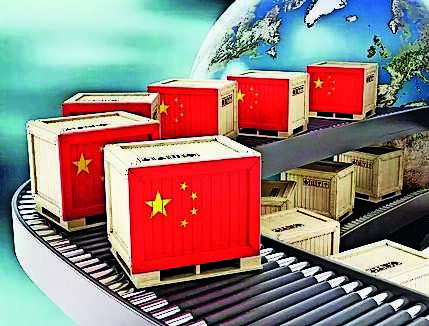
China's proposed artificial intelligence export curbs have set a boundary around the country's AI crown jewels, favoring a business model that keeps valuable technology within its borders while allowing access to it abroad as tensions with the US escalate. The draft rules, announced on October 16, differentiate between foreign customers utilizing Chinese AI services and foreign companies acquiring models, data, or expertise necessary to operate or replicate them independently.
This approach, which the leadership prefers, aligns with the market trend of keeping intellectual property (IP) and research and development (R&D) in China while selling operational access overseas. Beijing-based consulting firm Ankura's Alfredo Montufar-Helu noted that the new rules would enable overseas users to access Chinese AI via websites and cloud platforms while necessitating government approval for certain technology transfers or deployments outside the country.
This distinction proves crucial for developers relying on overseas computing resources, where US export restrictions on China limit access to powerful chips. The regulatory scrutiny adds to the already volatile macro-environment confronting China's tech giants and startups, currently grappling with a decline in AI and semiconductor stocks.
By the end of the year, China is anticipated to adopt the proposals and issue guidelines for implementation. The draft adds 23 AI-related technologies to a list that bans or restricts their export, encompassing advanced models, task-executing agents, chip design technology, and computing facility management. Certain transfers now face a temporary registration requirement.
Leading Chinese AI firms, such as DeepSeek, Moonshot, and Z.AI, extend their models to overseas customers through websites or cloud platforms. Some developers also utilize overseas computing facilities to access restricted chips. Researchers at major Chinese AI labs are seeking clarification on whether they can train or run their most advanced models on foreign servers.
In a worst-case scenario, developers might need to maintain separate domestic and overseas versions of the same downloadable model, according to an anonymous source. Companies are also seeking clarification on the tests used to determine covered models, which include computing requirements, parameter size, and performance rankings.
Some experts question how regulators would measure the size of models with selectively activated components and whether a proposed chip-design provision extends to less advanced products due to a lack of minimum performance standards. The draft is open to public comment until November 15. The commerce ministry has not responded to inquiries about the rules.
Written by urgent.news from Economic Times Tech's reporting — not their text. Machine-written — may contain errors; check the original before relying on it.
This story
This is one outlet's version. Read the fullest account.
- China's new export curbs draw a line around its AI crown jewels economictimes.indiatimes.com