Afghanistan opium poppy cultivation surges despite Taliban govt ban: UN
Opium poppy cultivation in Afghanistan more than quadrupled in 2026 despite a Taliban government ban, the United Nations said on Thursday, urging that impoverished farmers needed alternatives to the lucrative crop. Cultivated areas reached 43,000 hectares (around 106,200 acres), up from 10,000 hectares in 2025, while estimated opium production jumped fivefold from 300 tonnes to 1,500 tonnes, the…
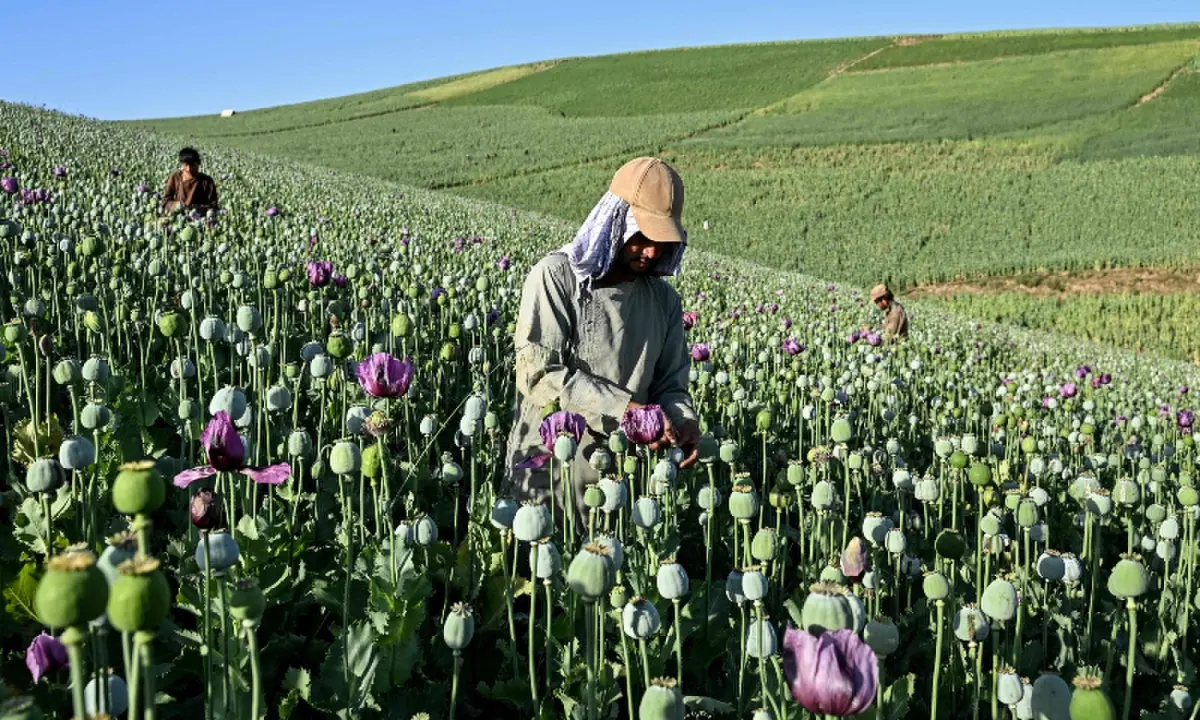
Despite a Taliban government ban, opium poppy cultivation in Afghanistan surged to 43,000 hectares in 2026, up from 10,000 hectares in 2025, according to a United Nations Office on Drugs and Crime (UNODC) report. The estimated opium production increased fivefold, from 300 tonnes to 1,500 tonnes. Myanmar cultivated 53,000 hectares in 2025, but no figures were available for 2026.
The Taliban claims to have destroyed over 22,000 hectares, but many poppy plots are concealed among cereal crops or behind walls, making detection difficult. Poor farmers, such as Mohammad, a 22-year-old from Badakhshan province, continue to grow poppies to make ends meet, as basic income from alternatives like wheat is insufficient.
The ban, implemented in 2022, led cultivation areas to plummet from over 200,000 hectares to just 10,000 hectares in 2025. UNODC Executive Director Monica Juma emphasized the challenge of maintaining decreased illicit opium cultivation without alternative livelihoods for impoverished farmers. Sustainable solutions require more than just alternative crops; they need access to markets, infrastructure, roads, irrigation, and storage.
UNODC estimates that such a strategy would require approximately $500 million, but only 10% of the funding has been provided by donors and the Taliban authorities. The issue extends beyond Afghanistan, as Afghan opium is the primary source of heroin in the European Union, where about 850,000 people use opioids. International cooperation is crucial to address this global problem.
Written by urgent.news from Dawn's reporting — not their text. Machine-written — may contain errors; check the original before relying on it.