Abu Dhabi professor develops groundbreaking system to tackle carbon emissions and crine waste
Abu Dhabi: A professor at Abu Dhabi University has won a US patent for a system that tackles two environmental problems at once, but the technology has so far only been tested in the lab. “A patent is one milestone in a longer journey. Demonstrating performance, understanding the technology’s environmental footprint and identifying viable routes to implementation are essential,” said Professor…
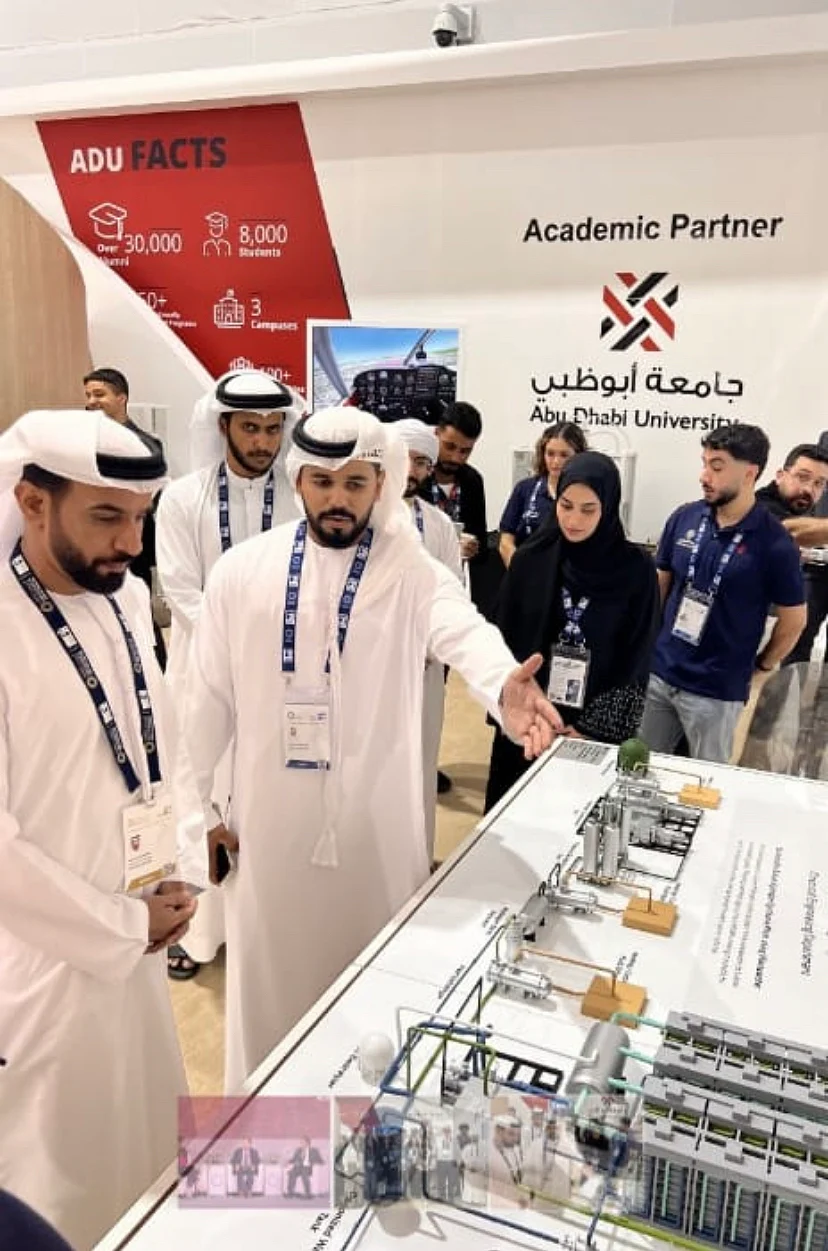
A professor at Abu Dhabi University has secured a US patent for a system that simultaneously addresses carbon emissions and brine waste, a technology that remains confined to laboratory testing. Professor Omar Chaalal, the inventor, emphasized that achieving patent status marks a milestone in a more extended journey. Demonstrating the technology's performance, gauging its environmental impact, and pinpointing viable implementation strategies are crucial next steps, according to Chaalal.
Desalination plants in the Gulf generate drinking water but also produce substantial volumes of brine, a highly concentrated saltwater that can adversely affect marine life if reintroduced into the sea. Concurrently, power plants and heavy industries emit carbon dioxide into the atmosphere. Chaos, however, may be averted by the invention of Professor Chaalal, as he posits a solution to both environmental challenges simultaneously.
The professor's process involves introducing carbon dioxide to the brine, where a chemical reaction transmutes a portion of the gas into solid mineral compounds—a procedure known as mineral carbonation. Simultaneously, the water's salinity diminishes as a result of this transformation. The university asserts that this invention is a pioneering development in the UAE.
According to the university, laboratory trials indicated a potential reduction of up to 99 percent in CO2 emissions and a 40 percent reduction in water salinity.
The university reports that 28.45 percent of the material utilized in the process was converted into solid form. Crucially, the system relies on ammonia, which the professor asserts can be recovered, purified, and reintroduced into the cycle. This closed-loop mechanism alleviates the necessity for ongoing chemical replenishment and minimizes the risk of secondary chemical pollution.
The university's research has yielded these figures, and the institution maintains that further advancements are necessary to ascertain the technology's efficacy at a commercial scale. The system is envisioned to be modular, facilitating its deployment in commercial settings. The university collaborates with the clean-technology company Global Green Global and is actively seeking industrial partners.
Potential sites for implementation include oil fields, coastal desalination plants, and heavy manufacturing facilities. However, it remains to be determined whether the technology can be seamlessly integrated into existing infrastructure.
Two engineering students, Saeed Alhmoudi and Mansour Alhashmi, are actively engaged in a complementary project alongside Chaalal: the generation of green methanol through carbon sequestration. A patent application has been submitted in connection with this endeavor.
Written by urgent.news from Gulf News's reporting — not their text. Machine-written — may contain errors; check the original before relying on it.