What Is Claude Duet? Inside Anthropic's Always-On AI Assistant
Claude Duet runs on a cloud VM, checks your apps every few hours and asks before anything irreversible. How it works and when a DIY agent wins.
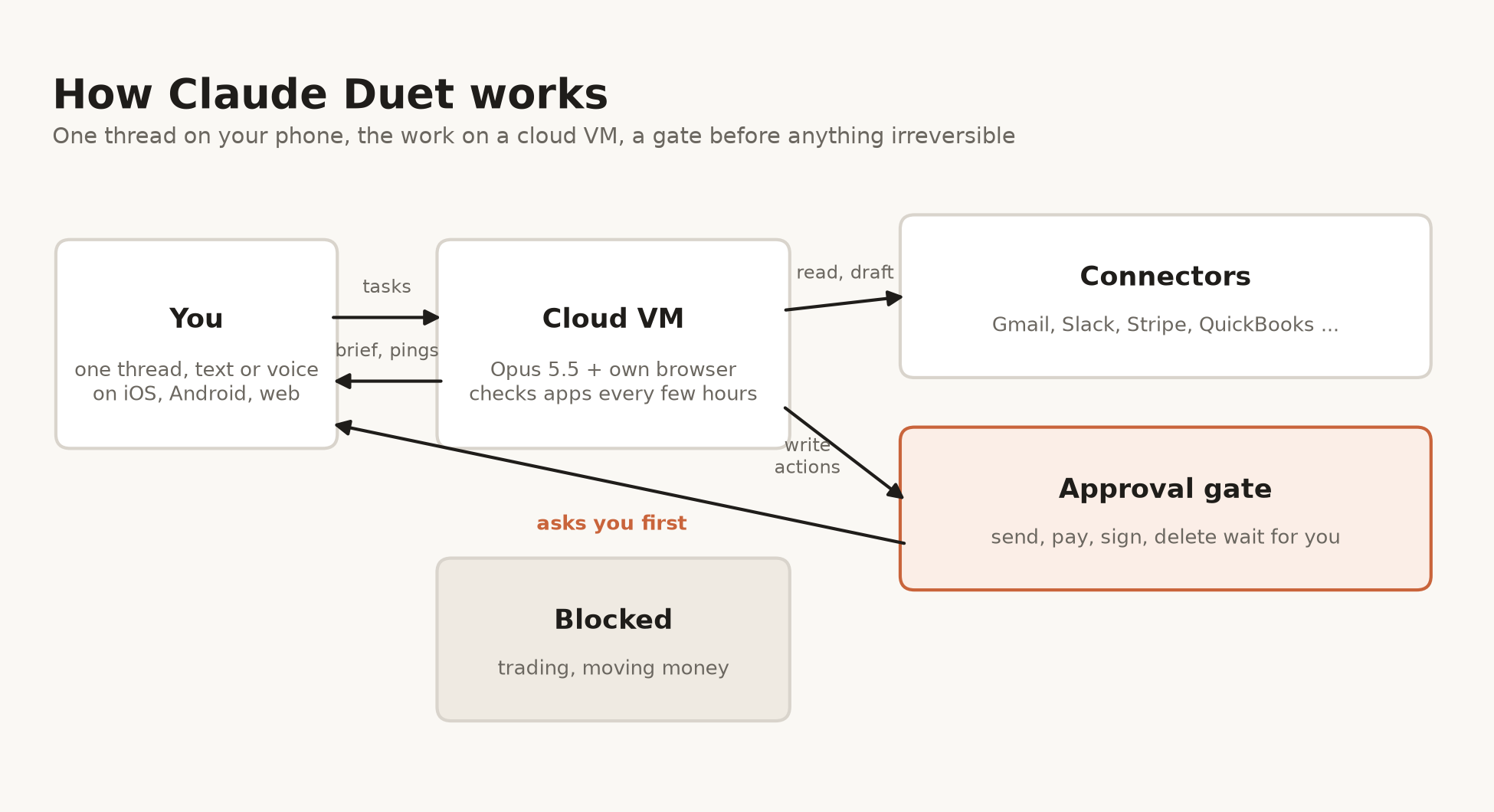
Claude Duet is Anthropic's latest AI assistant that operates without waiting for user prompts. Unlike previous versions, which required a user to initiate a chat or terminal session before receiving a response, Duet offers a proactive approach. Anthropic launched it as a research preview on October 21, 2026, and described it as an agent that comes to you with what needs your attention.
Duet is available as a standalone app on iOS, Android, and the web, and can be accessed by text or voice. It does not require any setup or prompt engineering, and all the user's memory, skills, and connectors from their Claude account are carried over. Duet runs on Claude Opus 5.5 and is included in Pro and Max plans at no extra cost. However, access is limited to waitlist members in the US who have Pro or Max subscriptions.
The key design choice behind Duet's architecture is that it does not run on the user's device. Instead, Anthropic provides each user with a virtual machine in the cloud, equipped with its own browser. This allows Duet to keep working even when the user's devices are offline. It connects to various apps through over 6,000 connectors and plugins, such as Gmail, Slack, Stripe, QuickBooks, Gusto, HubSpot, Docusign, Canva, and Shopify.
Duet operates on a polling loop, checking connected accounts every few hours rather than constantly monitoring them. Each morning, it sends a brief summary of important matters across the user's apps. Throughout the day, users can hand Duet tasks, and it works in the background. When something is completed or requires a decision, Duet notifies the user with the results provided as real artifacts like documents, spreadsheets, or presentations.
The approval model is the central aspect of Duet's functionality. It categorizes actions into three tiers: read, draft, and prepare, which it handles autonomously. For actions involving sending, paying, signing, or deleting, it presents the information and waits for user approval. It blocks trades of securities or money transfers between accounts, even if the user approves.
Purchases go through Stripe's Link wallet using a virtual card, ensuring no real card numbers are handled. The user's passwords or sign-in tokens are never directly visible to the agent.
To prevent unauthorized actions, Duet employs two classifiers. One auto-approves safe actions, similar to Claude Code's auto mode. The other watches for data leaks, rejecting credit card numbers and government IDs outright. The app has undergone red-teaming, penetration testing by an external firm, and is covered by Anthropic's public bug bounty program.
Duet's limitations include occasional misinterpretation of threads or neglect of urgent matters due to its polling nature. It currently cannot display its browser and lives in a separate app from the main Claude chat. Users have reported mediocre suggestions after setup and the absence of direct inspection of the VM, files, or rules it has learned. Additionally, Duet is currently available only in the US, and some sites may block agents or display CAPTCHAs.
While Duet does not offer the same level of customization as a DIY version, it provides a proactive assistant that can handle emails and calendars with minimal setup. The approval gates, credential isolation, and cloud VM are the standout features that distinguish Duet from a custom-built agent. As with any research preview, there are areas for improvement, but Duet demonstrates a promising direction for AI assistants that start conversations and proactively address user needs.
Written by urgent.news from HackerNoon's reporting — not their text. Machine-written — may contain errors; check the original before relying on it.