What China’s best new cultural spaces have in common: the light touch
On a hillside in Anji, in Zhejiang province, a cluster of umbrella-like canopies steps gently down the slope, following the rows of tea bushes. There is no grand entrance, no plinth, no monumental block of stone. On October 22, at Dutch Design Week in Eindhoven, this project, Anji Hood by RoarcRenew Architects, was named Cultural Space of the Year at the Frame Awards 2026, chosen from more than…
In Zhejiang province, Anji is home to a cluster of umbrella-like canopies that gracefully descend the slope alongside tea bushes. This innovative design, named Anji Hood by RoarcRenew Architects, earned the title of Cultural Space of the Year at the Frame Awards 2026. On October 22, the project was presented at Dutch Design Week in Eindhoven.
The award was chosen from over 1,000 submissions by 100 jurors across 10 panels. Three out of the five projects shortlisted for the "cultural space" award were located in mainland China: My Museum Beijing, Anji Hood, and the Huishan Ancestral Hall Museum in Wuxi.
China boasts a vast number of registered museums, with 7,046 as of the end of 2024, welcoming 1.49 billion visits that year. As the focus shifts from the sheer quantity of cultural venues to the type, the emerging trends are characterized by a lighter touch, greater respect for the environment, and a deeper connection to local culture.
A key aspect of this shift is the more harmonious relationship with the land. Anji Hood exemplifies this concept, with its umbrellas positioned on point foundations that follow the contour lines of the tea terraces. This design approach avoids large earthworks, preserves drainage, and maintains the natural shape of the slope. By respecting the landscape, the building becomes an integral part of the environment, rather than a monolithic structure that dominates it.
Another significant shift is the repurposing of existing historic buildings for public use. Huishan Ancient Town in Wuxi houses 108 ancestral halls and gardens that span from the Tang dynasty to the Republican era. The Huishan Ancestral Hall Museum operates within a Grade I protected timber-framed historic building, showcasing the value of preserving heritage in its original context.
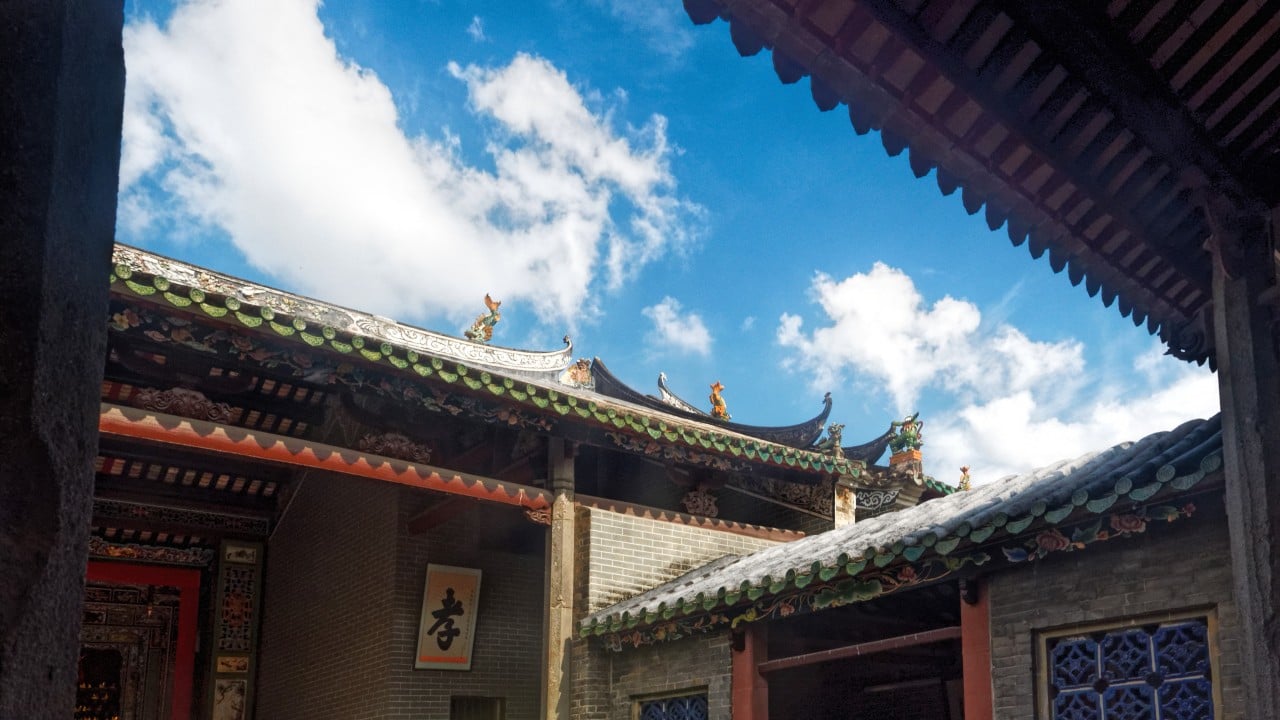
Hong Kong also embraces this idea, as seen in the revitalization of the Tang Ancestral Hall in Ping Shan, Yuen Long. This 700-year-old structure, declared a monument in 2001, continues to serve as a venue for worship, festivals, and clan gatherings. The government's Revitalising Historic Buildings Through Partnership Scheme has further encouraged the reuse of historic properties, such as Mei Ho House and the Old Tai O Police Station, as social enterprises.
The third shift is the expansion of cultural spaces beyond the largest cities, tailored to the unique characteristics of each location. Anji Hood does not transplant a metropolitan museum into the countryside; instead, it invites people to engage with a culture already practiced on the hillside. This approach is also evident in Hong Kong's Lai Chi Wo, a Hakka village dating back almost 400 years and previously abandoned by the 1990s.
A collaboration between the University of Hong Kong and local volunteers has successfully revived the village's paddy fields and terraces. The project's success led to its recognition by Unesco Asia-Pacific for sustainable development in 2020.
Digital tools also play a crucial role in transforming cultural spaces, albeit in a subtle manner. Museums require buildings to maintain specific climate conditions to protect their collections. The Bizot Green Protocol, established in 2015, sets a stable temperature range of 16 to 25 degrees Celsius and a relative humidity level between 40 to 60 percent for many objects.
This balance between long-term preservation and lower energy use is essential for maintaining such spaces. Wider bands and sensors with predictive, increasingly AI-assisted controls enable the efficient management of these conditions with minimal mechanical equipment.
Access to cultural spaces is also evolving, with digital technologies playing a significant role. The Digital Dunhuang project, launched in 2016, allows visitors to explore murals from 30 Mogao caves online. This initiative showcases how digital tools can enhance the accessibility of cultural heritage, transcending geographical boundaries and making it available to anyone, anywhere.
Historically, the announcement of a new museum often involved grandiose scale and presence. However, the projects of the current year exemplify a different approach. Hong Kong's ancestral halls in Yuen Long, the revived terraces in Lai Chi Wo, and the former police compound turned arts venue in Central illustrate this new trend.
These cultural spaces touch the ground lightly, allowing the surrounding environment to thrive and contribute to the overall experience. As we look towards the coming years, it is likely that the most compelling cultural spaces will continue to embrace this light touch, letting the life around them do the rest.
Written by urgent.news from Reuters Business via SCMP's reporting — not their text. Machine-written — may contain errors; check the original before relying on it.
This story
This is one outlet's version. Read the fullest account.