US public lands tracker highlights the collective impact of Trump policies
In his second term as the U.S. president, Donald Trump has taken actions to remove protections from at least 34.8 million hectares (86 million acres) of public lands, according to the advocacy group Center for American Progress. The nonprofit Conservation Lands Foundation (CLF) recently catalogued 12 such policy actions in its newly released Public Lands […]
In President Donald Trump's second term, at least 34.8 million hectares (86 million acres) of public lands have been subjected to removal of protections, as reported by the advocacy group Center for American Progress. Conservation Lands Foundation (CLF), a nonprofit organization, recently documented 12 such policy actions in its Public Lands Attack Tracker.
This tracker scrutinizes the various ways public lands have been diminished and undermined over the past two years, encompassing measures that encourage extractive industries and disregard public input.
Among the actions taken by the Trump administration are expanding oil and gas drilling on Federal lands and waters, repealing the public lands rule that mandates equal consideration of conservation alongside extractive industries, rescinding the roadless rule that prohibits road construction across vast areas of national forest land, and weakening provisions of the Endangered Species Act, which safeguards species on the brink of extinction.
The CLF contends that the aggregate effects of these actions surpass the sum of their individual impacts. Their Public Lands Attack Tracker website explains that this initiative "connects the dots," illustrating eight consequences of the "attacks on public land," such as allowing destructive uses and omitting tribal involvement, which results in enduring damage.
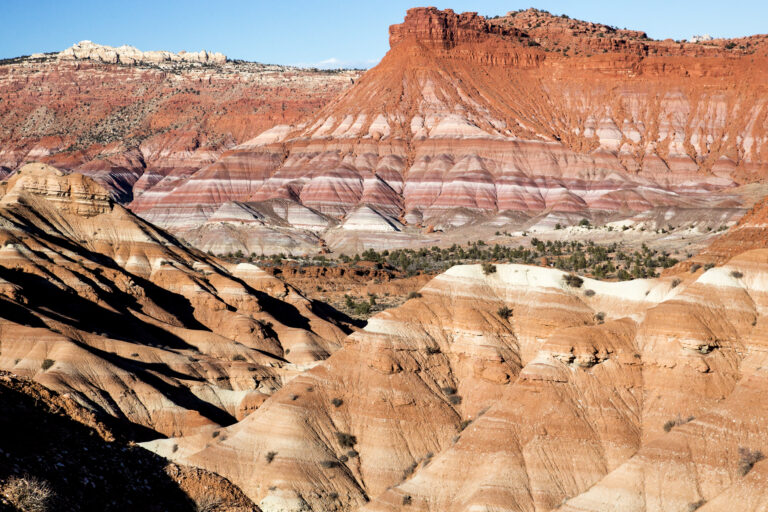
A notable instance of reduced public land protection can be observed in Utah's Bears Ears and Grand Staircase-Escalante national monuments. In July 2026, these monuments underwent significant changes in their protection status.
Written by urgent.news from Mongabay's reporting — not their text. Machine-written — may contain errors; check the original before relying on it.