These five divisions define how far we can go in space
In this Universe, just because you can see it doesn’t mean you can reach it. Conversely, just because you can’t see it today doesn’t necessarily mean that its light won’t arrive tomorrow. Because the fabric of the Universe itself is expanding, and because the maximum speed at which any signal — whether massive or massless — can travel through that fabric of space is finite, there are both: places…
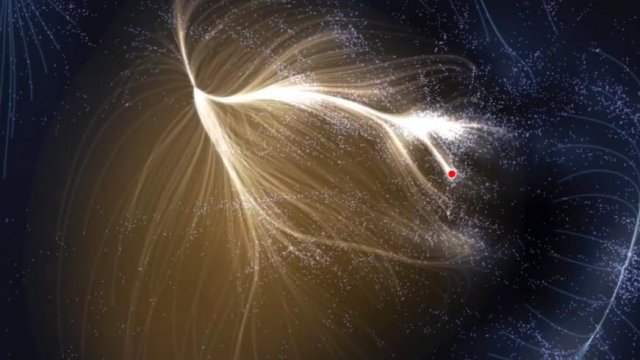
The universe is composed of five distinct regions that define the boundaries of what we can see and reach. The first region is the presently observable Universe, which extends 46.1 billion light-years in any direction. This limit is determined by the initial expansion rate at the beginning of the hot Big Bang, the matter and energy content of the Universe, the elapsed time since the Big Bang, and the speed of light.
Within this region lies the reachability or communicability limit, the area from which we could send a signal or spacecraft that would eventually reach objects inside it. Outside the observable Universe is the future visibility limit, which encompasses the light from objects that will someday reach our eyes. Beyond this limit lies the unobservable Universe, the true extent of which remains unknown.
The key to understanding the extent of the Universe lies in two fundamental concepts: the expanding Universe and the hot Big Bang. The expansion of the Universe is not like a balloon expanding, but rather an increase in the size of space itself. The energy density within the Universe changes as it expands, with dark energy remaining constant while matter and radiation dilute. The rate of expansion decreases as the energy density drops, leading to a more gradual expansion over time.
The Big Bang is often misunderstood as the birth of time and space, with all matter and energy compressed into a single point. However, this view has been revised since the proposal of cosmic inflation. The Big Bang represents the hot, dense early state of our Universe, preceded by an earlier period called cosmic inflation, during which there was no matter or radiation, only an enormous amount of energy inherent to space itself.
This inflationary phase gave way to the hot Big Bang, which began with extremely rapid expansion as the energy density was incredibly high. As the Universe expanded, the energy density decreased, eventually leading to a transition where dark energy became the dominant form of energy governing the expansion of the Universe about 6 billion years ago.
Written by urgent.news from Big Think's reporting — not their text. Machine-written — may contain errors; check the original before relying on it.