Urgent.News

What's breaking now, across thousands of outlets.

Tech

Standalone Nvidia Vera CPUs land in Oracle Cloud's multi-gigawatt deployment — our independent benchmarking of a local server reveals Vera's massive memory bandwidth lead over dual Xeon 6 server

Nvidia’s Vera CPU is now generally available on Oracle’s OCI Superclusters, a win for Nvidia as it moves past NVL72 to a standalone Vera deployment at a major hyperscaler.
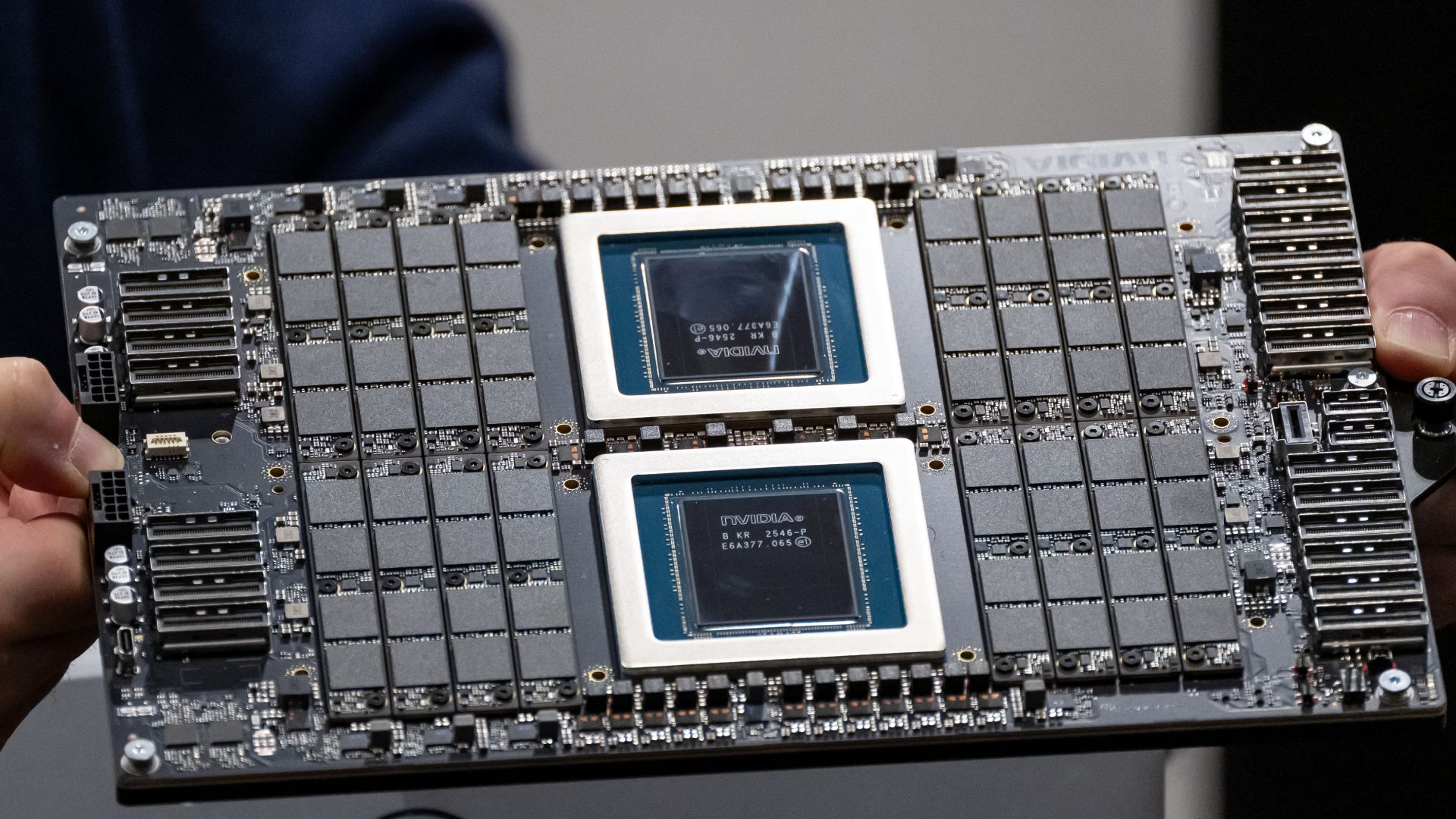
Standalone Nvidia Vera CPUs land in Oracle Cloud's multi-gigawatt deployment — our independent benchmarking of a local server reveals Vera's massive memory bandwidth lead over dual Xeon 6 server

Nvidia and Oracle have officially released Nvidia’s Vera CPUs on Oracle Cloud Infrastructure (OCI) Superclusters, according to a recent announcement at Oracle AI World. This marks Nvidia’s first standalone CPU push into the hyperscale data center market, challenging x86 competition on Oracle’s platform.

Independent benchmarking on a local server has revealed that Vera’s memory bandwidth outperforms that of dual Xeon 6 servers. Nvidia’s memory system boasts a bandwidth of 1.2 TB/s, which surpasses the capabilities of Intel’s Xeon 6980P system. This advantage is particularly noticeable in workloads involving extensive database queries or large amounts of documentation.

While Vera is not intended to directly compete with x86 processors, its strong performance in memory bandwidth and Python execution makes it an attractive option for agentic AI workloads and general data center applications alike. Oracle’s cautious approach to deploying multi-gigawatt Vera instances highlights the company’s cautious optimism regarding the chip’s potential in the data center ecosystem.

Written by urgent.news from Tom's Hardware's reporting — not their text. Machine-written — may contain errors; check the original before relying on it.

This story

This is one outlet's version. Read the fullest account.

Read the original at tomshardware.com →

More in Tech

Stop Pasting Production JWTs into Random Websites: The Security Guide to JSON Web Tokens

How many times this week have you opened a random online "JWT Debugger", pasted an Authorization: Bearer eyJhbGci... token from your production network tab, and hit enter?

  • Developers often paste production JWTs into random debuggers, exposing sensitive user data
  • JWTs are signed, not encrypted; use JWE for confidentiality
  • Three critical vulnerabilities: alg: none attack, asymmetric key confusion, and ignoring expiration

How to integrate a legal secretary with artificial intelligence into WordPress

Conversational artificial intelligence is opening up new possibilities for developing more interactive and useful websites.

  • Digital legal secretary integrates with WordPress for legal inquiries
  • Conversational AI interprets messages, generates responses within limits
  • Privacy compliance with GDPR and Spanish data protection regulations

MCP tool cost: 20 job Actors on Apify, 2.1K to 32.7K tokens each

Here is what an agent pays before it asks a job-search tool anything. I pinned 20 job-search Actors from the Apify Store, one at a time, on the hosted Apify MCP server and read what tools/list sends…

  • Twenty Apify MCP Actors used for job search cost analysis
  • Token counts range from 2,139 to 32,737 per tool definition
  • Author's input schema is 406 tokens, median is 3,829

Which Microcontroller to Choose for Matter and Thread (ESP32-C6, H2, and nRF52840)

Originally published on iot.gripe. Matter is the standard that aims for the same device to work with Apple Home, Google Home, Alexa and Home Assistant.

  • ESP32-C6 is best for Matter due to Wi-Fi and Thread compatibility and Espressif support
  • ESP32-H2 or nRF52840 alternatives for battery-powered devices using only Thread
  • Matter is an application layer standard, not a radio, traveling over Wi-Fi, Thread, and Internet

More from Wednesday 28 October →