Some weeds get supercharged by a hit of herbicide
A new study suggests farmers and homeowners are inadvertently making weeds growing around the perimeter of their fields or lawns stronger.
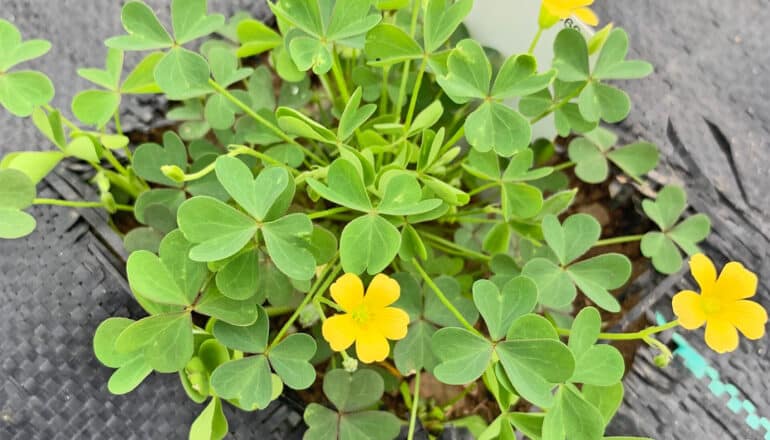
A common weed known as oxalis exhibits increased flower production after being exposed to a small amount of dicamba, a frequently employed herbicide, according to a recent study published in the journal New Phytologist. Lead researcher Regina Baucom, a professor at the University of Michigan, notes that the general public uses herbicides to eliminate weeds, but they are unaware that the weeds may benefit from the herbicide application.
The study reveals that dicamba often drifts downwind and settles on nearby plants, causing them to produce more flowers without experiencing toxic effects. This phenomenon, known as hormesis or a "stimulation effect," was first observed in the early 1900s when botanists discovered that low concentrations of toxic substances could enhance growth in plants, algae, and fungus.
In this study, researchers planted a field of oxalis and exposed half of it to low levels of dicamba, while the other half served as a control without any herbicide treatment. In the first year, the dicamba-treated plants produced more flowers and seeds compared to the control group. However, the researchers did not observe the same results in the second year.
Furthermore, the study discovered that plants exposed to dicamba had smaller flowers and attracted fewer pollinators. The researchers hypothesize that this may be due to the increased number of flowers, causing each flower to be visited less frequently. The findings suggest that this response may not evolve in the oxalis population, although the researchers note that other weed species or populations could potentially exhibit different reactions.
Written by urgent.news from Futurity's reporting — not their text. Machine-written — may contain errors; check the original before relying on it.