Police are using AI to track where you drive — and your next road trip could raise a red flag
Police are using AI and license plate cameras to flag suspicious driving patterns. Here's how the technology works and what drivers should know.
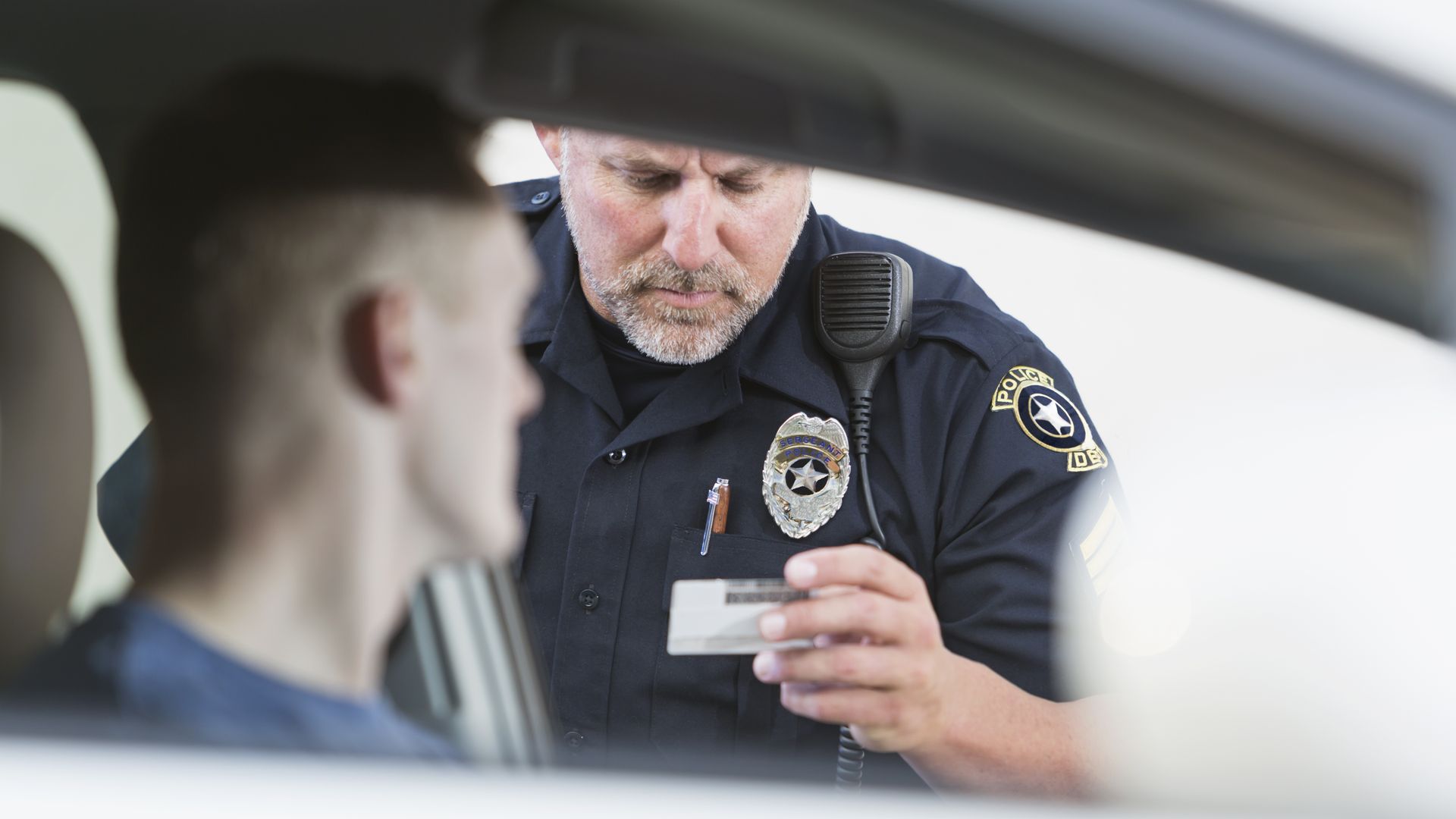
Imagine traveling across the country, minding your own business during a road trip, only to be pulled over by authorities due to an AI decision that your route seemed suspicious. This is what one Virginia resident claims happened to her, and privacy advocates warn that such encounters could become more frequent. According to a recent report from the American Civil Liberties Union (ACLU), law enforcement agencies are increasingly utilizing automated license plate readers (ALPRs) combined with AI-powered analysis to track drivers based on their travel patterns, even when there is no evidence of a criminal offense.
These systems can compile information about where a vehicle has traveled, how often it visits specific locations, and whether its movements resemble patterns that investigators deem suspicious. While ALPRs have been employed for years to identify stolen vehicles and aid in crime-solving, the integration of AI technology enables the analysis of extensive driving data.
The concern lies in the potential for an ordinary journey to be grounds for heightened police scrutiny. The incident involving Grace Knowles in September 2025 serves as a prime example. While driving from northern Virginia to Florida, Knowles was stopped by an officer who claimed she had spent excessive time in the left lane. However, according to her account to the ACLU, the officer was more interested in her travel history than her driving habits.
He inquired about her destinations, purpose of travel, and ability to prove recent visits to New Orleans. Knowles eventually presented him with a museum pamphlet as proof of her visit. The officer identified himself as an FBI special agent investigating human and drug trafficking, informing Knowles that her license plate had been flagged due to suspicious travel patterns.
Additionally, he invited her to view the computer screen in his vehicle, which displayed a map of her travel history, complete with photographs of her license plate attached to individual locations. Knowles was questioned about her visit to New Orleans because the system had failed to record her car there, highlighting one of the issues with relying on AI technology for this purpose.
The ACLU has not disclosed the specific software used during Knowles' stop, making it unclear how her driving patterns were flagged. Automated license plate readers, often mounted on police vehicles or along roads, highways, and intersections, continuously record license plate information, location, and time for each passing vehicle.
Companies like Flock Safety provide these systems to law enforcement, and technological advancements have made them more sophisticated. A 2023 investigation by WIRED revealed that Flock's newer AI-powered software can identify recurring travel patterns, recognize cars frequently encountered together, and link license plate records with other investigative data.
Consequently, law enforcement is no longer limited to searching for vehicles associated with specific crimes; they can also investigate unusual driving patterns and use these findings to identify individuals for further examination. For instance, someone who consistently drives between two cities could attract attention based solely on their route, even if they are merely commuting or visiting family.
In a separate case, a federal jury in September 2022 ruled in favor of Alek Schott, who alleged that his constitutional rights were violated during a traffic stop in Texas. Schott was pulled over while returning from a business trip to the border area. The officer claimed he had drifted out of his lane, but dashcam footage contradicted this assertion.
Despite the lack of evidence, the officer conducted a search of Schott's truck, leading to his detention and questioning. The jury awarded Schott $76 in damages, deeming the county's traffic stop practices unconstitutional and violating his rights. This case illustrates how a seemingly routine trip flagged as suspicious by AI can swiftly transform into a police encounter, even when no wrongdoing has occurred.
Fortunately, there is no straightforward method to avoid this form of surveillance. Roadside cameras capture license plates as vehicles pass by, rendering actions such as disabling phone location services or using a VPN ineffective. Furthermore, drivers have limited control over the fate of the collected data. The duration for which police retain license plate records and the extent to which they can share this information with others vary depending on the jurisdiction.
The ACLU has challenged the use of these systems, warning that monitoring a car's movements over time can reveal intimate details about an individual's life. To determine if your area employs license plate cameras, the Electronic Frontier Foundation's Atlas of Surveillance allows you to search for surveillance technologies utilized by local law enforcement.
Some departments also disclose their policies regarding data retention periods and access permissions, although not all agencies or technologies are listed in the database. In summary, AI is providing law enforcement with a more comprehensive understanding of individuals' driving habits, even in the absence of criminal suspicions.
While these tools are purportedly used to aid in crime investigations, privacy advocates express concerns that this trend may lead to broader surveillance and potential infringements on personal privacy.
Written by urgent.news from Tom's Guide's reporting — not their text. Machine-written — may contain errors; check the original before relying on it.