Nearly 5,000 tons of nitric acid for Russia’s military-industrial complex. Why did Azot plant become strategic target?
A military observer explains why Ukraine keeps striking Russia’s Azot plant.
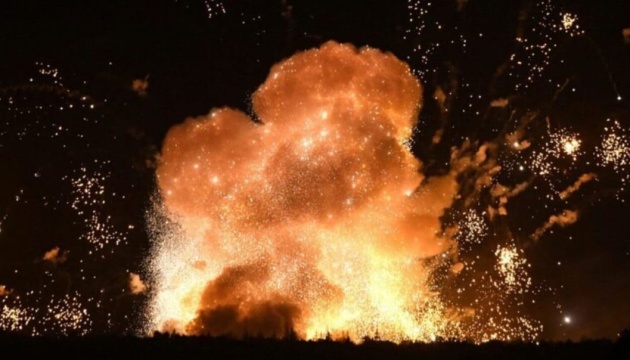
On 28 October, Ukrainian drones targeted the Azot chemical plant in Novomoskovsk, Tula Oblast, one of Russia's largest nitrogen-fertilizer producers. The assault triggered a significant fire at the site, according to Exilenova+. In the production of explosives, nitric acid is a fundamental industrial chemical. As a primary supplier of this substance, Azot holds considerable strategic value for Russia.
Oleksandr Kovalenko, a military observer, highlights the importance of Azot in the Russian war economy, emphasizing nitric acid's crucial role in generating high-explosive munitions. While nitric acid is primarily utilized in the manufacture of fertilizers, its secondary function as a raw material for explosives cannot be overlooked.
The plant's position in the war machine stems from its role in supplying raw materials to enterprises that produce energetic materials, rather than manufacturing explosives itself. Azot's output of nearly 5,000 tons of nitric acid to a sanctioned customer between 2022 and 2024 underscores its significance.
Written by urgent.news from Euromaidan Press's reporting — not their text. Machine-written — may contain errors; check the original before relying on it.