NASA's New UV Space Telescope Will Launch in 2031
NASA has committed to launching a new, more powerful UV space telescope. Named UVEX, the UltraViolet EXplorer, it will launch in 2031. It's about 100 times more powerful than its predecessor, GALEX, whose mission ended in 2013. UVEX will perform a survey in UV that will complement infrared surveys by other telescopes.
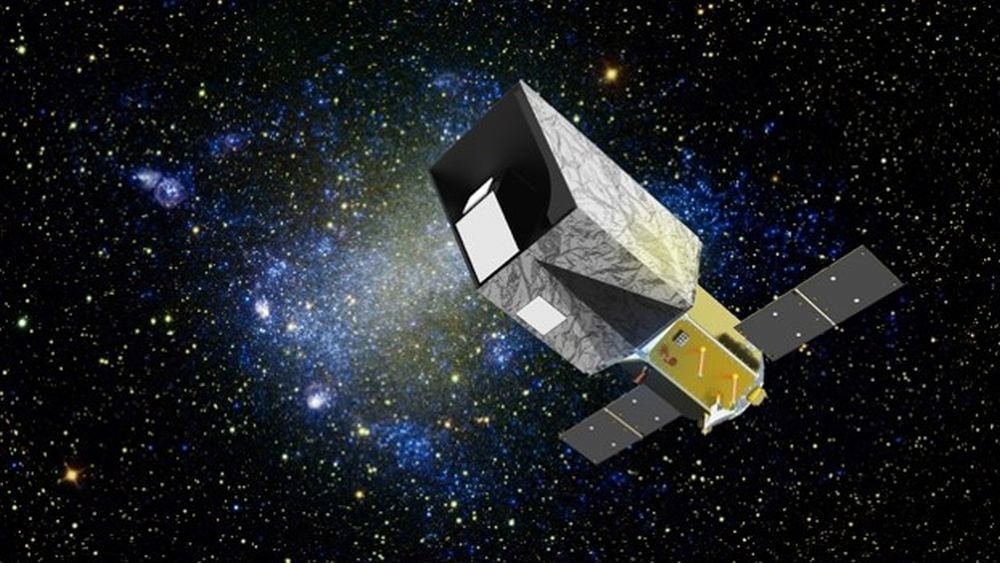
A new space telescope named UVEX, or UltraViolet EXplorer, is set to launch in 2031. This innovative telescope will focus exclusively on ultraviolet (UV) light, providing insights into astronomical events that are only visible in this specific wavelength range. Led by CalTech, the UVEX mission will conduct an all-sky survey in near and far-ultraviolet, complementing existing telescopes like the Nancy Grace Roman Space Telescope, Vera Rubin Observatory, and ESA's Euclid Space Telescope.
The UVEX telescope's primary objective is to study low-mass galaxies, which make up half of the Universe's mass and serve as analogs for the Universe's first galaxies. By observing these galaxies in UV light, UVEX will contribute valuable data to our understanding of galaxy evolution, star formation, and stellar evolution at low metallicities.
In addition to its primary mission, UVEX will also perform rapid target of opportunity surveys, spectroscopic follow-up of stars and galaxies, and generate a vast amount of UV data for researchers to analyze. This data will be comparable to the valuable information gathered by the recently concluded Gaia mission, which has been used for various research areas in astronomy.
With its enhanced sensitivity and focus on UV observations, UVEX will significantly enhance our understanding of the Universe, filling gaps in our observations and providing a more comprehensive view of the celestial landscape.
Written by urgent.news from Universe Today's reporting — not their text. Machine-written — may contain errors; check the original before relying on it.