Meteorites: Nature’s free sample return
Long before spacecraft visited the Moon, landed on asteroids, or returned samples from distant worlds, scientists were already studying material from beyond Earth.
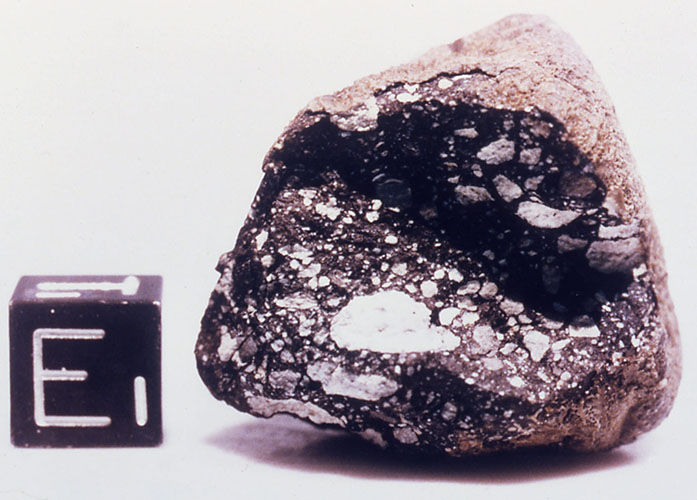
Long before spacecraft ventured to the Moon, asteroids, or distant worlds, scientists already harnessed extraterrestrial rocks as invaluable tools for space exploration. Known as meteorites, these celestial fragments have often been dubbed "poor man's space probes" due to their cost-effective provision of direct physical evidence from space without the need for complex spacecraft launches.
Notable missions like Apollo, Hayabusa2, and OSIRIS-REx have greatly expanded our knowledge of the Solar System. Yet, meteorites continue to hold immense value in unraveling its origin, evolution, and composition.
Meteorites are fragments of extraterrestrial material that withstand the Earth's atmosphere and land intact. Originating primarily from asteroids, particularly those in the asteroid belt between Mars and Jupiter, these fragments are ejected into independent orbits following collisions. Over millions of years, gravitational interactions gradually alter these orbits, occasionally bringing them into Earth's path.
As these objects enter the atmosphere at high velocity, they compress and heat the surrounding air, creating the luminous phenomenon known as a meteor or "shooting star." The material that survives this descent and reaches the ground is classified as a meteorite.
While the majority of meteorites hail from asteroids, a smaller fraction originate from the Moon or Mars. Powerful impacts can dislodge surface rocks, sending them into space where they may journey for millions of years before eventually reaching Earth. Some meteorites preserve remnants of ancient planetary bodies that were shattered by collisions during the early Solar System.
Unlike telescopes, which study distant objects through reflected or emitted light, meteorites offer scientists the opportunity for direct laboratory analysis. By measuring chemical compositions, isotopic abundances, mineral structures, magnetic properties, and microscopic organic compounds, meteorites can unveil insights that remote observations alone cannot provide.
Scientists classify meteorites into three main categories: stony, iron, and stony-iron. Stony meteorites make up approximately 94 percent of observed falls and primarily consist of silicate minerals. Chondrites, in particular, are of great importance as they contain tiny spherical structures called chondrules formed during the earliest stages of Solar System development. Many chondrites have remained largely unchanged for over 4.5 billion years, preserving evidence of the materials from which the planets originated.
The sample return capsule from NASA's OSIRIS REx mission, which touched down in the desert on September 24, 2023, at the Department of Defense's Utah Test and Training Range, exemplifies the value of meteorites. These natural messengers from space provide scientists with a wealth of information about the early Solar System, geological processes, and the composition of celestial bodies that continue to shape modern planetary exploration.
Written by urgent.news from MyJoyOnline Ghana's reporting — not their text. Machine-written — may contain errors; check the original before relying on it.