Kritik an EU-Kommission: Kanada wird vorerst kein assoziiertes EU-Mitglied
Kanzler Merz und andere Regierungschefs bremsen von der Leyens Kanada-Pläne. Mehrere EU-Staaten haben geplante Zusagen für eine engere Anbindung des Landes abgeschwächt - kurz vor einem Gipfeltreffen.
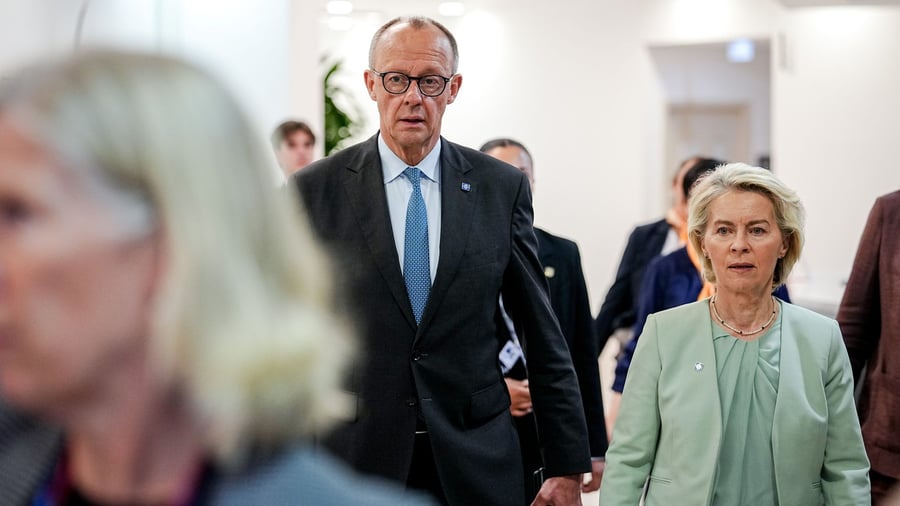
EU Commission President Ursula von der Leyen's push for Canada to gain an associated EU membership appears to have failed for now. According to diplomats in Brussels, EU leaders, including German Chancellor Friedrich Merz and others, removed the terms "associated membership" and "associated member" from the draft of the planned final declaration of the EU-Canada summit starting this Thursday.
Far-reaching promises related to financial market integration and mutual preferential treatment for security measures were also weakened. Instead, the text now mentions the intention to develop a concept for a "closer binding of Canada to the EU" by the upcoming EU-Canada summit next year. The concept was adopted in a written procedure by EU countries on Wednesday night and is set to be published on Friday at the end of the two-day summit in Montreal.
Von der Leyen had intended to officially launch "associated membership" for Canada in September during a speech alongside Canadian Prime Minister Mark Carney, which generated significant attention. EU leaders at the Montreal summit, including Carney and von der Leyen, as well as EU Council President António Costa and several EU Commissioners and Commissioners, are expected to attend.
Some EU member states criticized the vague concept due to the unclear meaning of the planned special status and insufficient prior coordination between the Commission and the Council. Furthermore, it was seen as problematic that the term was already being used in connection with Ukraine's EU accession process. Chancellor Merz proposed "associated membership" for Ukraine as a stepping stone towards regular EU membership in June.
According to Merz, Ukraine could regularly participate in summit meetings or ministerial councils before accession. While von der Leyen and Merz used the term differently, von der Leyen intended to signal that Canada, without legal accession possibilities, would be closely bound to the EU. Both sides plan to coordinate their policies more closely on issues such as energy, climate protection, technology, and security.
Additionally, Canada is expected to be more involved in EU programs for research, education, and defense. The overall goal is to better represent common interests and reduce dependence on other states. The loss of trust in the US under President Donald Trump is also a background factor. Trade conflicts and territorial claims under Trump have increased doubts about the reliability of the current partner in both Atlantic regions.
Trump referred to the push for an associated EU membership for Canada as "ridiculous" in his initial reaction. He threatened consequences if it were to harm US interests, such as imposing high tariffs or discontinuing trade with Europe in many sectors. The EU Commission initially aimed to have Canada participate in future exchanges and consultations on important political and regulatory initiatives as an "associated member of the Union."
The full scope of this associated membership was to be determined by the EU-Canada summit in 2027. Some economic promises were originally more extensive, such as guaranteeing favorable treatment in economic security measures and seeking to limit negative impacts on each other. A stronger integration of financial markets was also initially planned.
However, both sides are now only seeking to minimize adverse effects on each other. Furthermore, an economic council is to bring together businesses from both sides, and an investigation is planned to determine the feasibility of additional liquefied gas exports from Canada to Europe. Carney downplayed the removal of the term "associated membership," stating that what matters is the difference it will make in the lives of Canadians.
Written by urgent.news from Handelsblatt's reporting — not their text. Machine-written — may contain errors; check the original before relying on it.