Israel’s election deadlock: What could happen next?
Israel’s election deadlock: What could happen next? Submitted by Lubna Masarwa on Wed, 10/28/2026 - 16:51 There are three options facing Israel: more Netanyahu, an Eisenkot minority government, or another round of elections. Here's how they could play out Gadi Eisenkot waves an Israeli flag following the exit polls at his party headquarters in Tel Aviv, Israel, on 28 October 2026 (Reuters/Shir…
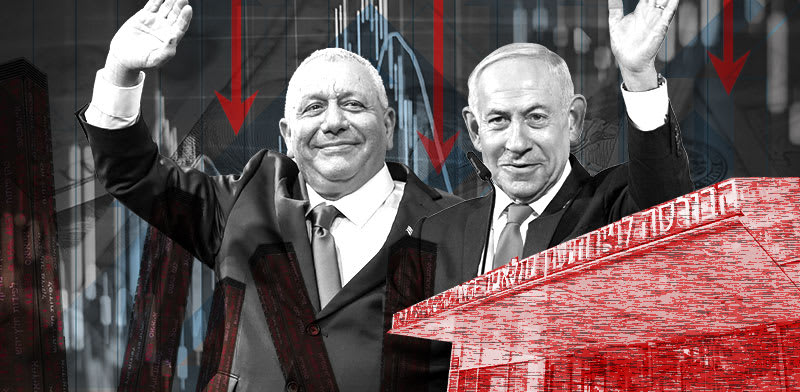
Israel’s recent election has left the country in a political deadlock, with no clear path forward for forming a government. Three potential outcomes have emerged: Benjamin Netanyahu returning as prime minister, Gadi Eisenkot forming a minority government with Palestinian parties, or another round of elections. With 85% of votes counted, Netanyahu’s Likud party leads with 53 seats, while Eisenkot’s bloc has 48.
The Palestinian Joint List and Ra’am hold 19 seats together. A minimum of 61 Knesset seats is needed to form a majority government, but no one is close to achieving this.
President Isaac Herzog is expected to give Netanyahu the chance to form a government first, given his party’s lead. Several ways to do this could include convincing opposition parties to defect or forming a unity government with key opposition parties like Eisenkot’s Yashar and Bennett’s Together slate. However, this would mean excluding far-right parties led by Smotrich and Ben Gvir, as well as ultra-Orthodox parties Shas and United Torah Judaism.
Netanyahu's political troubles in 2020 with Benny Gantz joining a unity government could deter opposition leaders from considering a similar arrangement again.
Eisenkot could attempt to form a minority government with the Palestinians outside of the Knesset, but this could face significant risks. Netanyahu's toxic image and the potential for political violence could make this approach unstable. Another option is holding another election, which would favor Netanyahu, as the opposition's anti-Netanyahu MPs would likely support him.
Netanyahu would retain his position as prime minister until fresh polls are held, and recent trends suggest that many Israelis who voted for his opponents are less likely to participate in a second election.
Written by urgent.news from Middle East Eye's reporting — not their text. Machine-written — may contain errors; check the original before relying on it.