Israeli elections: Exit polls show no clear winner as Netanyahu and Eisenkot both vow to form a government
Projections suggested on Wednesday morning that neither Netanyahu’s bloc nor his opponents earned enough seats for a parliamentary majority. The strongest gains on Tuesday came from Arab Israeli parties, whose voters turned out in soaring numbers against Netanyahu. They could emerge as kingmakers.
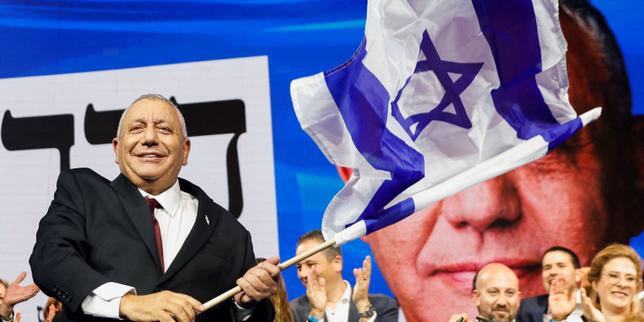
On Tuesday, Israel's recent election appeared to be in a stalemate, according to exit polls. Gadi Eisenkot's opposition party and Prime Minister Benjamin Netanyahu's camp were in a tight race, with neither side having an obvious route to power. Eisenkot, a former chief of staff, entered politics in 2022 and has positioned himself as a moderate alternative to Netanyahu while maintaining a strong stance on security matters.
At 66 years old, Eisenkot's path from the military's top echelons to the forefront of Israeli politics could mark a historic moment in the country's political landscape.
Born to a working-class Jewish Moroccan immigrant family, Eisenkot spent four decades in Israel's military, eventually rising to the rank of chief of staff. Currently leading the largest opposition party, the centrist Yashar!, Eisenkot's journey is marked by personal tragedy, as his son and two nephews were killed in combat following the October 7 attacks.
Eisenkot also served as an observer in Netanyahu's war cabinet but resigned after eight months due to his belief that the prime minister lacked a clear strategy. Since then, he has positioned himself as a moderate alternative to Netanyahu, although he remains hawkish on security issues.
Eisenkot is credited with devising Israel's "Dahiyeh Doctrine," a military strategy advocating for the use of disproportionate force in areas from which militants launch attacks. On Iran, he has stated that the country's nuclear program must be curbed, possibly through military means, but that regime change in Tehran is not a feasible goal.
Should he manage to form a coalition, Eisenkot could become the first Israeli Prime Minister of Mizrahi descent, a group that historically has faced discrimination from the country's European-descended elite.
Final results could take several days to be finalized, and Israel's complex political system means smaller parties can serve as potential kingmakers in coalition negotiations. These negotiations have been known to take weeks or months after past elections as parties try to assemble a coalition, often with the help of unlikely allies.
Naftali Bennett, a 54-year-old right-wing and religiously observant leader of the Together (Beyachad) party, is seen as a potential kingmaker. Bennett opposes Palestinian independence and supports settlement-building in the West Bank. After serving as Netanyahu's chief of staff and head of the Yesha Council, Bennett formed a coalition with centrist politician Yair Lapid, briefly serving as Prime Minister in 2021.
If neither of the coalitions can form a majority, Bennett could play a crucial role in helping form the next government by extending support, which would mark a return to the corridors of power.
Written by urgent.news from Hindustan Times's reporting — not their text. Machine-written — may contain errors; check the original before relying on it.
This story
This is one outlet's version. Read the fullest account.
- Gadi Eisenkot: The former general challenging Netanyahu hindustantimes.com
- Channel 12 exit poll update: Netanyahu bloc rises to 52 seats, Eisenkot bloc drops to 49 israelnationalnews.com