How to Get Rid of 27,000 Cubic Meters of Nuclear Waste
Three and a half years ago, Germany switched off its last nuclear power plants. But the issues connected to this kind of energy generation have not been resolved. What does the Federal Republic intend to do with its high-level radioactive trash?
On April 15th, 2023, Germany finally closed its last three nuclear power plants. This decision came after the Fukushima meltdowns in 2011, which led Chancellor Angela Merkel to reverse her stance on nuclear energy. The previous Chernobyl disaster in 1986 had also raised concerns about nuclear safety, despite the German Interior Minister's misleading claims at the time.
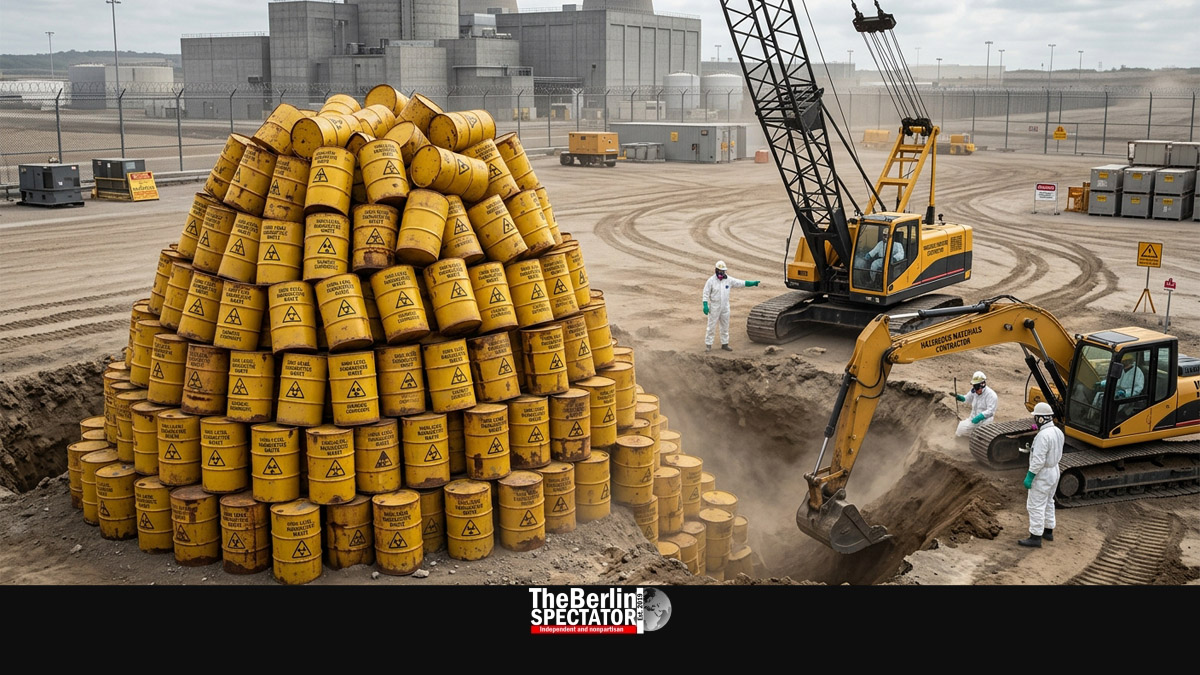
Despite switching off the nuclear plants, Germany still faces the challenge of disposing of the 27,000 cubic meters of nuclear waste generated. The country lacks a final disposal site capable of safely containing radioactive materials for a million years, the duration of their high radioactivity. Previous attempts, like the Asse II cave, have proven inadequate due to groundwater infiltration and container leaks.
The German government has been searching for a suitable location to store this waste, but the task remains daunting. In the meantime, neighboring countries like France, which relies heavily on nuclear power, continue to manage their own radioactive waste, which does not respect national borders. Radioactive contamination can travel, posing risks to neighboring regions.
Switching off the nuclear plants has not resolved Germany's nuclear waste problem, highlighting the long-term challenges associated with nuclear energy.
Written by urgent.news from The Berlin Spectator's reporting — not their text. Machine-written — may contain errors; check the original before relying on it.