How brains prevent ‘catastrophic forgetting’
Dendrite-specific inhibition lets overlapping neuronal assemblies form across brain areas without erasing existing memories, a new modeling study suggests.
A new modeling study sheds light on how the human brain avoids catastrophic forgetting, a problem that plagues artificial neural networks. Researchers from the Technical University of Munich propose a biologically plausible mechanism involving dendrite-specific inhibition, where overlapping neuronal assemblies can form across brain areas without erasing existing memories.
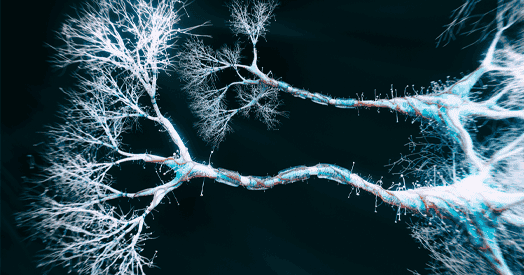
In their simulations, each neuron contains multiple dendritic compartments that can independently generate spikes and strengthen connections. Inhibitory neurons selectively regulate learning in each compartment, allowing the same neuron to join multiple assemblies without losing prior knowledge. When an animal enters a new environment or internal state, inhibitory neurons selectively silence certain dendritic compartments, enabling the neuron to learn new information while preserving older memories.
The researchers also demonstrated that individual assemblies could be formed in the brain's visual area and then combined with auditory input in a downstream "concept" area, allowing the brain to distinguish between visually similar but distinct stimuli. This mechanism could help explain how the brain integrates information from different modalities, such as combining visual and auditory cues to form a single concept.
The study, published in Neuron, offers a biologically realistic model of how the brain handles learning and memory, bridging the gap between artificial neural networks and biological systems. However, the model contains several simplifying assumptions and further experimental validation is needed to confirm its predictions.
Written by urgent.news from The Transmitter's reporting — not their text. Machine-written — may contain errors; check the original before relying on it.