Glowing Salt Crystals Tracked Radiation Aboard Artemis I
There weren’t any humans strapped into the bucket seats of the Orion spacecraft for the Artemis I mission. But there were two anthropomorphic mannequins made to mimic human bone and soft tissue, but also equipped with hundreds of radiation sensors spread throughout their body as part of the Matroshka AstroRad Radiation Experiment. A recent paper led by Paweł Bilski of the Institute for Nuclear…
Two anthropomorphic mannequins, equipped with radiation sensors, accompanied the unmanned Artemis I mission to the Moon. Scientists utilized these mannequins, known as Matroshka AstroRad Radiation Experiment, to study the effects of cosmic radiation on human tissue. A new type of passive radiation monitor, made of lithium fluoride, was introduced in this experiment.
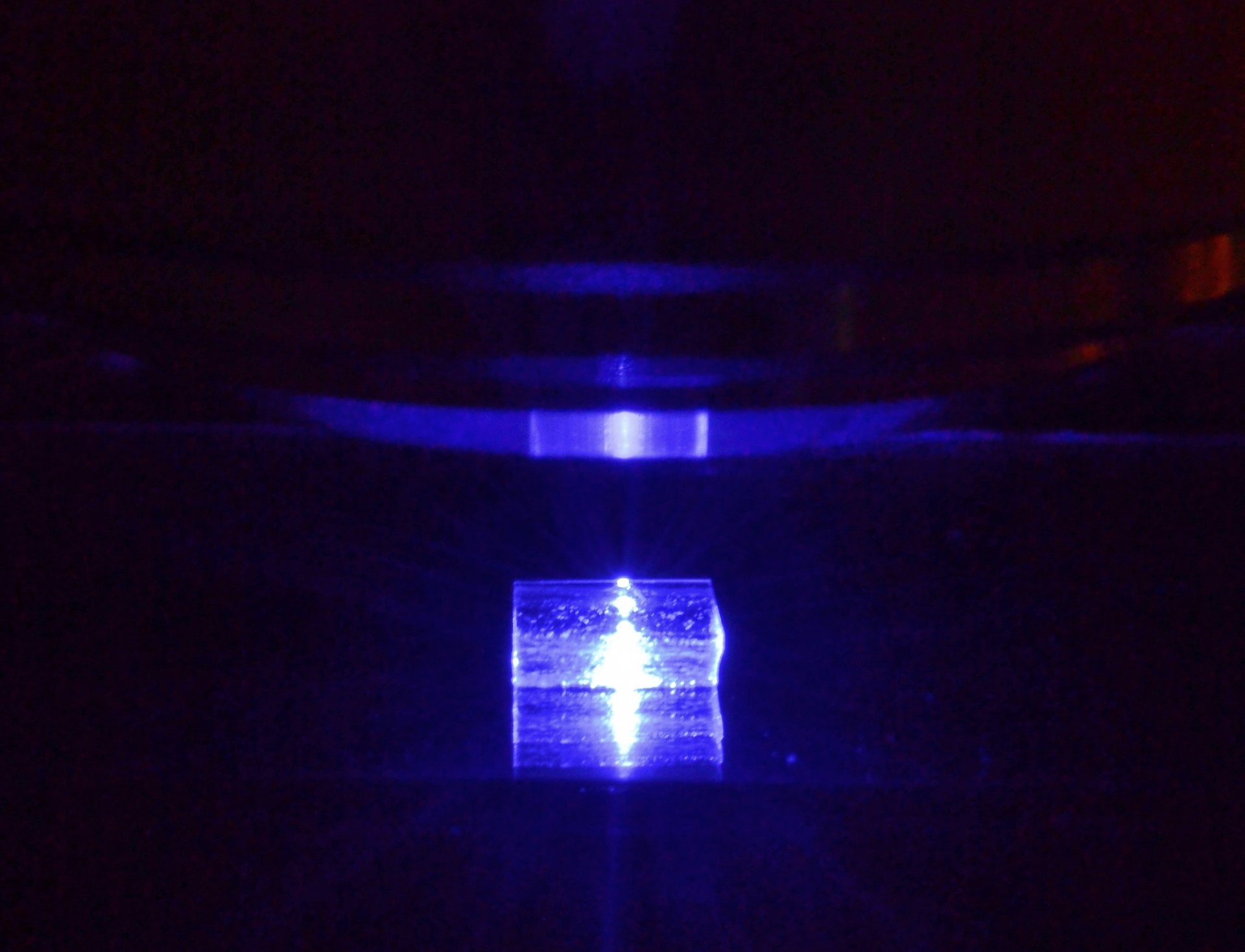
When cosmic radiation particles pass through the lithium crystals, they excite electrons, causing the crystal structure to change - a phenomenon that gives off a blue glow when illuminated under a microscope. This method of radiation measurement, previously employed by plastic nuclear detectors, avoids destructive etching and generates hazardous waste.
However, the lithium fluoride crystals showed a 30% overestimation of radiation dose for high energy transfers during the Artemis I mission. This discrepancy could be due to the nuclear physics of the lithium fluoride itself, specifically secondary neutron collisions with lithium nuclei. Despite this challenge, this new passive space-based dosimetry technique represents a significant advancement.
As humanity plans longer lunar missions, such detectors will provide valuable insights into radiation exposure, helping protect future astronauts.
Written by urgent.news from Universe Today's reporting — not their text. Machine-written — may contain errors; check the original before relying on it.