GitHub Universe 2026: Evolving every layer of the stack
Today, we laid out our vision for GitHub as the most comprehensive, end-to-end software delivery system in the world. The post GitHub Universe 2026: Evolving every layer of the stack appeared first on The GitHub Blog .
As developers' roles evolve, GitHub Universe 2026 showcased a comprehensive software delivery system built for the future. Gone are the days of writing every line of code; instead, developers now work alongside AI assistants to orchestrate complex workflows. The goal remains unchanged: deliver completed software, not just lines of code.
GitHub presented a vision for a continuous learning machine that streamlines the software development lifecycle (SDLC). From ideation to deployment, the SDLC is no longer a linear path but a flexible system where work can trigger changes at any stage. Developers set the direction, make decisions, and ensure accountability, while agents handle implementation and verification.
Three core aspects define this agentic software delivery system: velocity, intelligence, and quality. Velocity focuses on expediting the journey from idea to completed software. Intelligence combines context across the platform with a continuous learning engine to improve as it's used. Quality ensures completed work is secure by default and catches bugs before they reach users.
GitHub's latest products and features were unveiled at Universe, starting with the GitHub Copilot app. Designed for agentic software delivery, the app connects agents and tools across projects, allowing developers to direct work without making handoffs. It's not just for code; Copilot can also handle specs, design discussions, and telemetry analysis.
Copilot Fusion introduces multi-model orchestration, choosing the right model for each task based on reasoning, code generation, debugging, and tool use. In Artificial Analysis Coding Agent Index tests, Fusion Max outperformed Opus 5.5 Max, delivering results at half the cost and 40% less time. Copilot projects enable running agent work across multiple repositories in parallel, streamlining progress tracking and decision-making.
Session continuity allows work to seamlessly transition across devices and tools, maintaining context as the agent continues working in the cloud. Copilot automations let developers create AI-powered workflows within their repositories, handling tasks like issue triage and code review. These automations now learn from their outcomes, proposing improvements for review and approval.
Copilot code review Max focuses on surfacing meaningful, actionable bugs, reducing the demand for review in high-severity issues while maintaining quality. For everyday reviews, Lite and Balanced options keep things fast. All Copilot features are now available without a separate enterprise subscription, with GitHub Enterprise customers able to use them for their existing AI credits.
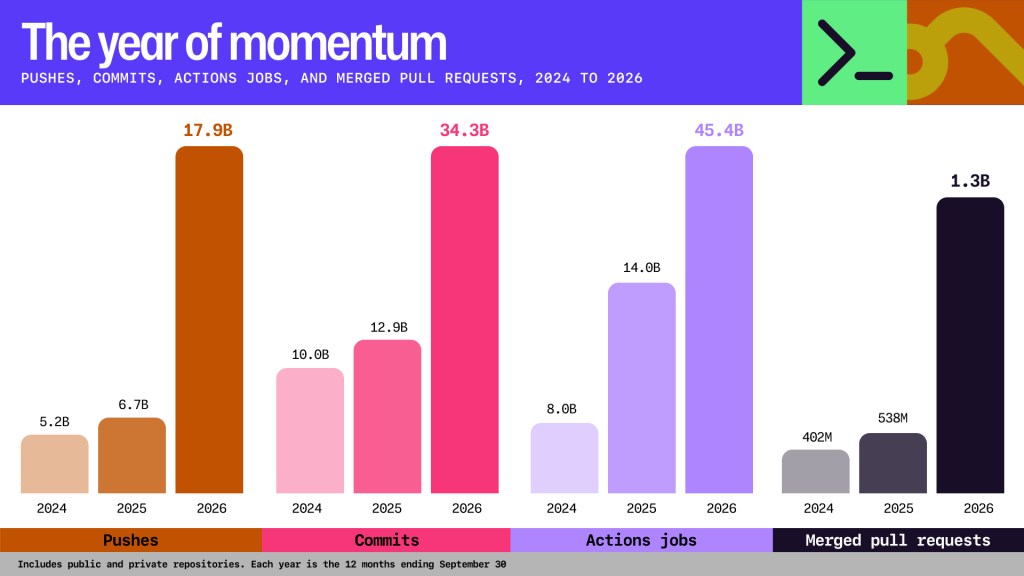
Underpinning these advancements is GitHub's infrastructure investment. This year alone, they added 4 million CPU cores, 160 PB of high-speed storage, and 50 Tb/s network capacity. They're also migrating to a multi-region deployment in Azure while maintaining exceptional traffic levels worldwide. These investments set the stage for more growth as the software development landscape continues to evolve.
Written by urgent.news from GitHub Blog's reporting — not their text. Machine-written — may contain errors; check the original before relying on it.