Ghana must not confuse access to AI tools with readiness for AI-powered education – KNUST lecturer
Coordinator of AI Courses at the Kwame Nkrumah University of Science and Technology (KNUST), Prof. Eric Appau Asante, is advocating for the establishment of practical national and institutional guidelines to regulate the use of AI in education. This he says will help avoid poorly governed technologies becoming embedded in teaching and learning practices. He warned […]
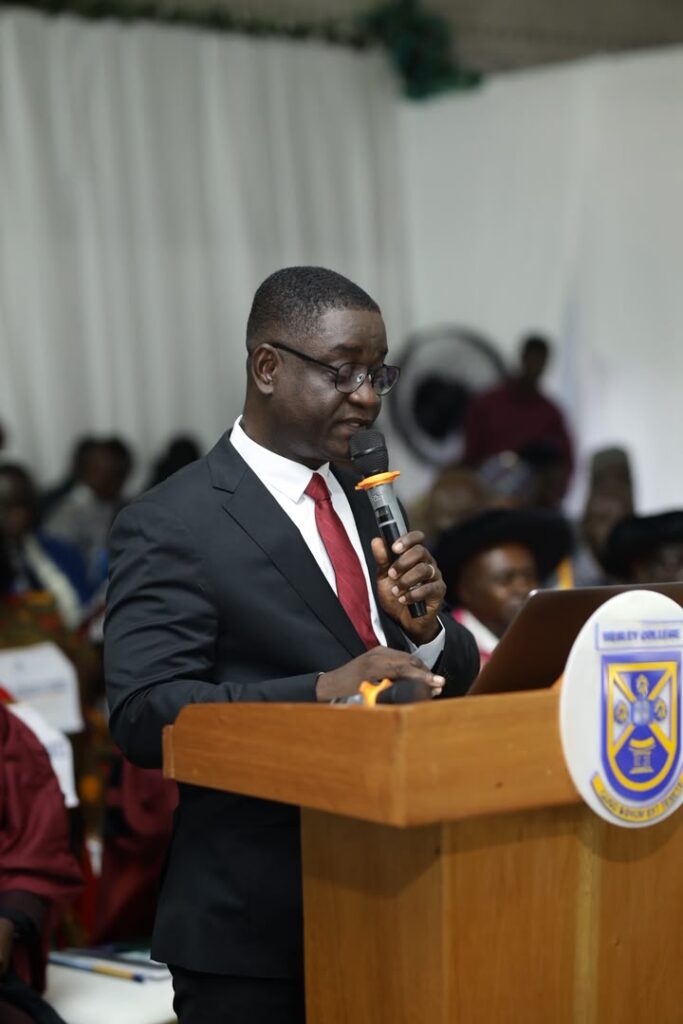
Prof. Eric Appau Asante, coordinator of AI courses at Kwame Nkrumah University of Science and Technology (KNUST), is urging the creation of practical national and institutional guidelines for regulating AI use in education. He warns that unregulated integration could exacerbate existing inequalities between well-connected urban schools and resource-limited rural institutions.
Speaking at the 17th Congregation of Wesley College of Education, Prof. Asante stressed that AI-generated educational content must align with Ghana's curriculum, local languages, cultural experiences, and available teaching materials.
The KNUST lecturer emphasized that AI alone cannot solve the fundamental issues facing Ghana's education sector; it cannot fix broken classrooms, provide electricity to underserved areas, or replace skilled teachers. He cautioned against hastily adopting technologies without considering the realities faced by schools nationwide.
Prof. Asante challenged Wesley College of Education to lead by example in responsible, teacher-focused AI integration, citing the EU's AI Act, which classifies certain AI applications in education as high-risk due to potential errors and bias affecting learners' futures.
He urged educational authorities—including colleges of education, the Ghana Tertiary Education Commission, the National Teaching Council, curriculum authorities, school leaders, and policymakers—to incorporate AI literacy into teacher preparation programs rather than treating it as an occasional training activity. Prof. Asante argued that AI should be measured by improvements in learners' opportunities, not merely the introduction of more technological tools into classrooms.
He concluded by stating that a nation equipping its classrooms with AI while neglecting its teachers is not transforming education; it is simply digitizing its shortcomings.
Written by urgent.news from MyJoyOnline Ghana's reporting — not their text. Machine-written — may contain errors; check the original before relying on it.