Former USFK commanders raise concerns over command structure after OPCON transfer
WASHINGTON — Two former U.S. Forces Korea (USFK) commanders on Tuesday raised concerns that Korea's envisioned wartime operational control (OPCON) transfer could weaken the bilateral alliance and undermine military effectiveness if Seoul and Washington fail to preserve a robust combined command structure. In an online symposium hosted by the Institute for Corean-American Studies, retired Gen.…
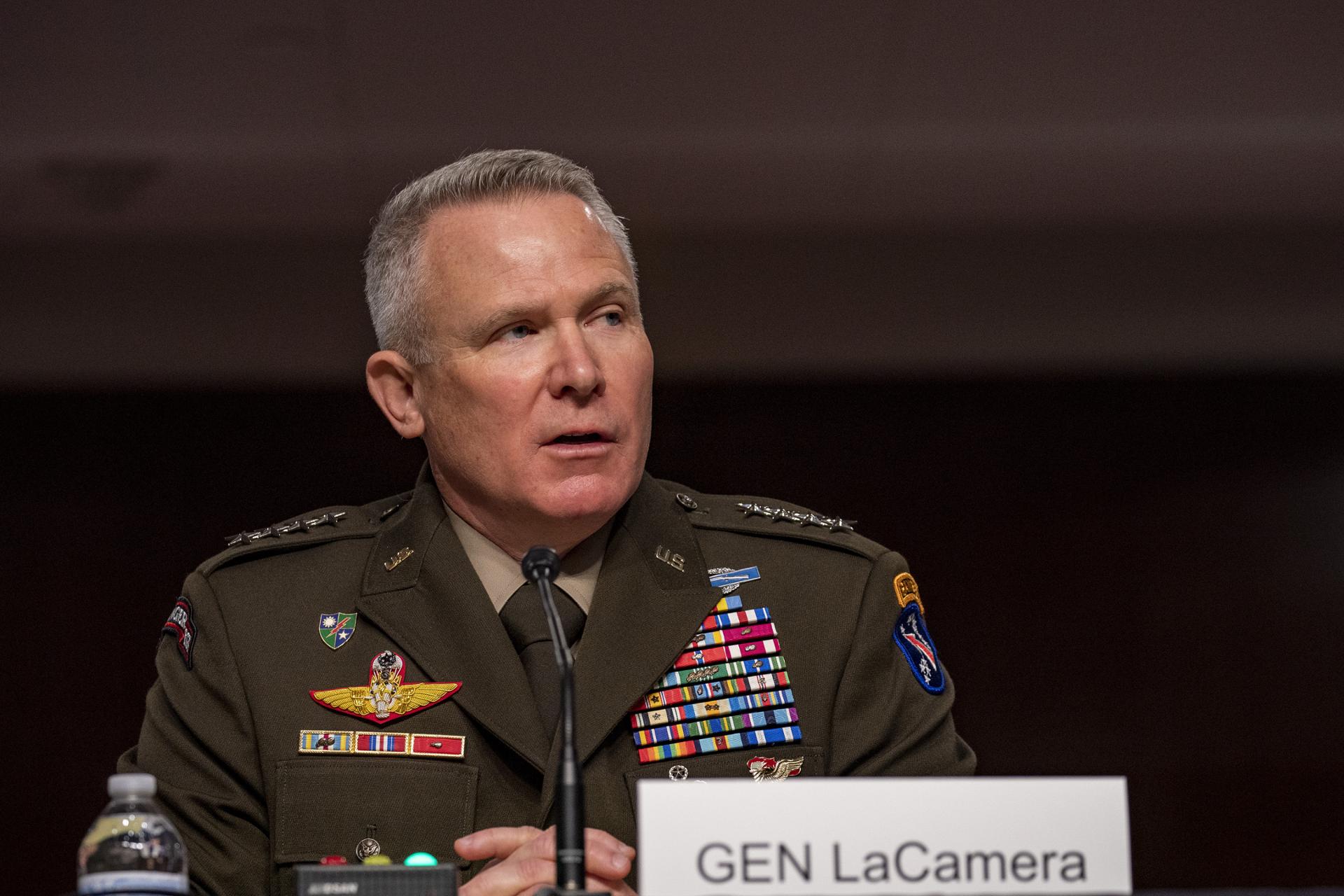
Washington - Two former leaders of U.S. Forces Korea (USFK) voiced worries on Tuesday that the planned transfer of wartime operational control (OPCON) to South Korea might weaken the alliance between the two nations and impair the military's effectiveness if Seoul and Washington do not maintain a strong combined command structure.
Addressing an online forum organized by the Institute for Corean-American Studies, retired General Walter Sharp cautioned that modifications to the Korea-U.S. Combined Forces Command (CFC) post-OPCON transfer could have significant implications for the long-standing alliance. Sharp emphasized that the combined essence of CFC would disappear, potentially leading to a significant reduction in cooperation and collaboration between the U.S. and Korea.
Sharp also questioned the future of the CFC as a genuine bilateral partnership, particularly concerning the roles of the Military Committee Meeting and Security Consultative Meeting, as well as the approval process for wartime operational plans. Retired General Paul LaCamera, another former USFK commander, echoed similar concerns about the potential changes in the command arrangement.
Written by urgent.news from The Korea Times's reporting — not their text. Machine-written — may contain errors; check the original before relying on it.
This story
This is one outlet's version. Read the fullest account.