Finding India’s Next AI Goldmine
A recent debate over investors’ lack of interest in India’s hardware and deeptech bets has brought some longstanding challenges in…
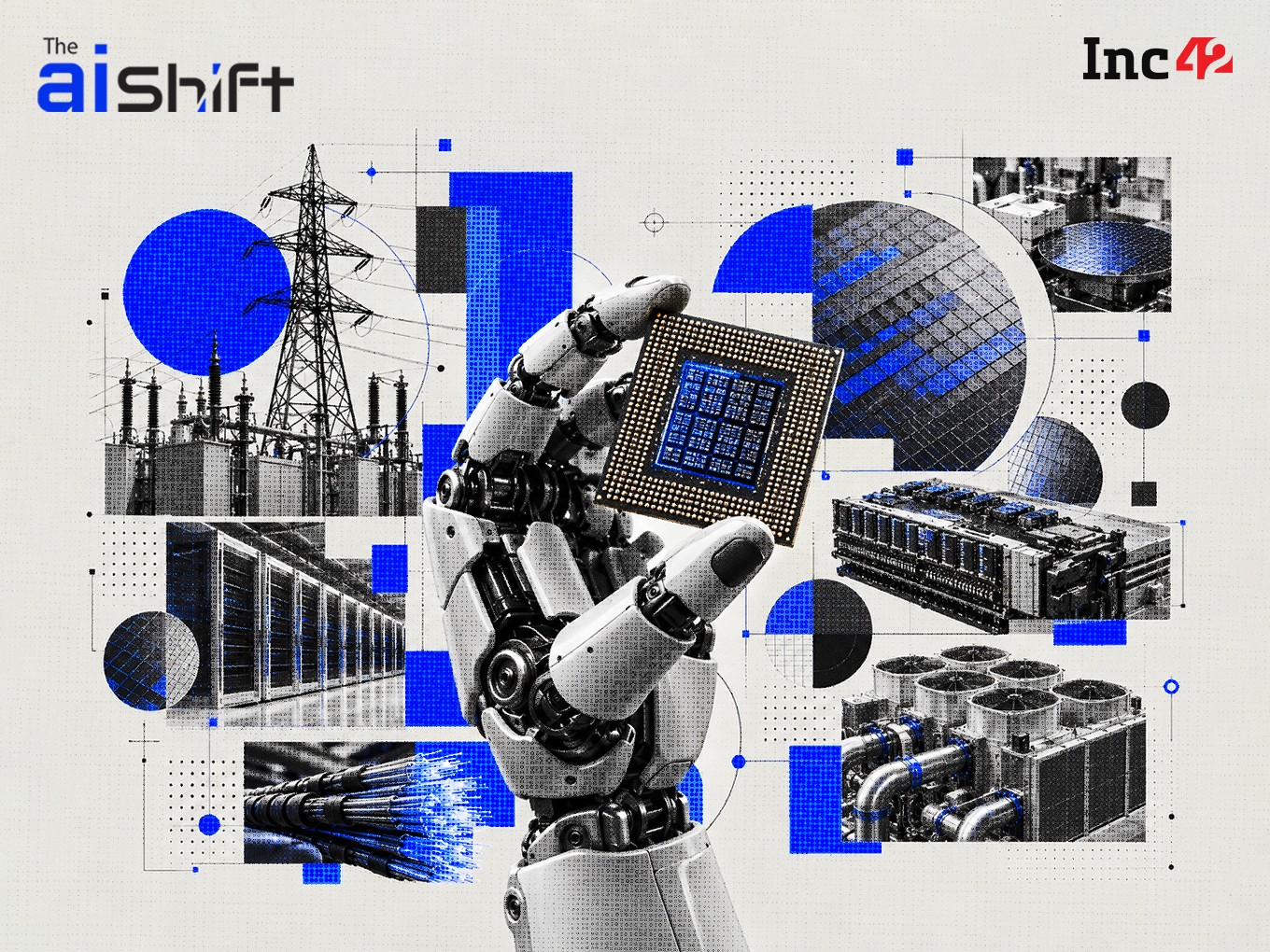
A recent discussion on Indian investors' hesitance towards hardware and deep-tech ventures has brought to light several ongoing challenges in the sector. These include limited patient capital, early distribution pressures from limited partners (LPs), collective investing, and the challenge of evaluating long development and qualification periods.
As AI infrastructure transitions from a pure compute race to focusing on layers that optimize system efficiency, India is on the verge of a substantial opportunity. However, merely increasing computational power will not suffice for India to become a global AI leader. Opportunities lie in supporting infrastructure, such as data centres, which require more efficient power delivery, improved cooling systems, and faster connections between processors and memory.
These factors directly impact the real-world performance and total cost of ownership of AI infrastructure. Recognizing that India cannot compete across the entire AI hardware stack, the focus should be on developing specialized technologies. In a conversation with venture capitalists tracking the homegrown deep-tech ecosystem, we explored which layers offer the most significant multiplier effects and what India needs to establish its position in them.
Power delivery emerged as a primary opportunity, with VCs emphasizing the need to improve power efficiency as AI systems become more power-dense. Natasha Malpani, founder and general partner of Boundless Ventures, suggested focusing on power electronics, grid-edge systems, and cooling technologies tailored for hot and humid environments in Indian data centres.
Liquid-cooling systems are crucial for managing heat generated by high-density computing equipment, leading to demand for coolant distribution units, heat exchangers, and direct-to-chip cooling technology. Moving data between processors and memory presents another opportunity, where India should concentrate on interconnect and memory layers within AI chips.
This includes high-speed SerDes circuits, PCIe and CXL controllers, chiplet interconnects, and memory expansion silicon. Standards-based technologies can enable new entrants to enter multiple chip ecosystems without directly challenging established GPU platforms. The multiplier effect here lies in licensing valuable semiconductor intellectual property (IP) to multiple manufacturers, potentially earning royalties from global shipments.
Additionally, India's strong semiconductor and systems-design talent can support custom embedded-system design, verification, and testing. However, value capture requires moving beyond services into components, advanced materials, proprietary process equipment, and product and system IP, where value capture will be concentrated.
Several Indian startups are already working in these areas, although their level of commercial maturity and technology ownership varies. For instance, Bengaluru-based C2i Semiconductors has developed power-management technology for AI data centres, while Infineon recently acquired C2i to strengthen its power-management capabilities and expand its R&D presence in India.
In thermal management, Ahmedabad-based KuhlTherm is developing liquid-cooling systems for high-density computing, including rear-door heat exchangers and coolant distribution units. Meanwhile, LightSpeed Photonics is focusing on developing optical interconnect technology for AI and high-performance computing, raising $6.5 million in a funding round led by pi Ventures.
The government is also supporting the semiconductor design ecosystem through schemes like the Design Linked Incentive, which has supported 24 chip-design projects, resulting in 16 tape-outs, six fabricated chips, and 10 patents. This support has engaged over 1,000 specialized engineers and developed more than 140 reusable technologies.
Written by urgent.news from Inc42's reporting — not their text. Machine-written — may contain errors; check the original before relying on it.