Coding agents explained: how AI agents boost development
Learn how AI coding agents plan, write, and test code, compare leading tools, and manage security, API integrations, and multi-agent coordination.
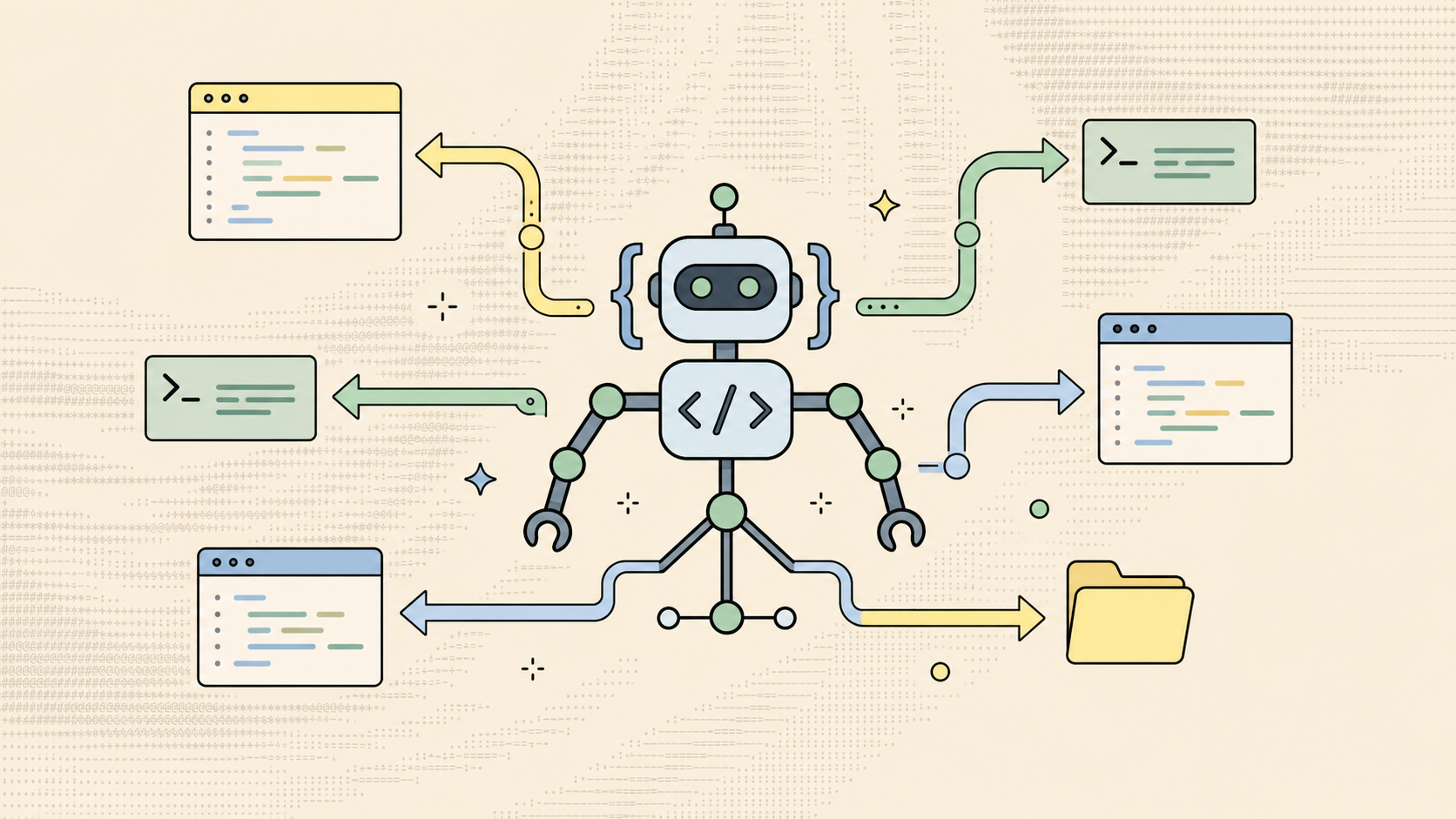
Coding agents are innovative AI tools that can autonomously plan, execute, and evaluate software development tasks with limited human supervision. At their core, these agents are large language models integrated with a runtime environment capable of interacting with code repositories, executing tools, running shell commands, and applying changes across multiple files within a project.
The key aspect of coding agents lies in their operational scope, which determines whether they act as a mere suggestion engine or a fully autonomous agent that executes changes and reports outcomes. This distinction is crucial, as the agent's ability to act independently and provide a summary of its actions is what sets it apart from traditional code completion tools that work on a single file.
The internal working mechanism of coding agents involves several key steps. Initially, the agent gathers context by reading relevant files, configuration, and recent commits in the codebase, limited by the model's context window and the runtime's indexing capabilities. Next, it forms a plan, detailing a sequence of changes, often making assumptions that may not be verifiable from the repository alone.
Then, the agent applies edits, installs dependencies, and runs commands through predefined tool calls or external servers, as defined in the Model Context Protocol (MCP).
After editing the code, the agent verifies its changes by running tests or building the application, interpreting the output as feedback rather than a definitive assessment. If the verification fails, the agent may retry within its step or token budget before returning a summary, diff, and any unresolved blockers that necessitate human intervention. This iterative process continues until the task is completed or the agent's step budget is exhausted.
While coding agents offer significant benefits, such as automating mechanical refactors, enhancing test coverage, facilitating migration work, and providing first-pass investigations of unfamiliar code, they also come with risks. Incorrect, insecure, or incomplete code can be generated, especially for tasks outside the agent's area of expertise.
Security risks arise when agents handle credentials, write configuration files, or log sensitive data without explicit boundaries. Additionally, context gaps can lead to conflicts between the outputs of multiple agents working on interdependent aspects of a project, necessitating human review and oversight.
To mitigate these risks and ensure reliable results, it is essential to implement guardrails. These include defining scope limits for the agent's actions before execution, using credential separation with short-lived tokens under role-based access control (RBAC), conducting independent verification of tests and decisions, implementing decision checkpoints for critical tasks like schema changes or dependency additions, and maintaining an audit trail of all tool calls and file changes for traceability.
By carefully managing these aspects, organizations can harness the potential of coding agents while minimizing associated risks.
Written by urgent.news from HackerNoon's reporting — not their text. Machine-written — may contain errors; check the original before relying on it.