Cloudy With a Chance of Incineration: Predicting Weather on Distant Worlds
How scientists decode climate light-years away The post Cloudy With a Chance of Incineration: Predicting Weather on Distant Worlds appeared first on Nautilus .
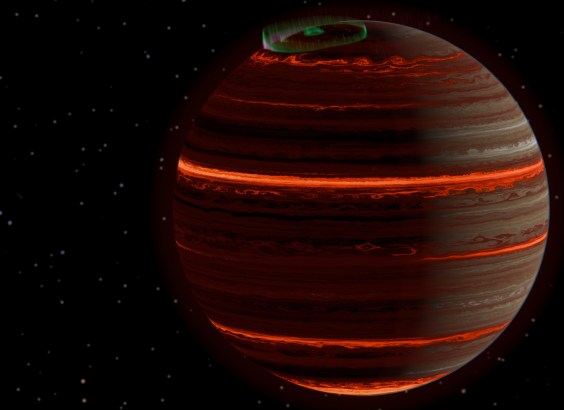
Weather on distant planets reveals vital clues about their formation, composition, and potential to harbor life. However, obtaining detailed meteorological data about celestial objects beyond our solar system is challenging due to their faint light and vast distances. A recent study published in Astronomy & Astrophysics introduces a novel method to decode these faint signals, providing valuable insights into the weather and driving forces on faraway worlds.
The technique, based on Principal Component Analysis (PCA), applies existing atmospheric physics principles to interpret light patterns from SIMP 0136, a brown dwarf that formed like a star but never ignited. By analyzing data captured by the James Webb Space Telescope, researchers observed that SIMP 0136's weather is primarily influenced by temperature fluctuations and vertical cloud formations, with alternating bands of hotter, thinner clouds and cooler, thicker clouds.
The temperature on this sub-stellar object can reach up to 1,243 Kelvin (1,778°F). Situated 20 light-years away in the Pisces constellation, SIMP 0136 is approximately 200 million years old and 13 times the mass of Jupiter. Its rogue status, without orbiting a star, makes it an intriguing subject for further study. Understanding its weather patterns can aid the exploration of other brown dwarfs and gas giant planets.
Study author Merle Schrader expressed amazement at the ability to decipher distant weather systems through a single pixel, while emphasizing the potential for applying this technique to other exoplanets.
Written by urgent.news from Nautilus's reporting — not their text. Machine-written — may contain errors; check the original before relying on it.