Bug Unknown and Weevil Found in Colombia Could Provide a Valuable Service in Australia
In 1984, the wild passion fruit species Passiflora foetida, a plant native to Central and South America, was introduced to Australia. Its rapid growth allows it to form dense mats that cover trees and shrubs and smother the vegetation growing underneath. Over time, it became a serious environmental problem because it spread across large areas […]
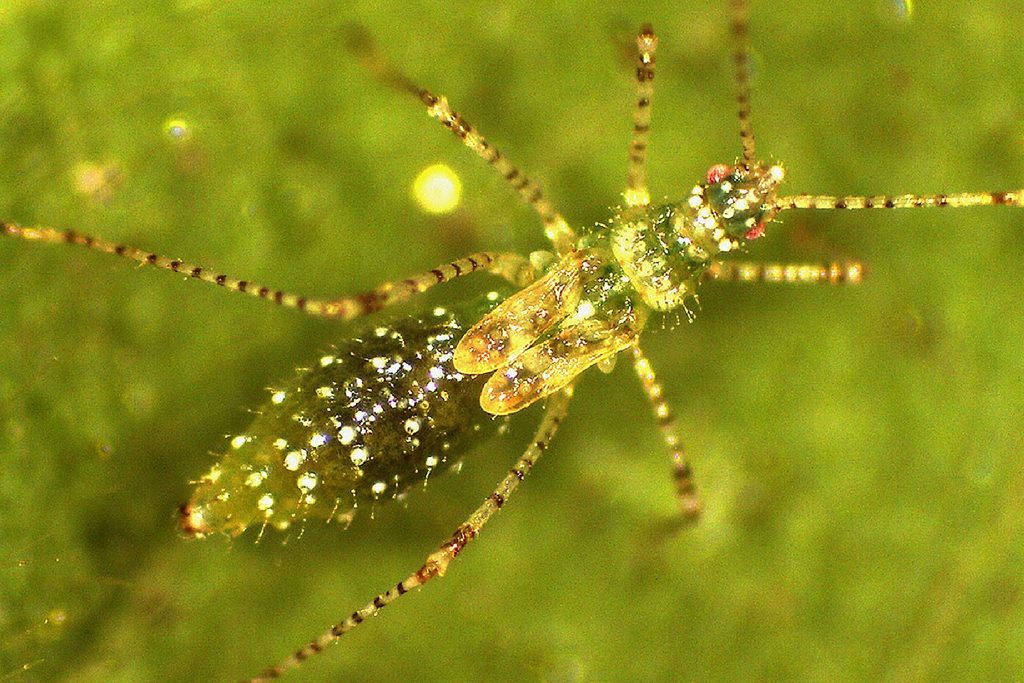
A previously unidentified insect species, Pronotacantha maculata, and a weevil called Philonis inermis, discovered in Colombia, may prove beneficial in managing invasive wild passion fruit in Australia. The wild passion fruit, native to Central and South America, self-propagates and smothers vegetation, causing environmental concerns in Australia's northern regions, including the Kimberley region and Dampier Peninsula.
Pronotacantha maculata, a bug measuring just 3mm, bears a resemblance to a mosquito and has uniquely spotted legs and a pointed projection on its thorax. It was identified as a new species during a study conducted by researchers Alejandra Clavijo from the National University of Colombia. Philonis inermis, the weevil, has a compact, robust black body with beige and reddish-brown scales forming transverse stripes on its elytra, and was also identified as a new species for Colombia.
The potential of these species as biological control agents is being studied under laboratory conditions to determine if they can feed on the invasive passionflower without negatively impacting other plants. Researchers are examining their life cycles, genetic differences, and feeding habits to assess their effectiveness in controlling the spread of wild passion fruit in Australia.
Written by urgent.news from Colombia One's reporting — not their text. Machine-written — may contain errors; check the original before relying on it.