Bitcoin has soared 50% on average after midterms. The S&P 500 has gained 15%.
Both bitcoin and the S&P 500 have historically produced positive returns in a year after midterms. BTC's pattern, however, could also be explained by the four-year halving cycles.
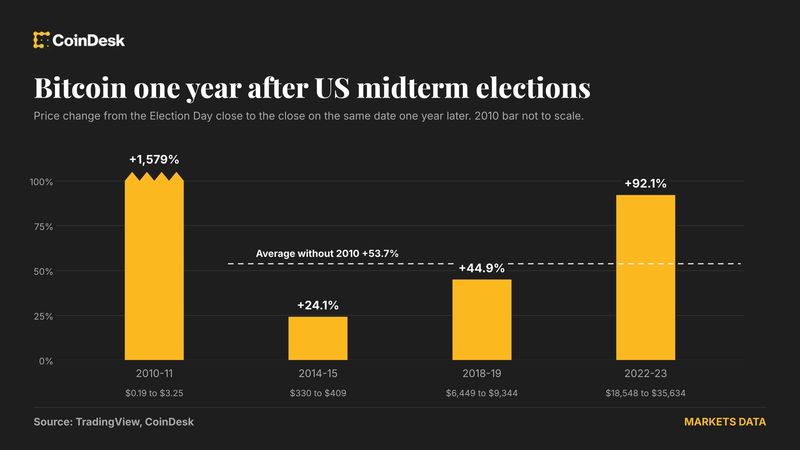
Bitcoin has gained an average of 50% in value following U.S. midterm elections, following a pattern observed since its creation in 2009. Excluding the 2010 midterm, which was a smaller and less reliable data point, bitcoin has risen by an average of 53.7% in the year following each subsequent midterm. This performance could indicate a new upward trend for the cryptocurrency, given the recent subdued price action around $80,000.
Analysts suggest that this may be a favorable time to invest in and hold onto bitcoin. However, experts caution that the historical data is too limited to draw definitive conclusions, and the post-midterm surges may be more related to the four-year cycle of bitcoin's price movements than U.S. political events. The S&P 500, a broader stock market index, has also shown a positive trend in the year following midterms, with an average gain of 15.17% since 1950, compared to 7.3% in other years.
This bullish outlook for risk assets could potentially benefit bitcoin and other cryptocurrencies. The upcoming 2026 midterm elections may also impact the political landscape and financial policies, potentially influencing the trajectory of bitcoin and other risk assets.
Written by urgent.news from CoinDesk's reporting — not their text. Machine-written — may contain errors; check the original before relying on it.