Bilanz 2025/26: Extremes Niedrigwasser „lässt sich nicht wegbaggern“
Das zu Ende gehende Jahr war geprägt von extremem Niedrigwasser. Experten führen dies zum Teil auf den Klimawandel zurück - aber auch auf die Begradigung und Vertiefung von Flüssen.
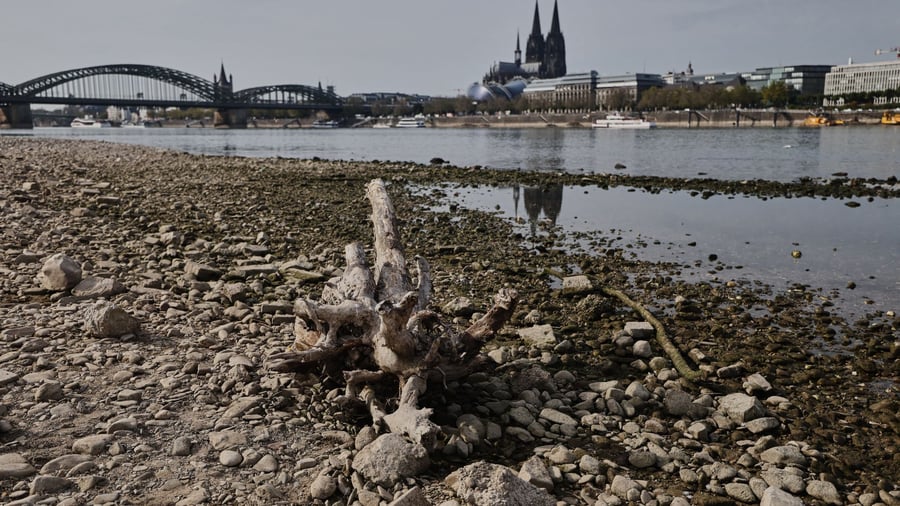
In the 2025/26 hydrological year, German rivers experienced significant low water levels, with nine major river basins affected. Such low water events were more frequent than in previous years, according to the Science Media Center's assessment of the hydrological year. The low water levels were influenced by dry soils, depleted groundwater, and rivers, which typically refill during the winter when evaporation is minimal.
However, winter 2025/26 was drier than usual, making the situation particularly challenging. The Science Media Center drew on data from the Niedrigwasserinformationssystem (NIWIS), which classified around one-fifth of river flows as "very low" or "extremely low" in January 2026, and 35% in August and September. This classification was based on comparing current discharges with values from the same season between 1991 and 2020.
Extremely low flow levels were defined as those falling in the bottom 1% of comparison values, while very low flow levels were those in the bottom 5%. The extreme drought affected not only the rivers but also the soils, making it the most severe since records began. The prolonged and intense rainfall events required to refill the water bodies are yet to be seen, but projections suggest that Germany will still face significant disparities in water distribution between regions and seasons.
Beveled rivers face the most severe consequences, with human intervention such as straightening, shortening, and engineering them for water transport playing a role. The low water levels have detrimental effects on the ecosystems of the rivers, with low water and high temperatures being particularly critical. The most effective measure to protect river ecosystems and biodiversity is revitalizing the natural flow dynamics of the rivers.
A climate-adapted transportation policy would involve aligning infrastructure and shipping with natural water conditions, such as using smaller ships with lower draft. Building dams is not a solution, as they destroy the river landscape, increase evaporation, and shift the drought problem downstream.
Written by urgent.news from Handelsblatt's reporting — not their text. Machine-written — may contain errors; check the original before relying on it.