Australia must recruit hundreds more to crew Aukus submarines, retired admiral warns
As USS Colorado showcases the program in Perth, Peter Briggs says personnel is just one of the ‘huge issues’ it faces Get our breaking news email , free app or daily news podcast Australia faces an uphill battle to recruit and train enough naval personnel to serve on submarines planned for the future fleet of nuclear-powered vessels under the controversial $368bn Aukus deal , a retired admiral…
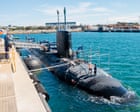
Australia faces a critical challenge in recruiting and training sufficient naval personnel to operate the nuclear-powered submarines under the Aukus defense deal, warns retired admiral Peter Briggs. The USS Colorado, a Virginia-class submarine, recently visited HMAS Stirling in Perth for maintenance and to aid Australian expertise in crewing these larger vessels.
These new submarines, which could range from three to five in number, require up to 134 crew members, nearly triple the number needed for the older Collins-class submarines. The Royal Australian Navy currently has around 230 personnel in various stages of training for US nuclear-powered submarines, with an expected completion of 400 trained personnel by 2030.
However, Briggs urges a more aggressive recruitment plan to accommodate the increased crew needs. He suggests that Australia may eventually need a submarine arm of 3,000 personnel to manage the transition from the Collins-class to the future SSN-AUKUS submarine. The personnel side is a significant issue, but not the only one, according to Briggs.
Maintaining two different submarine types would complicate training, logistics, maintenance, and spare parts arrangements. The Australian government has not provided updates on recruitment targets or the status of a workforce development program. The recruitment process is further complicated by the need for numerous trades, from radio and sonar operators to cooks and electricians.
The USS Colorado will remain at HMAS Stirling until late 2027, during which time it will help build Australian skills and infrastructure for its nuclear fleet. US submarines carrying nuclear weapons could potentially rotate through Australian ports despite a non-proliferation commitment, although the US government has not confirmed this.
The demands of living and working in confined spaces for extended periods, such as the tight sleeping arrangements and "hot racking" system, present additional challenges for recruitment officials. Despite these challenges, nuclear submarines offer the advantage of not needing refueling, providing effectively infinite range, and relying on food and toilet paper as the primary limits of endurance.
Written by urgent.news from The Guardian's reporting — not their text. Machine-written — may contain errors; check the original before relying on it.