Astronomers found a mysterious object beyond Neptune, and it could be a new dwarf planet
The Vera Rubin Observatory has discovered a suspected dwarf planet beyond Neptune's orbit. If confirmed, it would be the sixth known dwarf planet in our solar system.
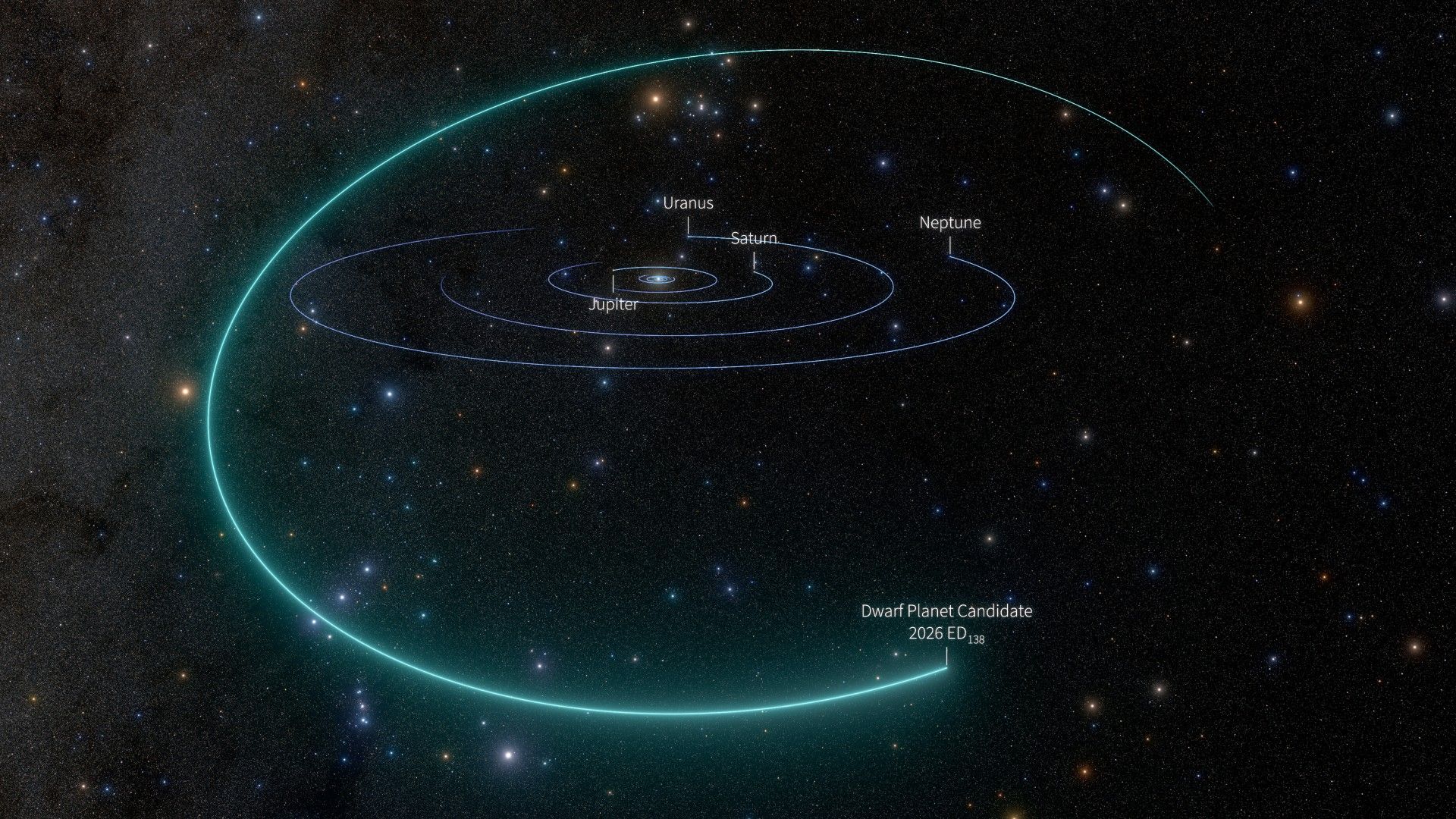
Scientists have discovered a potential new dwarf planet beyond Neptune using data from the Vera Rubin Observatory. Known as 2026 ED138, this icy object is estimated to be between 600 and 1500 kilometers in diameter, placing it firmly in the size range capable of being spherical due to its own gravity. If confirmed, 2026 ED138 would be the sixth known dwarf planet in our solar system, following Pluto, Ceres, Eris, Haumea, and Makemake.
The discovery was made by Matthew Holman at the Center for Astrophysics | Harvard & Smithsonian, who was analyzing previously collected Rubin data using a search algorithm he developed with colleague Kevin Napier. Holman described the initial moment as one of "excited disbelief" due to the rarity of such objects. The Vera Rubin Observatory, located in Chile, captured multiple images of 2026 ED138 over a period of six months, with the object visible in each frame.
Its orbit is tilted by about 25 degrees relative to the solar system's plane, suggesting it experienced a gravitational interaction with Neptune that altered its path. Currently situated around 46 astronomical units from the sun, 2026 ED138 is beyond Pluto's average distance, placing it in the outer reaches of our solar system. Confirmation as a dwarf planet will require further infrared observations, potentially facilitated by NASA's James Webb Space Telescope.
Written by urgent.news from Space.com's reporting — not their text. Machine-written — may contain errors; check the original before relying on it.