Asia’s richest country to raise retirement age to 65 a year ahead of timeline
Singapore will raise its retirement age to 65 from 64 and its re-employment age from 69 to 70 in January 2029, one year earlier than the original schedule of 2030.
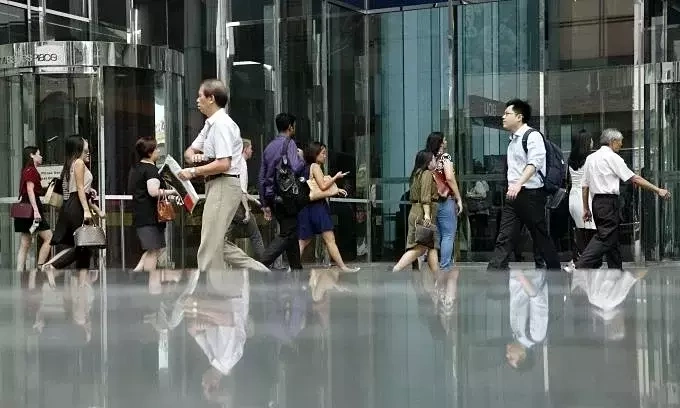
Singapore, the wealthiest country in Asia by GDP per capita, has announced plans to raise its retirement age to 65, two years earlier than initially scheduled. This decision, outlined in a report by the Tripartite Workgroup on Senior Employment, aims to provide senior workers with more assurance of continued employment if they choose to work.
The workgroup, comprising representatives from the Ministry of Manpower, the National Trades Union Congress, and the Singapore National Employers Federation, suggests six measures to support senior workers, all of which have been approved by the government. These measures include extending wage support for employers who re-employ older workers, increasing assistance for lower-wage senior workers, and providing funding for employers to create flexible job opportunities.
In Singapore, which has become a super-aged society with 21.4% of its population aged 65 and above, labor force participation among residents declines significantly after the age of 50. The workforce participation rate drops from 85.9% for those aged 50-54 to 68.4% for those aged 60-64 and 50.2% for those aged 65-69. Despite many older workers desiring to remain economically active, the workforce participation rate has been lower than the average among the top five OECD economies.
The government's report suggests that some workers leave the labor force earlier than desired. The workgroup's recommendations aim to help seniors find meaningful and sustainable employment through flexible work arrangements, such as continuing the same job or transitioning to different roles. Further details on the implementation of these recommendations are expected to be released in the first half of 2027.
Written by urgent.news from VnExpress Business's reporting — not their text. Machine-written — may contain errors; check the original before relying on it.