Arab parties set sights on removing Netanyahu as Israel counts last votes
Politicians from Israel 's Arab minority set their sights on removing Prime Minister Benjamin Netanyahu on Wednesday as they savoured an election result that increases their presence in parliament. With most ballots counted, neither Mr Netanyahu nor opposition parties led by former army general Gadi Eisenkot had a majority in the 120-member Knesset. The two rival camps were hovering around 50…
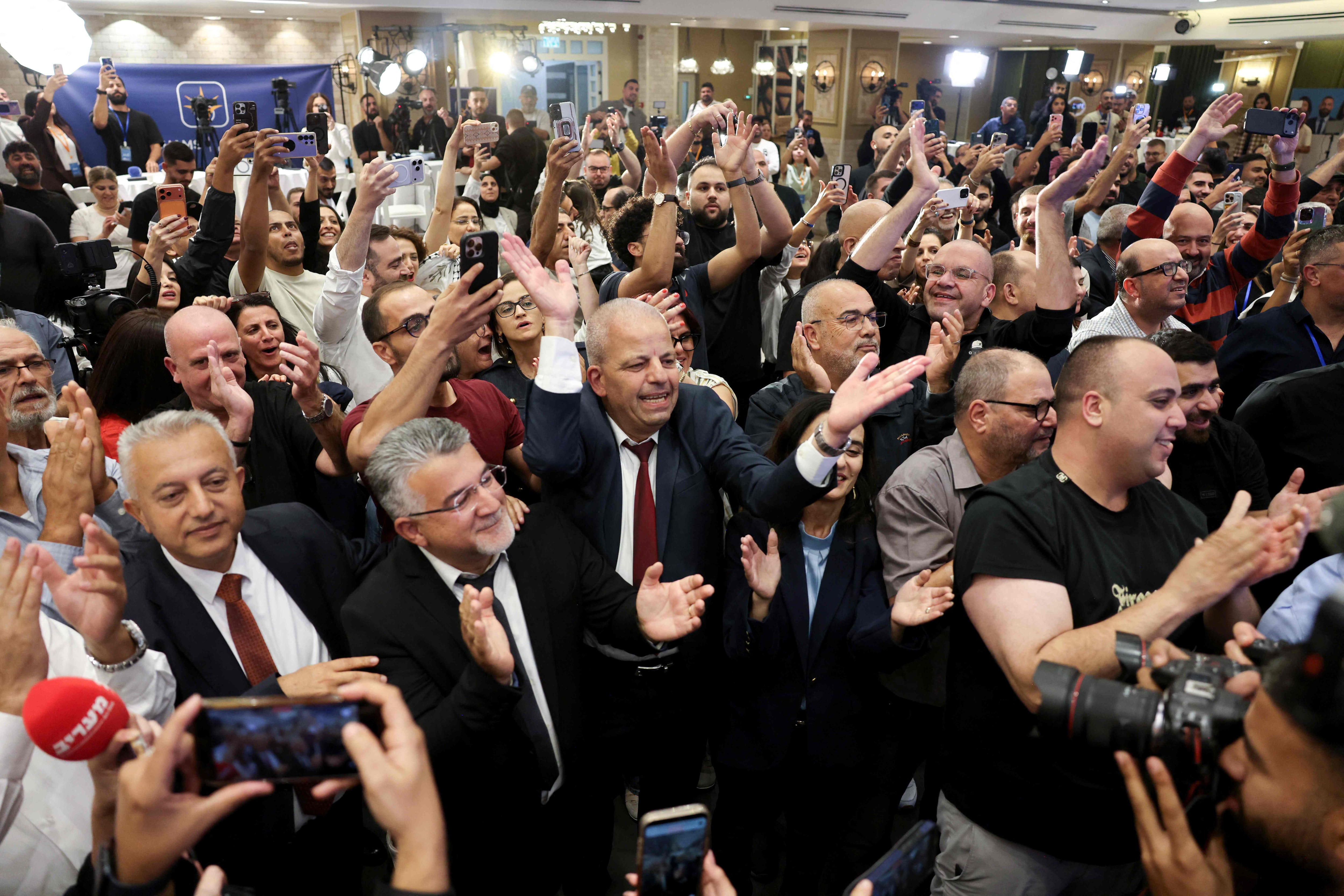
As Israel counted its final votes on Wednesday, Arab parties were set to make a significant push in the country's politics by targeting the removal of Prime Minister Benjamin Netanyahu. While neither Netanyahu nor opposition leader Gadi Eisenkot's bloc had a majority in the 120-member Knesset, the election results indicated a potential shift in power dynamics. Arab parties were projected to secure around 18 seats, up from 10 in the previous election, which could grant them a key role in coalition negotiations.
Election turnout reached 77.7%, the highest since 1999, with increased participation from Arab communities. Notable Arab party leaders, including Yousef Jabareen and Ahmad Tibi, called for a "true and equal partnership" between Jewish and Arab Israelis, pledging support for an Eisenkot government but asserting their unwillingness to work alongside Netanyahu.
Despite the potential for a new government under Eisenkot, forming a coalition proved a challenging task due to political risks associated with alliances with Arab parties amidst the highly sensitive Israeli-Palestinian conflict.
While a formal coalition may not be guaranteed, Arab parties could potentially tolerate a minority government. However, Netanyahu's continued presence, despite facing numerous scandals and crises, remains a strong possibility, as his Likud party is likely to remain the largest single force in the Knesset. Netanyahu's Likud party scored the most votes of the Arab parties, reinforcing his base of support.
The election results intensified concerns about Netanyahu potentially using the situation to advance his policies, potentially escalating tensions with Iran. The campaign was marked by a focus on national security and belligerent rhetoric towards Iran, with Netanyahu pledging to confront Iran's threats.
The political landscape also saw the rise of opposition leader Gadi Eisenkot, who described Netanyahu as a prime minister without a mandate and called for an end to using Israeli security for political gain. Netanyahu, despite his belligerent stance, appeared to lean on the support of former allies, such as Naftali Bennett and Yair Lapid, though their influence waned during the campaign.
As the formation of a government unfolded under Israel's strict sequence of legal windows, President Isaac Herzog prepared to consult with all groups in the coming days, emphasizing the necessity for a functioning government to address the country's pressing issues.
Written by urgent.news from The National Business's reporting — not their text. Machine-written — may contain errors; check the original before relying on it.