According to Harvard, 2,200 S’poreans may have died from the 2015 haze. What could the 2026 toll be?
Disclaimer: Unless otherwise stated, any opinions expressed below belong solely to the author. Following the particularly severe haze episode in 2015, when skies over much of Southeast Asia were blanketed in smoke for many days between Jun and Oct, researchers at Harvard attempted to estimate the impact of the extraordinarily polluted air on health and […]
According to researchers at Harvard, the 2015 Singapore haze may have caused approximately 2,200 premature deaths, although this figure comes with a significant uncertainty range between 600 to 3,800 fatalities. This estimate was based on the observed increase in all-cause mortality by 1% for every additional 1 µg/m³ of annual-average PM2.5 concentration in the air during the haze season.
In the current year, the 2026 haze episode, while still severe, has seen lower peaks compared to 2015. The highest hourly PM2.5 reading was 288 µg/m³, a 39% decrease from 471 µg/m³ in 2015. Additionally, the highest daily PSI was 230, a 29% drop from 322 in 2015. However, for the Sep to Oct period, the average concentration of particulate matter was nearly identical at around 56 µg/m³ in both years.
Despite these lower readings, the total Singaporean population has grown by 12.2% since 2015, potentially leading to an estimated 2,500 additional deaths due to pollution exposure. When considering the increase in annual mortality rates from 19,862 in 2015 to 26,499 in 2025, the 2026 haze could potentially result in up to 3,000 Singaporean deaths.
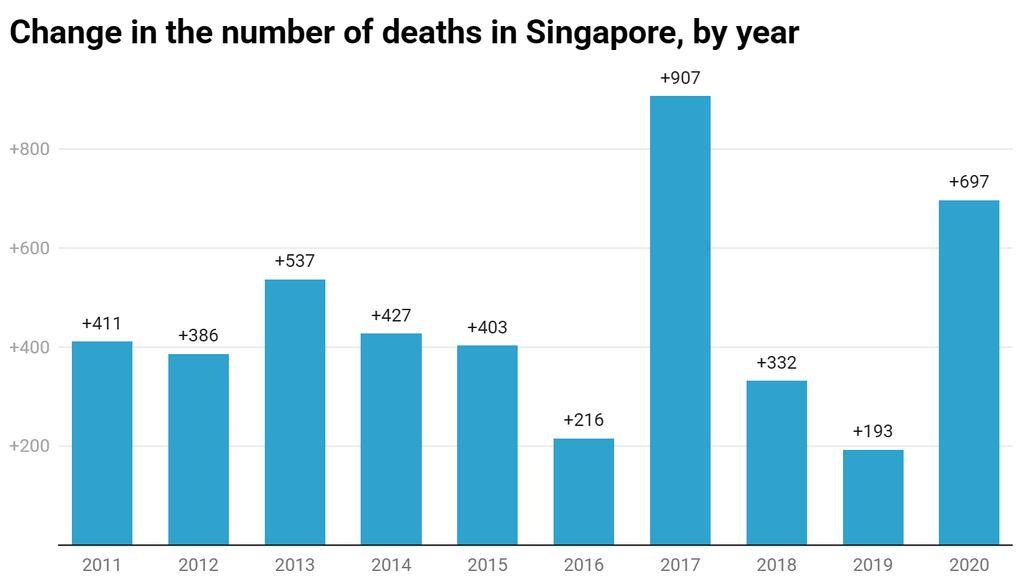
However, attributing specific deaths to the haze episode is challenging due to the multitude of factors at play. For instance, the increase in Singapore's crude death rate is attributed to an aging society, which does not necessarily indicate an increase in haze-related mortality. Additionally, the absolute death numbers may be misleading, as evident by a drop in additional deaths in 2016 after the 2015 haze, followed by an increase in 2017 due to an influenza epidemic.
While the 2026 haze may have contributed to some additional deaths, the impact appears to be lower than initially estimated by Harvard researchers. Factors such as public awareness, precautionary measures advised by authorities, and Singapore's indoor lifestyle, predominantly in air-conditioned buildings and vehicles, likely saved many lives. Nonetheless, the threat of haze remains, and failure to treat it seriously could still result in fatalities.
Written by urgent.news from Vulcan Post's reporting — not their text. Machine-written — may contain errors; check the original before relying on it.