Two years on, Karnataka beekeepers continue to face threat from small hive beetle
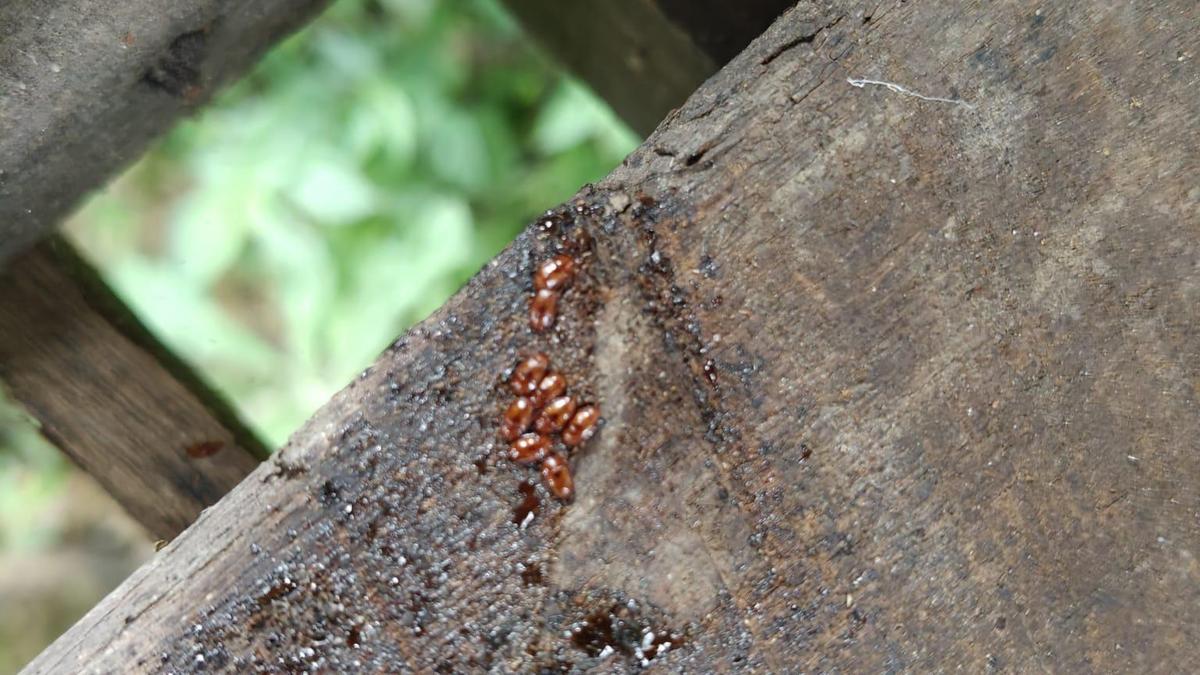
Two years after the small hive beetle infestation devastated around 800 honey bee colonies in Karnataka, the threat persists with no clear solution in sight. Experts from the University of Agricultural Sciences Bangalore (UAS-B) have identified the small hive beetle as a destructive, invasive scavenger insect that attacks honey bee colonies, bees, honey and pollen. Originally from America, the beetle was later found in China, Bangladesh, West Bengal, Assam, Odisha, Andhra Pradesh, Telangana and Karnataka.
Researchers at UAS-B have reported that the attack on bees and their colonies by the beetle has doubled in two to three years in plains-based apiculture farms. Native to the American continent, the insect first appeared in China, followed by Bangladesh, and finally reached Karnataka and surrounding states. The beetle, which resembles a bedbug and is challenging to identify, poses a severe threat to honey bee colonies in plains regions such as Bengaluru Urban, Bengaluru Rural, Mysuru, Mandya and Chamarajanagar.
Sunny Burton, a beekeeper from Sakleshpur, lost 200 colonies within 25 days after relocating his bee boxes from the hills to the plains. He expressed concern over the rapid multiplication of the beetle and its potential to affect pollination in coffee plantations, urging the Department of Horticulture to take action. Beekeepers like Apoorva B.V. are resorting to traps or poison bait to prevent attacks, but the beetle's sensitivity to these methods raises doubts about its long-term effectiveness.
While the Department of Horticulture is raising awareness among beekeepers, they acknowledge the beetle's adaptation to the environment, hoping for a solution from UAS-B researchers.
Written by urgent.news from The Hindu - Sci-Tech's reporting — not their text. Machine-written — may contain errors; check the original before relying on it.