Turning solar boom into a shared resource
Imagine a small mud house in Sindh’s Tharparkar. Imagine now a mother switching on a single light after sunset, prodding children for the umpteenth time to finish homework promptly, since the battery storing the power won’t last through the night. Some 1,432 kilometres away, towards the northeast of Tharparkar, is Islamabad, where families have a very different experience of power - both real and…
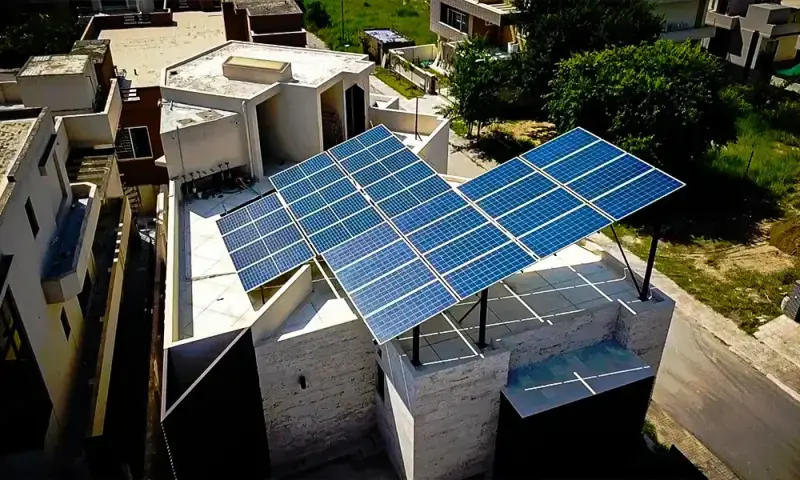
In Pakistan, the solar energy boom has created a conundrum. While some families have roofs lined with solar panels, others struggle to afford them. This surplus electricity, when not utilized, goes to waste.
Policy Research Institute for Equitable Development (PRIED) estimates that over 78% of the country's rooftop solar capacity is outside the net-metering system, meaning those who produce excess solar power are unable to share it with others in need.
To address this issue, the concept of a virtual power plant (VPP) has emerged. A VPP can bring together thousands of small, scattered rooftop solar systems and batteries, allowing them to act collectively like one large, well-managed power plant.
In the UK, a similar system is already in place. Octopus Energy's Kraken platform manages over 2 gigawatts of flexible power from over 500,000 connected devices, including electric cars. This system charges batteries and electric cars when the grid tariff is low and the network has surplus generation, reducing the cost of driving an electric car to about £0.02 a mile.
A similar approach could work in Pakistan. In Tharparkar, some neighbours are already sharing electricity informally, showing willingness for a formal network. A VPP could help reduce energy poverty by allowing small solar systems to share excess power with each other, turning it into a small source of income.
In Bangladesh, SOLshare has successfully implemented a peer-to-peer microgrid system, reducing local emissions by up to 30% and increasing the income of participating households by up to 25%. This model could be adapted to Pakistan's unique context, potentially transforming the way solar energy is utilized across the country.
Written by urgent.news from Business Recorder's reporting — not their text. Machine-written — may contain errors; check the original before relying on it.