The New Stanford Prison Experiment proves nothing
Netflix's The New Stanford Prison Experiment tries to pass itself off as serious science. But the presence of cameras renders the experiment almost scientifically meaningless.
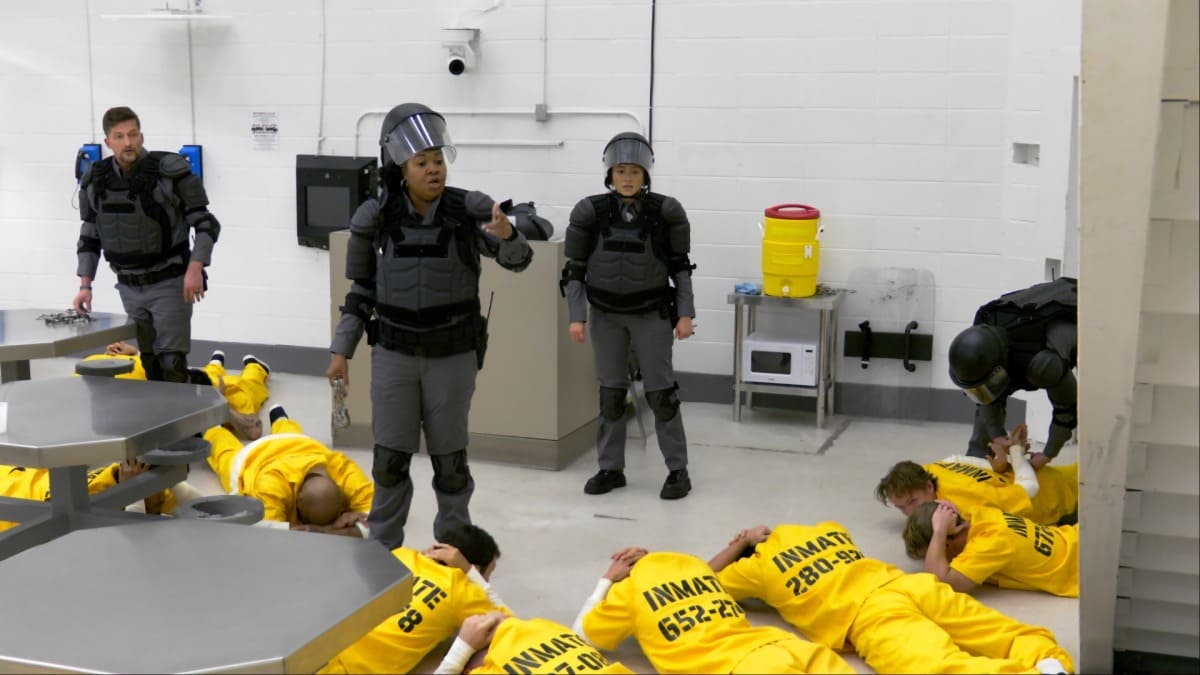
"The New Stanford Prison Experiment" is a Netflix reality series that attempts to replicate the now-infamous 1971 Stanford prison experiment. Thirty volunteers, including 22 inmates and eight guards, are placed in a real Georgia correctional facility for two weeks. Three experts - Alison Wood Brooks, a Harvard professor and behavioral scientist; Trymaine Lee, a Pulitzer Prize-winning journalist; and Michael Cantrell, a retired federal corrections officer - provide commentary throughout the series, discussing the four phases: transformation, hierarchy, role reversal, and self-governance.
As expected, the guards begin to inflict harsher punishments on the inmates, such as assigning two inmates to a 23-and-1 punishment for discussing resistance. However, these behaviors are not entirely surprising, given the history of authority figures engaging in such actions. The show aims to emphasize that power can corrupt and bring out control issues in individuals like Chet Hudson, the oil rig supervisor, or Chris Lee, a more benevolent guard.
However, some characters such as Derrick Eldridge, a self-described snitch who becomes friends with the guards, show that people can also come together and fight back against their programming.
The experts' presence, however, hinders the true storytelling, as they boil down complex social dynamics into simplistic narratives about power, control, and teamwork. The lack of privacy and the presence of cameras render the experiment almost meaningless, as it's difficult to know if participants are truly acting naturally without the awareness that their actions will be broadcast on Netflix.
Additionally, the show omits crucial discussions about race and gender dynamics, instead focusing on trivial observations. Ultimately, despite solid casting and some interesting performances, "The New Stanford Prison Experiment" is ultimately flawed due to its questionable premise, limited runtime, and overreliance on armchair psychology.
Written by urgent.news from The A.V. Club's reporting — not their text. Machine-written — may contain errors; check the original before relying on it.