Sculpture recreates odd optical effects of famed Lycurgus Cup
University of Sheffield researchers figured out how to recreate the 1600-year-old glass recipe.
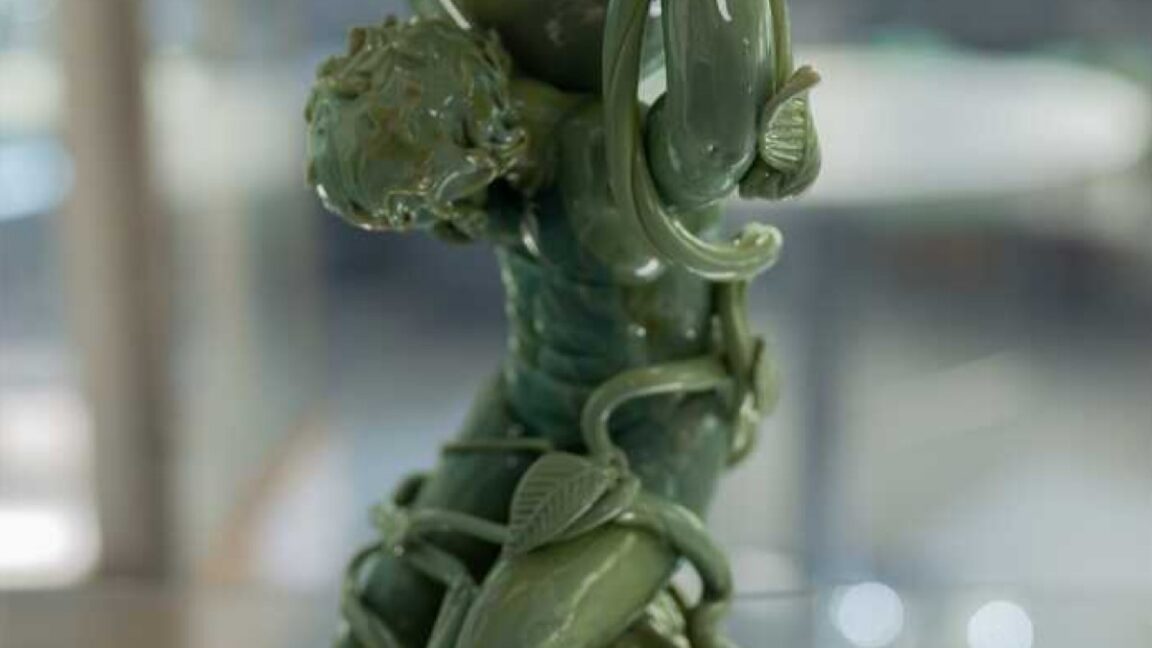
Dating back to around 400 CE and made of dichroic glass, the Lycurgus Cup is notable for its ability to exhibit different colors depending on the direction of the light. When viewed from the front, the cup appears green, while when illuminated from behind, it transforms into a deep red. University of Sheffield scientists have successfully recreated the original recipe for this unique glass sculpture, replicating the same optical effect.
Known as one of the seven glass wonders of the world, only 40 glass cage cups like the Lycurgus Cup still exist today. The enigmatic origins of the cup's exceptional color-changing properties were only unraveled in 2007 when scientists discovered that nanoparticles, specifically gold and silver particles, were responsible for the color shifts.
These nanoparticles alter the way electrons vibrate within the glass when exposed to light, causing the observed color to change based on the observer's position. This phenomenon shares similarities with the shifting colors seen in 19th-century daguerreotypes, attributed to the scattering properties of nanoparticles. The Romans achieved this effect by adding salts during the glass-making process, which contained gold atoms.
Upon melting the silicon (sand) to create the glass, these gold atoms aggregated and formed nanoparticles, ultimately resulting in the observed colors. This process is analogous to the formation of iridescent colors found in nature, such as the wings of butterflies or opals.
Written by urgent.news from Ars Technica's reporting — not their text. Machine-written — may contain errors; check the original before relying on it.