Pakistan opposes expansion of veto power, calls for equitable security council reform
Pakistan Monday told the UN General Assembly that reform of the Security Council must tackle the veto power, held by the five permanent members — US, Russia, China, France and UK — to end the 15-member body’s institutional paralysis and make it more effective and equitable. “The misuse of the veto undermines the Security Council’s effectiveness and the credibility of the UN, while giving the…
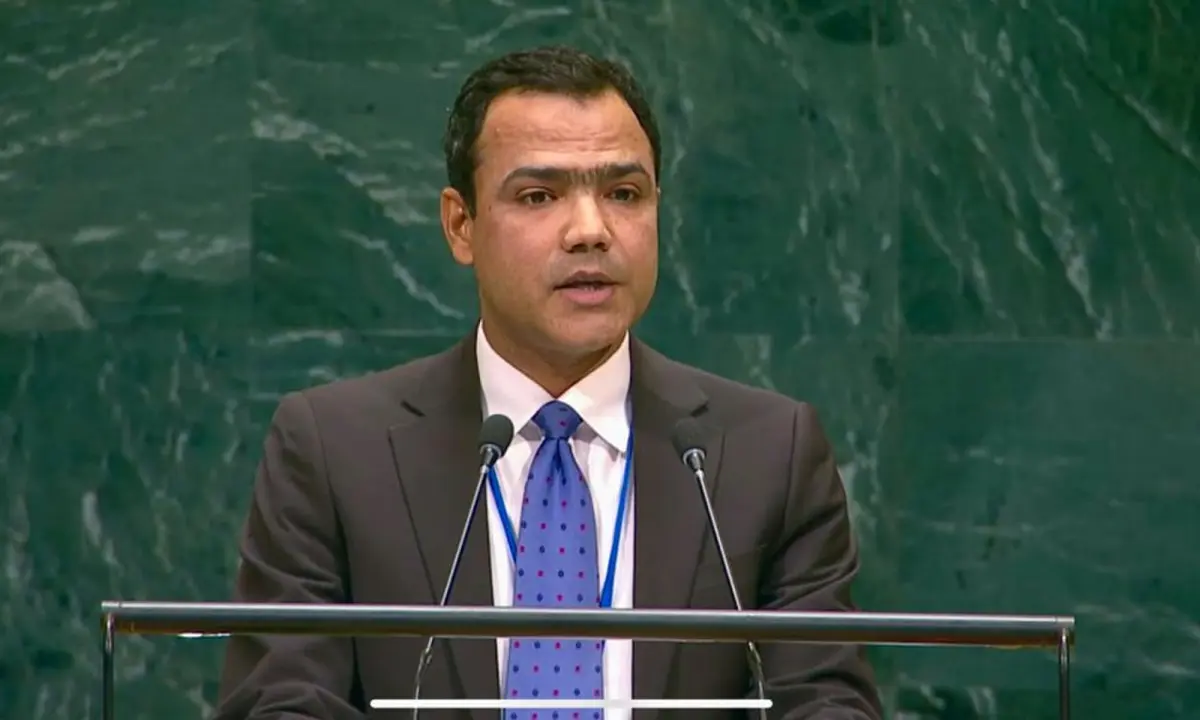
Pakistan has urged the United Nations General Assembly to reform the Security Council in order to tackle the issue of the veto power held by the five permanent members - the United States, Russia, China, France, and the United Kingdom. According to Pakistani delegate Gul Qaiser Sarwani, the misuse of the veto undermines the effectiveness of the Security Council and its credibility as a whole, while giving the permanent five members unwarranted influence across the entire UN system.
Sarwani emphasized that adding more permanent members or increasing the number of vetoes would only exacerbate existing inequalities, preserve historical privileges, establish new centers of power and heighten the risk of institutional paralysis.
Sarwani, speaking on behalf of the Pakistan Mission to the UN, reiterated that the Uniting for Consensus (UfC) group, led by Pakistan and Italy, remains opposed to expanding the Security Council with new permanent members. Instead, the delegation favors abolishing or severely restricting the veto power, rather than expanding it.
The Pakistani representative supported the General Assembly's resolution 76/262, which mandates the body to hold a session within 10 working days of a veto being cast in the Security Council. However, any measures to restrict the use of the veto must be consistent with UN Charter provisions.
General Assembly President Khalilur Rahman (Bangladesh) opened the meeting, noting that the 21 meetings held as part of the veto initiative have become a recognized expression of transparency, accountability, and collective responsibility within the organization. Rahman commended the Security Council for its timely special reports to the General Assembly and participation of the permanent members in these debates.
He stressed that the effectiveness of the Council directly impacts people living in conflict, insecurity, and humanitarian suffering, and when the Council fails to act decisively, the consequences are borne by those most affected by violence and instability.
Rahman urged the Council to find consensus needed to act decisively in the service of peace, urging debates to not become repetitive exercises, but instead to keep the dialogue alive. He emphasized that no veto should bring an end to dialogue and diplomacy, and the principles of the UN Charter must continue to guide the collective search for peace.
Delegates discussed the present and potential pitfalls of a veto-laden Security Council and its implications for regions and territories far from the location where the decision is taken.
Written by urgent.news from Business Recorder's reporting — not their text. Machine-written — may contain errors; check the original before relying on it.