Israel election live: Exit polls indicate deadlock after record-breaking turnout

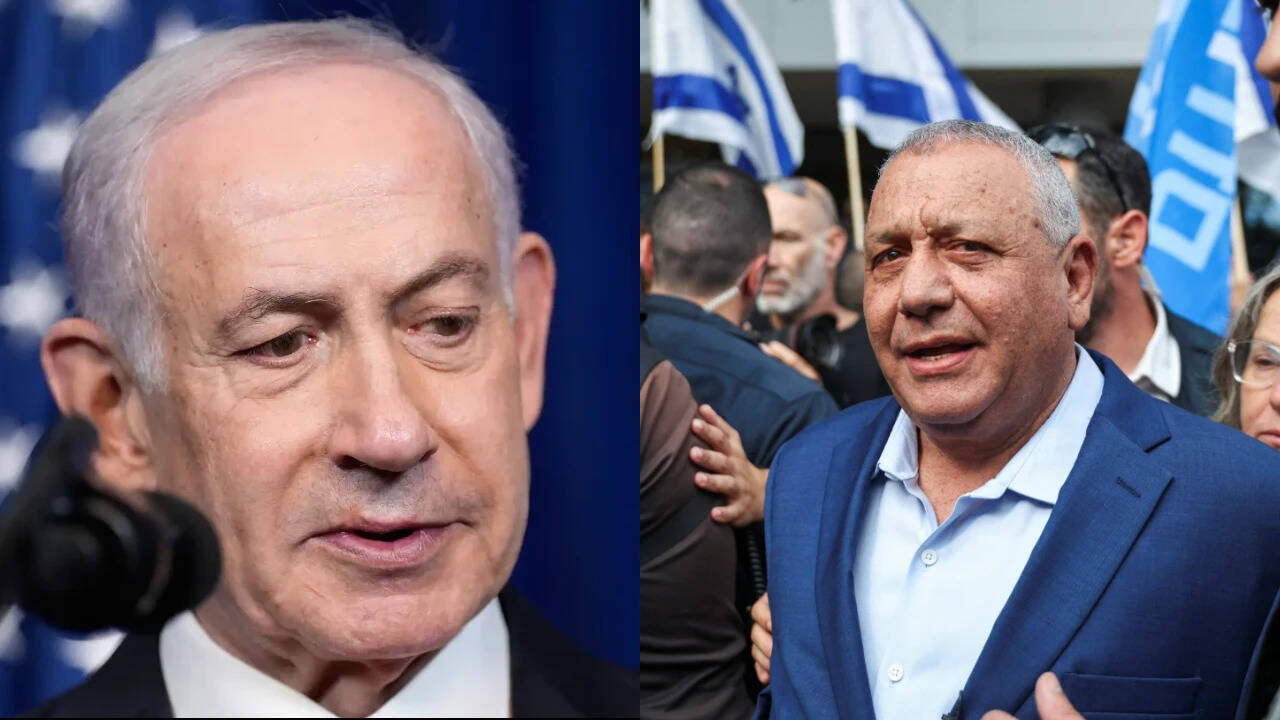
Israelis cast their votes in a general election on Tuesday, marking the highest turnout in decades amid a critical moment for the Middle East. The closely-fought race pitted Prime Minister Benjamin Netanyahu, representing the Likud party, against former army general Gadi Eisenkot, running as the head of the Yeshat party. An exit poll by Channel 12 predicted Netanyahu's party taking 24 out of 120 seats in the Knesset, while Eisenkot's party garnered 22 seats.
The close contest between the two could lead to months of coalition negotiations to secure the 61 seats required for a majority. Turnout was notably high, with long lines at polling stations, as voters expressed their opinions on Israel's wartime government. Netanyahu and Eisenkot voted in separate locations, with Netanyahu casting his ballot amid heightened security in west Jerusalem.
Opposition politician Yair Golan emerged unscathed after an attempted assault by a man carrying a large knife. The election saw significant participation from Israel's Arab minority, some casting their ballots for the first time, driven by a desire for change following the October 7 attacks. The high Arab turnout could potentially give parties representing the minority a pivotal role in forming the new government, either by joining a coalition or tolerating a weak administration.
Netanyahu will continue to lead the country while coalition discussions unfold, with no restrictions on his powers during this period. The potential political deadlock has fueled concerns about Netanyahu possibly exploiting the situation to launch a new campaign against Iran. Israel has a history of political stalemates, with five elections held between 2019 and 2022 as parties struggled to form stable governments.
Israeli law dictates that the President appoints a lawmaker to form a coalition within 42 days, with additional timeframes granted if the initial attempt fails. If no majority is achieved by the 21-day deadline, the Knesset automatically dissolves, leading to snap elections roughly 90 days later. This election marked the first opportunity for voters to assess Netanyahu's leadership since the October 7 attacks, Israel's devastating war on Gaza, and subsequent military actions in Lebanon, Iran, and the broader region.
Opposition supporters have called for a formal investigation into the October 7 attacks, a demand Netanyahu has rejected. Critics argue that Netanyahu has further isolated Israel internationally, with his actions in Gaza and the West Bank eliciting widespread global condemnation. Netanyahu defended his record, positioning himself as the only leader capable of confronting Israel's adversaries.
He concluded the campaign by emphasizing his hardline approach, including threats of a "second Holocaust" if Iran rearms and ordering a controversial military operation in the West Bank. Eisenkot, on the other hand, maintained a more vague stance, advocating for straightforward honesty. Most of the leading candidates harbor hostile views towards Iran and are generally opposed to the idea of a Palestinian state.
Written by urgent.news from The National Business's reporting — not their text. Machine-written — may contain errors; check the original before relying on it.
This story
This is one outlet's version. Read the fullest account.
- Live: Polls to close in Israel's most seismic election in decades abc.net.au
- People of Israel, Reservists-Economic both projected to fall short of threshold, exit polls show jpost.com
- Israel election commission rejects Netanyahu party bid to extend voting middleeasteye.net
- Israel's Elections Committee rejects Likud petition to extend voting hours haaretz.com
- Elections in Israel: All election polls and the battle to form a government israelnationalnews.com
- Israel: October 7 families remember victims as voters head to polls euronews.com
- Arab parties in Israel accuse Netanyahu of inciting hatred to scare voters aljazeera.com
- Australia news LIVE: Nearly 800 threats against MPs in six months, AFP says, as Labor bolsters safety after Haines attack; Israelis head to polls for first election since October 7 attacks theage.com.au