India Set To Face Torrid Summers Without Green Cover
The reported loss of 5.6 percentage points in green cover across India in a quarter century should come as no surprise, given the pressures mounted on land for building activity and resource extraction. As the study by Climate Trends, using Moderate Resolution Imaging Spectroradiometer (MODIS) land cover data and temperature trends from the European Centre for Medium-Range Weather Forecasts,…
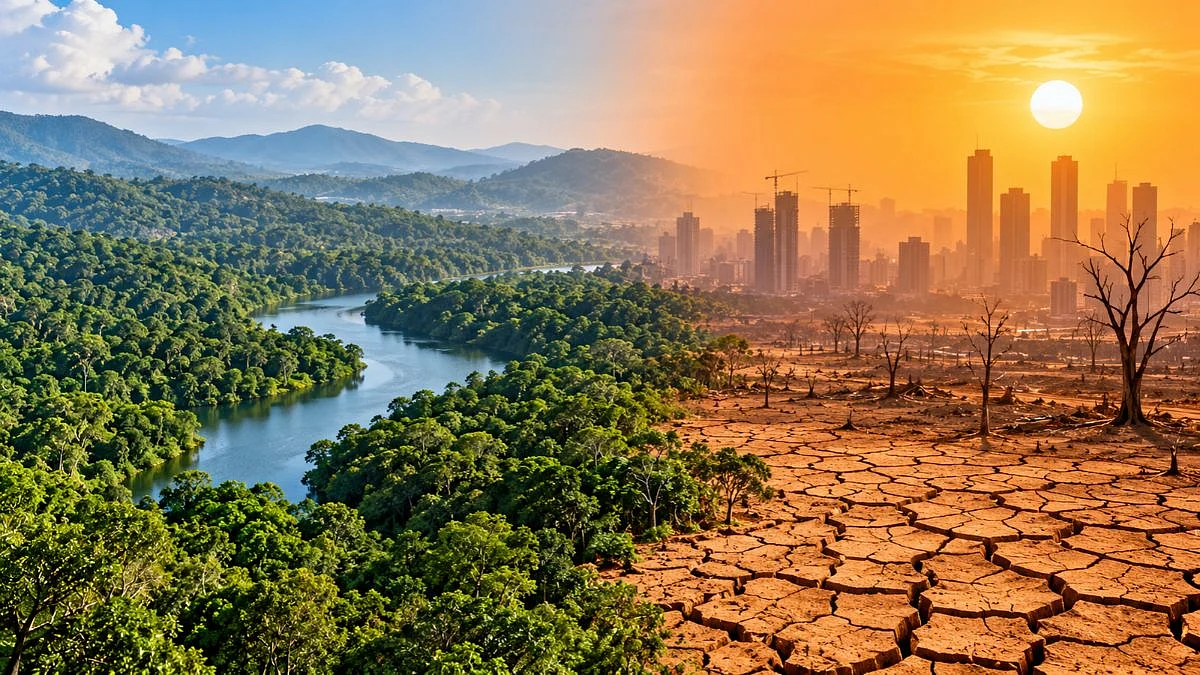
A recent study warns that India's diminishing green cover could lead to significantly hotter summers across the country. The research, conducted by Climate Trends, reveals a 5.6 percentage point loss in green cover over the past quarter-century, primarily due to land development for buildings and mining. Despite pockets of green areas remaining in the Western Ghats and Northeast, urban sprawl into surrounding districts has become a notable trend.
The study links this green cover loss directly to increased summer temperatures in non-vegetated regions. It found that areas lacking tree cover experienced temperatures that were 1 to 2.5 degrees Celsius higher than those with tree cover from 2001 to the present. Furthermore, barren areas recorded temperatures ranging from 29 to 32 degrees Celsius, while tree-covered areas maintained temperatures between 28 and 30 degrees Celsius.
Notably, the impact of green cover loss varies across different regions. Karnataka, Maharashtra, Gujarat, Rajasthan, and Madhya Pradesh are particularly affected, with higher temperatures predominantly observed in the western parts of these states. Interestingly, the Himalayan region has also seen a concerning temperature increase.
Even within forested areas, temperature variations exist, indicating that forests are not immune to climate change. The study suggests that without proactive climate policies addressing green cover erosion and wetland conservation, many parts of India will likely face intolerable temperatures in the coming decades.
The report urges policymakers to prioritize regreening efforts, particularly in exploited lands and urban centers. India's unique landscape, which includes tropical evergreen and moist deciduous forests, grasslands, mangroves, marshes, scrubland, and desert regions, has evolved over centuries and should not be altered for short-term gains. The findings emphasize the importance of regreening efforts to mitigate the adverse effects of climate change on India's diverse ecosystems.
Written by urgent.news from Free Press Journal's reporting — not their text. Machine-written — may contain errors; check the original before relying on it.