Impuestos: el peaje invisible que frena la construcción de vivienda
Una maraña de tributos y tasas municipales encarece de forma artificial la obra nueva. España, al contrario que Europa, grava de forma excepcional cada fase de la construcción. Leer
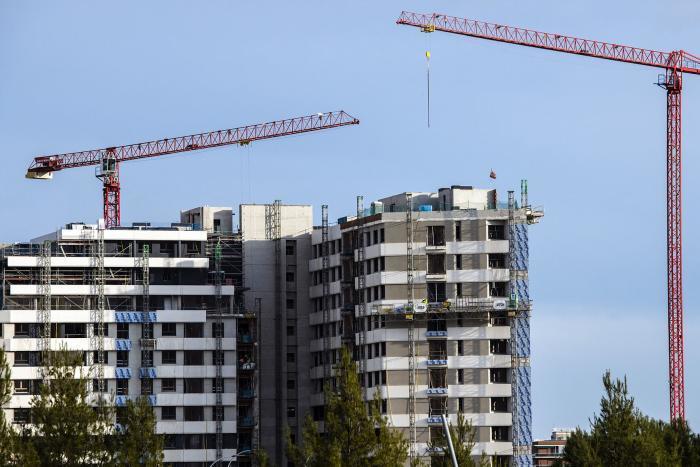
Spain imposes a hidden toll that hampers residential construction, unlike its European counterparts. This country uniquely taxes every stage of building a new home, making homeownership one of the most pressing social and economic issues. While public discourse often focuses on soil scarcity, material costs, or inflation, a silent yet significant factor is the mounting fiscal pressure throughout the construction process.
Beyond the concrete, design, and labor, there exists a network of local taxes that levy on every square meter before the first homeowner steps inside. Juan Carpizo, a partner at Fiscal and head of Fiscal and Environmental Local Taxation at Andersen, warns that "the fiscal burden associated with residential promotion and construction imposes a significant structural cost to the final purchaser."
For him, the taxation directly multiplies the economic strain on buyers, hindering access to housing. The fiscal journey begins long before the first brick is laid. As soon as a developer purchases land, they must bear the Property Tax (IBI) for the duration of ownership and development, an ongoing financial expense. Immediately thereafter, they face the Construction, Installations, and Works Tax (ICIO), which can reach up to 4% of the project's actual cost.
Additionally, an urban licensing fee is levied in parallel on the material execution budget. However, the fiscal toll doesn't end there. Daily operations on the plot incur a myriad of charges, such as using public roads for cranes, containers, and scaffolding, plus payments for inspections and technical authorizations. Carpizo emphasizes that "these burdens represent effective, unrecoverable costs directly attributed to the construction process, integrated into the production cost of the promotion and fully reflected in the final sale price borne by the buyer."
The most contentious and contentious part of this tax system is the Urban Increase in Value of Urban Land (IIVTNU) tax, or the municipal plusvalía. Following a 2021 legal reform, promoters found themselves trapped in a system that penalizes their business model. Carpizo explains how the current scheme penalizes the very investment needed for the generation of the real estate asset, creating a clear disconnect between the taxable base and the actual economic capacity.
The situation worsens due to the temporary nature of promotions. With short tenure periods—generally less than two years between land purchase and property sale—many have suffered devastating impacts. Carpizo points out that "coefficients for short tenure periods have seen increases of up to 600% in some municipalities," resulting in skyrocketing payments "without any correlation to the real increase in land value."
The compounded impact of this tax architecture distorts the composition of housing prices in Spain. The final price doesn't just reflect the quality of finishes, energy efficiency, or location. As Carpizo concludes, "Spain has built an entire municipal tax subsystem tied to urban planning, with specific figures that tax every phase of the real estate promotion."
This is a labyrinth of figures like the Construction, Installations, and Works Tax, the Urban Increase in Value tax, and numerous rates that, according to Carpizo, "have no functional equivalent in our European neighbors and turn Spanish municipal fiscal policy on housing into an exceptional case." It is an artificial toll that deepens the access gap to a basic necessity and, in many cases, is not part of current debates to simplify reforms and unblock the market.
Written by urgent.news from Expansion ES's reporting — not their text. Machine-written — may contain errors; check the original before relying on it.