I made self-hosting harder than it needed to be by making this one mistake
I spent so much time perfecting my homelab that I nearly forgot why I built it in the first place.
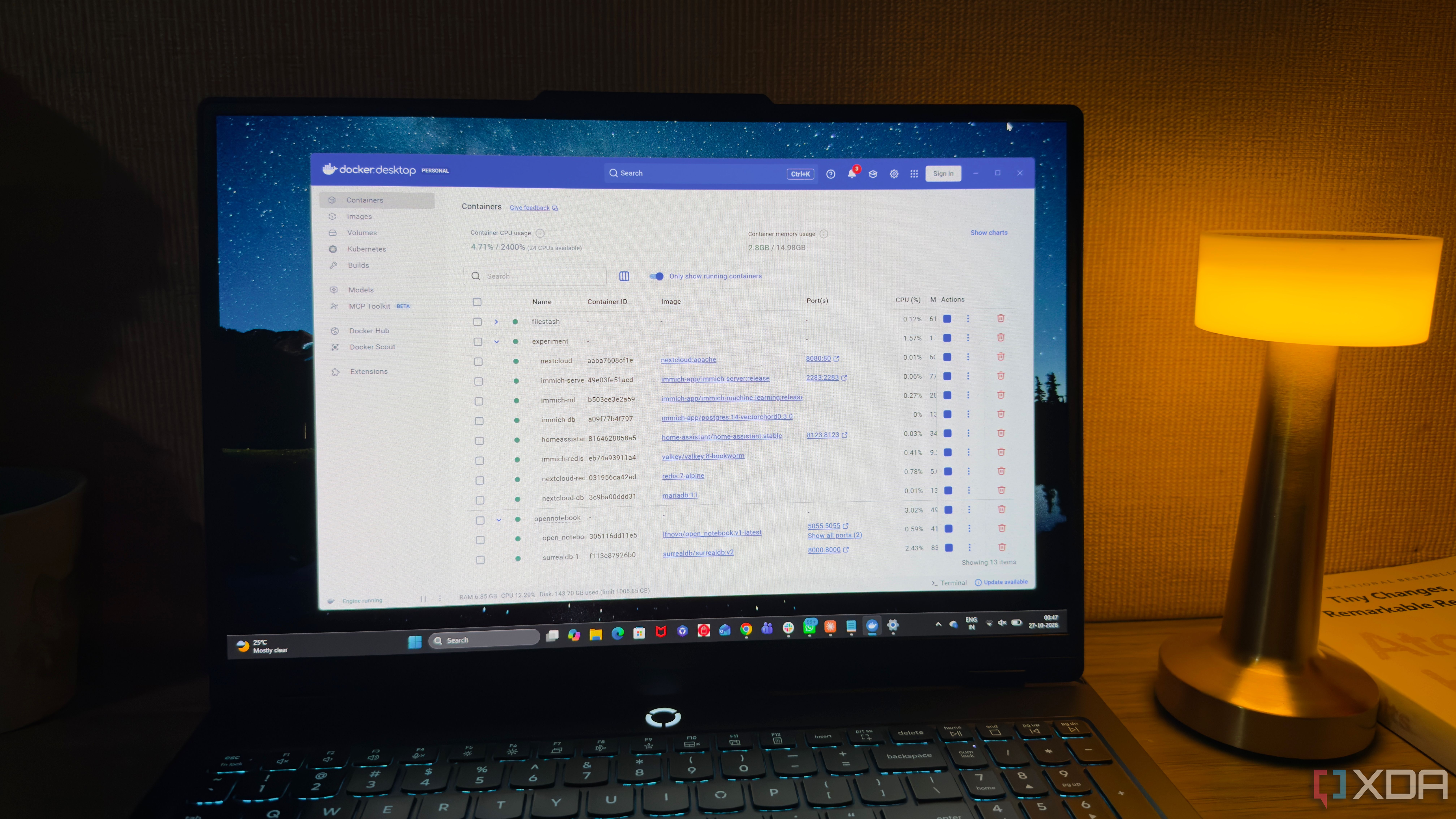
Self-hosting provides the freedom to run personal services, utilize open-source tools, and maintain better control over data. Initially a hobby, it evolved into a more substantial project than anticipated. The author spent more time configuring and tweaking than actually using the hosted applications. Every weekend brought a new change, making the list of planned improvements grow faster than they could implement.
The issue wasn't self-hosting itself, but the author's habit of planning for every possible scenario, even those they never encountered. A simple setup often seemed insufficient when they could create a more adaptable version. Over-engineering became a problem; they kept adding complexity instead of focusing on essential needs. As they became more comfortable with self-hosting, they desired to customize everything more.
They experimented with reverse proxies, custom Docker networks, environment variables, and additional configuration options, even when the standard setup worked well. Using an IP address and port to access a self-hosted application locally was simpler than setting up a reverse proxy, configuring domain names, managing SSL certificates, and routing traffic through extra services.
Adding tools to improve others also led to unnecessary complexity. When an application lacked a desired feature, they looked for another service that could fill the gap. Each new addition felt like progress, but it wasn't always a solution to an existing problem. The appeal lay in the perceived sophistication of the complexity, but those elaborate setups often didn't align with the author's needs or time constraints.
The real cost became apparent after the initial enthusiasm faded. Maintaining the applications required frequent updates, checking for service functionality, and troubleshooting issues whenever they arose. Even minor changes could turn into time-consuming tasks. Updating a container sometimes required verifying its configuration to avoid breaking anything.
When something malfunctioned, the author had to sift through logs and examine various components to diagnose the issue. As dependencies between services increased, pinpointing the problem became more challenging. Time further compounded the issue; clever tweaks made one weekend seemed bewildering months later. When something failed, the author often had to reverse-engineer their decisions to find a solution, as they seldom documented their reasons for setup choices.
The setup consumed far more time than justified by the benefits of each extra layer. The author needed a better approach to determine what was essential for their homelab and what wasn't. Now, they evaluate their setup based on how well it serves them, not by how advanced it appears. If an application runs smoothly, they leave its configuration unchanged, even when a more sophisticated approach seems appealing.
Often, the smarter choice is to maintain the status quo. Before adopting any new tool, they ask themselves if it solves a current problem, if they regularly use it, and if they're prepared to maintain it long-term. If the answer to any of these questions is no, the tool remains on their list of potential future additions rather than becoming part of their homelab.
For tools that never leave their home network, they revert to plain IP-and-port access and limit the reverse proxy to only the few services needing external access. However, complex homelabs aren't inherently bad. Building one for the sole purpose of learning is a valid reason. What matters is whether the complexity serves a purpose or merely generates additional work.
For the author, self-hosting is more enjoyable when it remains practical, and their tools run quietly in the background. They still appreciate discovering new self-hosted tools and experimenting with their setup. But they no longer feel compelled to install every interesting application or constantly tweak things out of habit. There's always more to explore, and that's part of the fun.
They've simply learned to be more selective about what deserves a place in their homelab. After all, they started self-hosting to simplify their digital life, not to spend all their time managing it.
Written by urgent.news from XDA Developers's reporting — not their text. Machine-written — may contain errors; check the original before relying on it.