How Jumping Spiders Sleep
Remarkably like us with cycles of wakefulness and REM The post How Jumping Spiders Sleep appeared first on Nautilus .
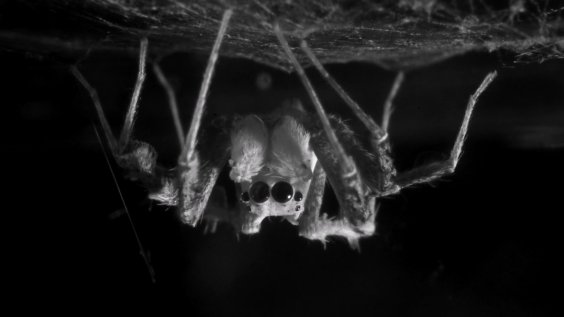
Jumping spiders, much like humans, follow cycles of wakefulness and REM sleep, according to a new study published in the journal Proceedings of the National Academy of Sciences. Conducted by biologists from Germany, Australia, and Italy, researchers observed the sleeping habits of Australian jumping spiders (Portia fimbriata), which are typically active during the day and sleep at night.
The spiders, often no larger than a grain of rice, were noted for their characteristic sleeping posture, with legs pulled in to blend in with foliage or rocks.
To study their sleep patterns, the researchers kept 10 individual spiders in a lab environment and continuously monitored them for three days. Using infrared cameras, they documented the spiders' sleeping positions, REM-like behaviors, and reaction times when exposed to startling sounds. It was found that jumping spiders exhibit a free-running circadian rhythm, robust sleep architecture, regularly occurring REM-like behaviors, elevated arousal thresholds during REM-like states, and rebound effects following sleep disruption, similar to humans.
The study authors suggest that the spiders' human-like sleep patterns may be influenced by their poor night vision and increased risk of predation. Additionally, the dense forests where they live may provide ample sensory input that necessitates REM sleep for processing. However, engaging in a sleepover with an Australian jumping spider may not be the most comfortable experience, as these spiders are known to bite.
Written by urgent.news from Nautilus's reporting — not their text. Machine-written — may contain errors; check the original before relying on it.