Edge Sound raises $2M to help physical AI make sense of audio
Edge Sound Research Inc. today announced it has raised $2 million in new funding to build audio infrastructure that isolates useful sounds and combines them with other sensor data to help physical AI systems understand what’s happening in real time. Stormbreaker Ventures led the round, bringing the company’s total funding to $9 million. When the […] The post Edge Sound raises $2M to help physical…
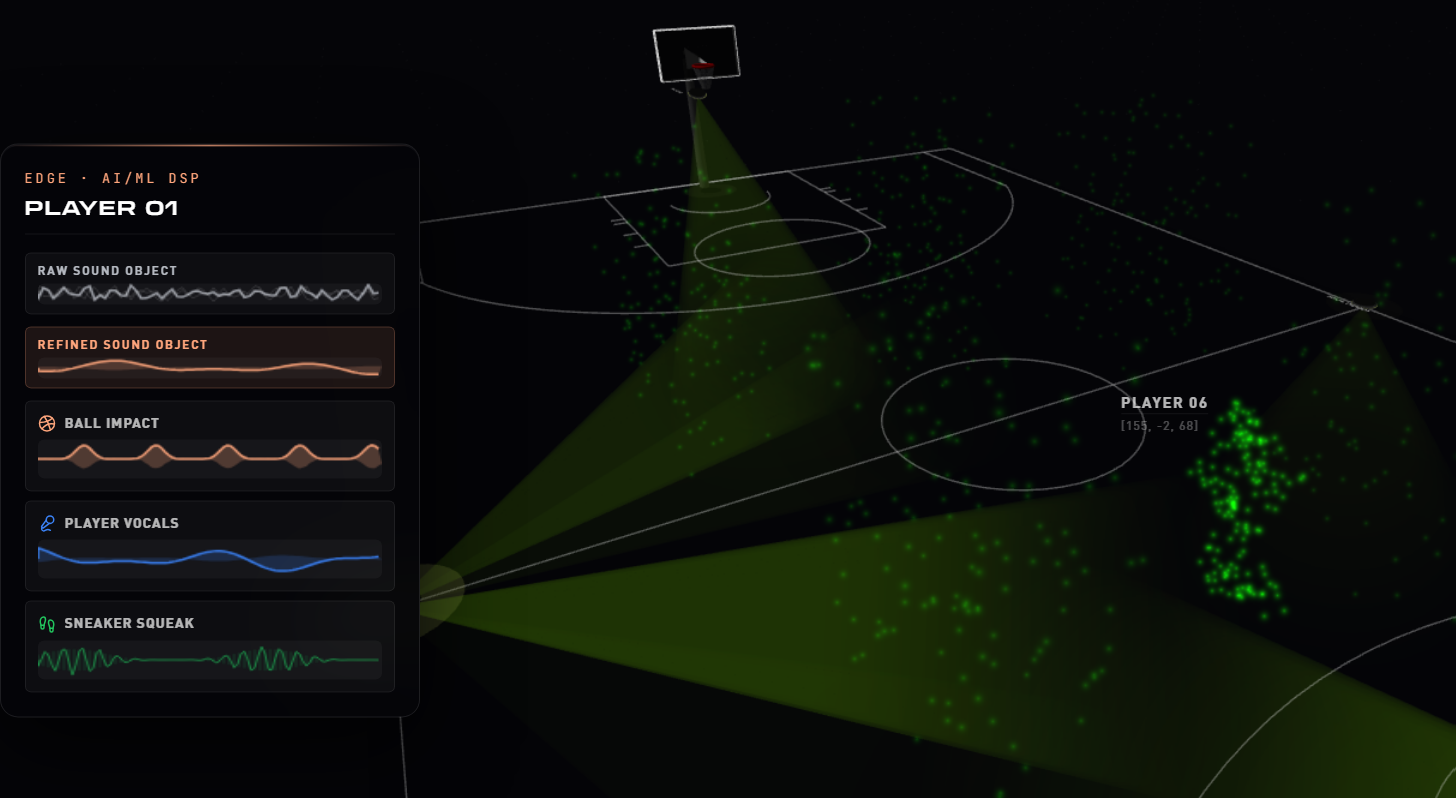
Edge Sound Research Inc. has secured $2 million in new funding to develop audio infrastructure that enables physical AI systems to comprehend their surroundings in real-time, according to a recent announcement. Stormbreaker Ventures led the round, bringing the company's total funding to $9 million. The company's approach involves fusing audio data with tracking and visual information to accurately identify and isolate sounds within complex environments.
Founder and CEO Valtteri Salomaki explains that traditional audio processing is often overlooked in favor of visual data, as cameras are ubiquitous. However, Salomaki emphasizes that sound plays a crucial role in navigation, especially for physical AI systems. He notes that audio is connected to microphones positioned around a space or on objects, creating signals that identify specific sounds.
By combining microphone locations, pickup patterns, and object tracking, Edge Sound Research's system can effectively separate and associate audio with visual data. The company's software allows users to import 3D or 2D layouts of spaces, enabling the creation of a "digital twin" that maps the environment and its sensors. This digital twin allows for the pairing of audio and visual data to identify objects, such as players, the ball, or even referees in a sports arena.
Potential applications extend beyond sports, including autonomous vehicles that can detect sirens and determine their direction using audio cues. Edge Sound Research's digital twin software and AI models are designed to be adaptable for various customer needs, with different delay tolerances based on the specific application. Salomaki highlights the importance of timely perception for most use cases, as hearing and seeing must be synchronized.
With the recent funding, Edge Sound Research aims to integrate its technology with existing enterprise customers and make the platform's components transferable across industries. The company has already gained commercial traction through its Virtual Sound Engine, which automatically captures and isolates sound in complex environments, and has been deployed for various customers, including Shure Inc., the National Basketball Association, Fox Sports Media Group, and the United States Tennis Association Inc.
Written by urgent.news from SiliconANGLE's reporting — not their text. Machine-written — may contain errors; check the original before relying on it.