Dino skeleton that looks like mini T. rex sells for a giant US$47 million
A dinosaur that looks like a miniature T. rex is now one of the world’s most expensive fossils. The rare skeleton of a Nanotyrannus – recently confirmed to be a distant cousin of Tyrannosaurus rex, not just a young specimen – sold for US$47.3 million to a mystery buyer at auction in New York on Tuesday, according to Sotheby’s. The auction house had expected it to fetch anywhere from US$6 to US$9…
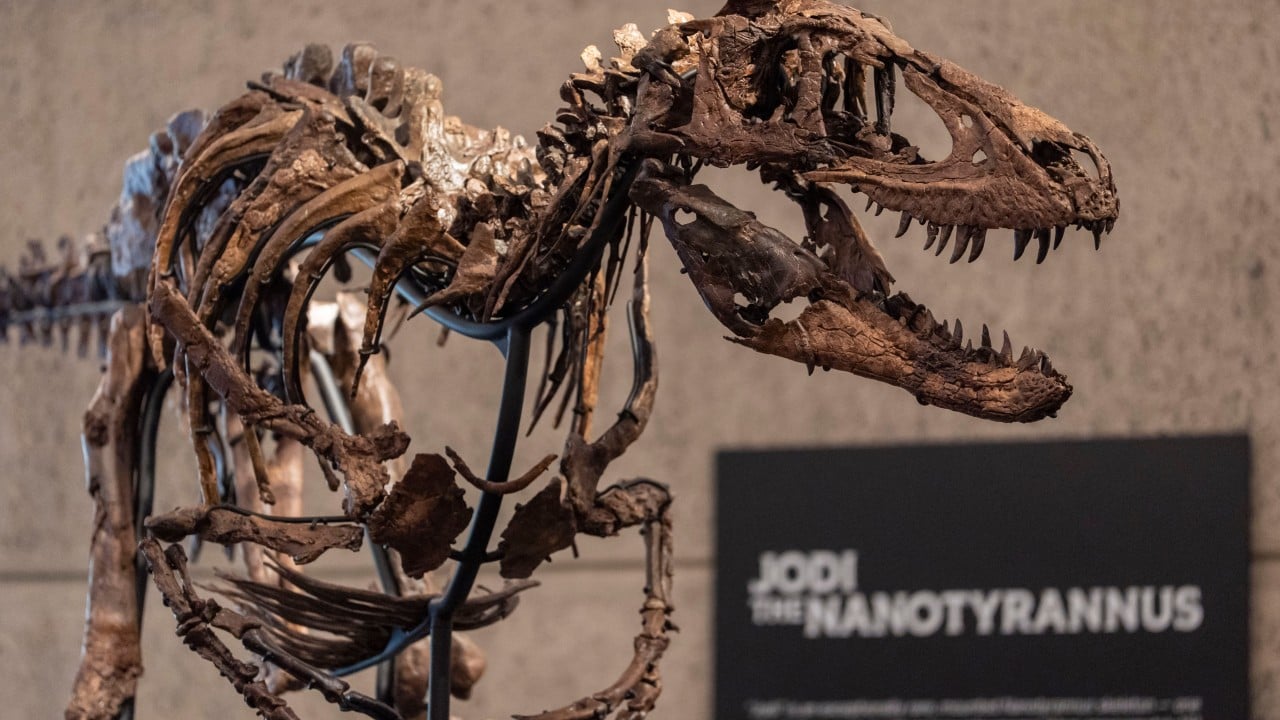
A dinosaur skeleton resembling a miniature Tyrannosaurus rex has fetched an astonishing US$47.3 million at an auction in New York, making it one of the world's most expensive fossils. The rare Nanotyrannus specimen, referred to as "Jodi," was confirmed to be a separate species, not just a juvenile T. rex, leading to an unexpected record-breaking sale price.
Prior to this auction, Sotheby's had anticipated the skeleton would sell for between US$6 million and US$9 million. The record price places "Jodi" as the second most expensive set of dinosaur bones ever sold, following a T. rex fossil known as "Gus" recorded at a staggering US$50.1 million. The anonymous buyer outbid five other potential purchasers during a 12-minute live auction.
Nanotyrannus, which coexisted with adult T. rexes in the Cretaceous period around 67 million years ago, was approximately half the size of its famous relative. Distinguished by longer forelimbs, larger hand claws, and more slender, bladelike teeth, "Jodi" is one of only three such skeletons known to exist. Standing nine feet six inches tall (2.9 meters) and measuring nearly 20 feet (6 meters) in length, the fossil has been displayed at Sotheby's headquarters in upper Manhattan since earlier this month.
Discovered by Montana rancher Jodi Pierson in 2019, the specimen is estimated to be nearly 70% complete.
Sotheby's acknowledged the efforts of the fossil hunters featured in the Discovery Channel series "Dino Hunters" from 2020, whose dedication to studying and preserving the specimen contributed to the auction's success. However, some scientists have raised concerns about the private sale of significant fossils like "Jodi," arguing that such specimens should remain in museums or other institutions for public viewing and scientific research.
Although the exact classification of Nanotyrannus has been debated for decades, recent research published last year concluded that it represented a distinct genus of dinosaur.
Written by urgent.news from South China Morning Post's reporting — not their text. Machine-written — may contain errors; check the original before relying on it.