Der grösste Kohlehafen der Welt baut bald Raketen
Newcastle, zwei Autostunden nördlich von Sydney gelegen, ist der grösste Kohlehafen der Welt. Dieses Image möchte die Stadt nun gerne loswerden. Sie setzt auf Rüstung, Wasserstoff, Forschung – und auf einen besonders schnellen Zug.
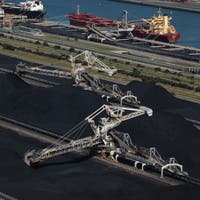
Newcastle, a city located two hours north of Sydney, is the world's largest coal port. However, the city is eager to shed this image, moving towards weaponry, hydrogen, research, and a fast train. It is the only port that exports the most coal globally. In 2025, around 149 million tons of coal passed through its quays, only 10% less than the record year of 2019.
Coal accounts for nearly 93% of its cargo volume. Meanwhile, a new facility is being built 160 kilometers north of Sydney: a rocket factory, a hydrogen plant, and an international airport. The turning point came in 1999 when BHP closed its steelworks, leaving the region without its primary industry and a crucial economic pillar.
Shops and pubs closed down. Initially, Newcastle tried creative ideas, leasing empty shops to tailors, painters, and furniture designers through the Renew Newcastle initiative. Later, the University of Newcastle built a campus in the city center for 95 million Australian dollars, which now hosts numerous research teams, including those working on a stroke therapy, cancer medications, and a spray against airborne viruses.
The CSIRO, a research agency, also conducts tests on thin, bendable solar cells and solar thermal energy at the port. However, the harbor's transformation is less noticeable. While components for local wind farms are now being shipped, Orica, a chemical company, plans to produce about 4700 tons of hydrogen annually at Kooragang Island starting 2029 with a $432 million government investment.
This project aims to replace natural gas in ammonia production. Despite this, over 70% of the harbor's revenue still comes from fossil fuels, according to Tim Buckley, director of the Climate Energy Finance think-tank. The goal of living half with coal and other businesses by 2030 is unlikely to be met, predicts Buckley. The harbor is unlikely to achieve its half-and-half plan, believes Buckley.
The offshore wind power establishment project has failed due to high interest rates and political disputes. The promised billions for green hydrogen are largely unfulfilled. However, the Orica project is deemed important and feasible. The Iran conflict has shown how much Australia relies on imported ammonia for fertilizers and explosives in the mining industry.
It is considered "of national strategic importance." Whether the investments will suffice when Australia's largest coal-fired power plant, Eraring, shuts down in 2029, supplying the aluminum works Tomago, remains to be seen. New industries are growing "slower than I would like," says Buckley. The largest project under construction is beside the Williamtown military base, from which Australia's F-35 fighter jets launch.
Kongsberg, a Norwegian company, is building a factory for missiles like the Joint Strike Missile, designed for the F-35, as well as the Naval Strike Missile to replace the older Harpoon. Production is set to begin in 2027, with the facility fully operational by the end of 2028. Up to $490 million (490 million Swiss francs) is being contributed by Canberra.
This project will generate revenue from missiles and ammunition over the next decade, amounting to $16 to $21 billion (9 to 12 billion Swiss francs). This endeavor is independent of the AUKUS agreement, which involves building nuclear submarines, but follows a similar logic: as tensions with China persist, Australia seeks to equip and become more independent militarily.
BAE Systems is already present, with three more defense companies expected to follow. They consider the positions "highly skilled and well-paid," says Andrew Warrender, who manages the nearby airport. The city also gained a new international terminal in September 2025 after extending the runway in cooperation with the air force.
Now, even the Airbus A380 can land there. In the 2025/26 financial year, the airport handled over 1.3 million passengers, and it is projected to triple or quadruple within ten years. The route to Bali has been fully booked since the start, says Warrender. Next, he hopes for connections to New Zealand, Fiji, and direct flights to Singapore.
Another future project is a high-speed rail line, which would allow trains to travel between Newcastle and Sydney in one hour. By 2028, the government hopes to decide on the construction. However, not everyone believes this will materialize: Australia has been discussing high-speed trains for over four decades, and all previous attempts have failed, according to Philip Laird of the University of Wollongong.
If successful this time, the world's largest coal port would have a high-speed train connecting it to the country's capital.
Written by urgent.news from NZZ Wirtschaft's reporting — not their text. Machine-written — may contain errors; check the original before relying on it.