Chinese scientists create powerful catalyst to turn air on Mars into rocket fuel
Chinese space scientists are working out how future astronauts on Mars could make their own fuel out of thin air, a sign that Beijing is serious about one day sending people to the red planet. A team at the state-funded Deep Space Exploration Laboratory in Hefei has developed a catalyst that turns carbon dioxide – which makes up more than 95 per cent of the Martian atmosphere – into a liquid fuel…
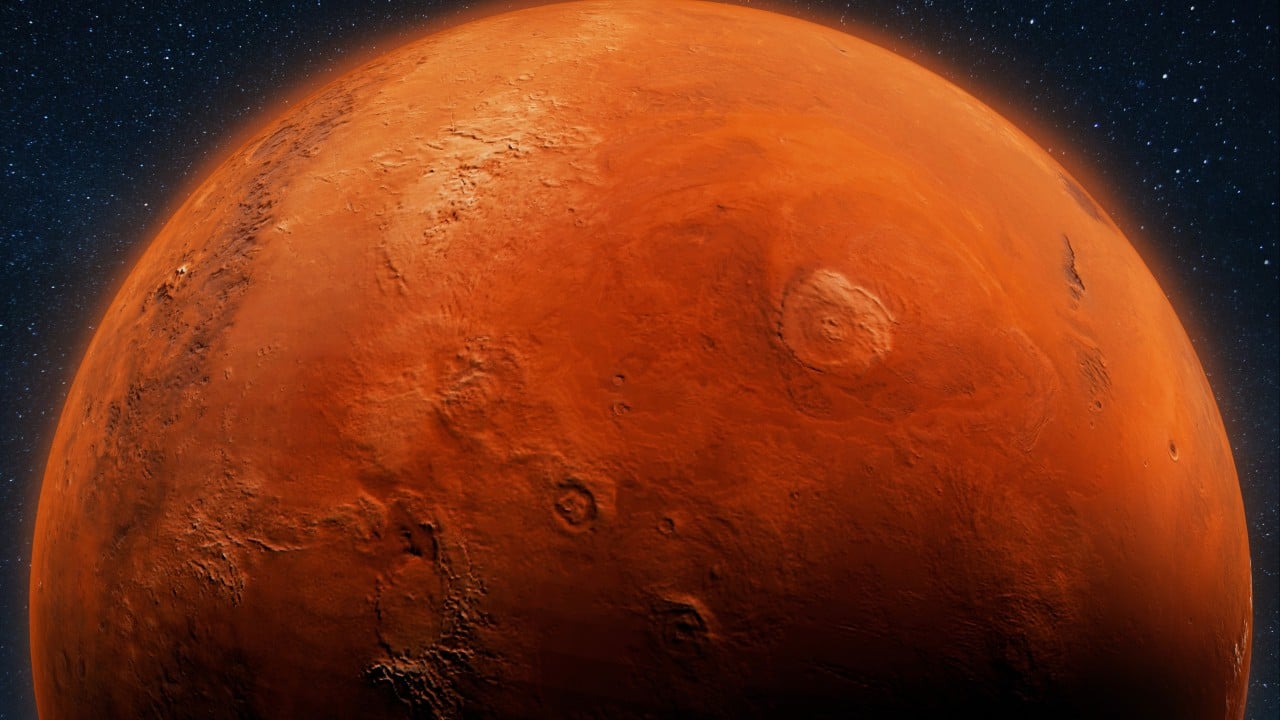
Chinese space scientists are working on developing a catalyst to transform carbon dioxide in Mars' atmosphere into a liquid fuel called methanol. The catalyst, which combines copper with sodium on a sponge-like crystal, enhances carbon dioxide's reaction with hydrogen, which could be derived from Martian ice, to create methanol.
In laboratory tests, the catalyst produced 11 times more methanol than copper alone, reducing unwanted by-products. Methanol could serve as fuel for electricity generation, heating, powering Mars rovers, and even as a base for manufacturing antifreeze, building materials, and other products. Mars, with its potential air, water ice, and minerals, is considered a crucial destination for future crewed landings and long-term human presence.
Producing fuel and essential chemicals on Mars would reduce the need to transport resources from Earth, cutting costs and enhancing the base's independence. The Chinese team's research, published in the Journal of Deep Space Exploration, suggests that making methanol on site from Martian carbon dioxide is technically feasible. NASA has been planning a manned Mars mission, but no specific date has been set.
While NASA and SpaceX have been focused on converting Martian carbon dioxide into methane to power rockets home, the Chinese scientists opted for methanol due to its liquid state at room temperature, which facilitates easier storage and greater versatility. The catalyst demonstrated its effectiveness during 12-hour tests, with every kilogram of it producing approximately 245 grams of methanol per hour.
China's Tianwen-3 mission, slated for launch around 2028, aims to retrieve at least 500 grams of Martian samples by around 2031. Zhang and his colleagues acknowledged that further research is required, including methods to collect and compress thin Martian air.
Written by urgent.news from Reuters Business via SCMP's reporting — not their text. Machine-written — may contain errors; check the original before relying on it.