Autotest: VW Mission Efficiency: Auf schmaler Spur zum Sparrekord
Effizienz ist reine Formsache - das beweist uns VW mit einem neuen Sparmodell in der Tradition des XL1. Doch wie viele Kompromisse müssten die Kunden machen, wenn es den Stromer in Serie gäbe?
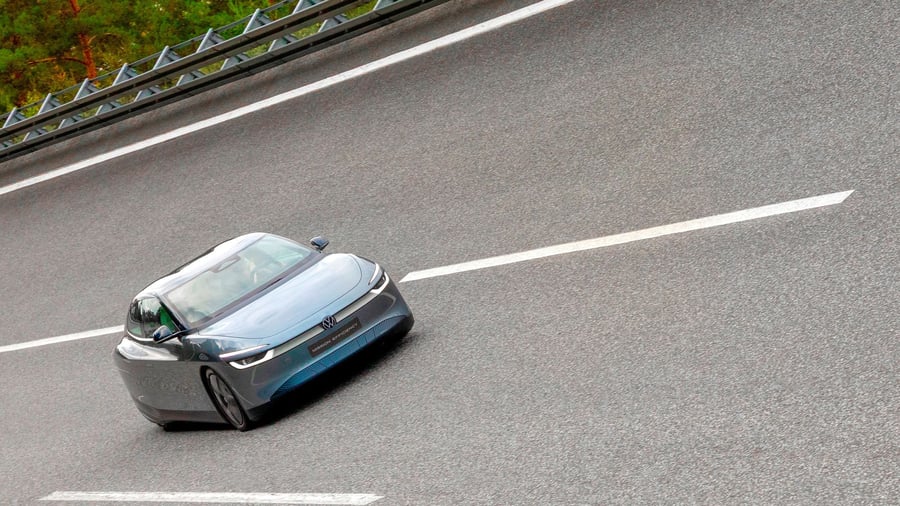
In a remarkable display of efficiency and innovation, Volkswagen has unveiled the Mission Efficiency, a vehicle that continues the company's tradition of setting new benchmarks in fuel economy. Just 24 years after Ferdinand Piëch introduced a one-liter car to the supervisory board and later the XL1, the company is once again leading the charge in creating a groundbreaking spartan vehicle.
The Mission Efficiency incorporates the same MEB+ platform as the ID. Polo, featuring a 99 kW/136 PS electric motor at the front and a 52 kWh battery pack. However, its remarkable efficiency sets it apart from its predecessors, achieving up to 654 kilometers on a single charge. In a test drive from Wolfsburg to Vienna, the vehicle managed an impressive 7.51 kWh consumption over 1,300 kilometers, with an average speed of 68 km/h, and even reached 6.48 kWh under ideal conditions.
The design of the Mission Efficiency prioritizes aerodynamics, with a particularly sleek body shape and a lower profile than many sports cars. The vehicle also has a long, tapered rear spoiler, similar to the aerodynamic principles of the legendary "Tropfenwagen," developed by Edmund Rumpler in the 1920s. This design, combined with specialized wheel covers, narrow mirrors, and solar panels, achieves an unprecedented aerodynamic coefficient of 0.158.
Additional efficiency measures include a special brake system with cables instead of hydraulic lines in the rear and solar panels for an extra 30 kilometers of daily driving. Although the solar panels currently only recharge the 12-volt battery, the vehicle feels less like a sports car and more like a traditional Polo, thanks to its long doors, deep seats, and panoramic windshield. The interior features a tablet instead of a touchscreen and has a futuristic design with a single crossbar instead of a traditional dashboard.
Despite its sleek appearance, the Mission Efficiency is comfortable and easy to drive, with a 0-100 km/h acceleration time of 9.0 seconds, and it operates silently due to the lack of wind resistance. Its efficiency becomes particularly noticeable on highways, where increased speed does not significantly increase energy consumption. The vehicle is limited to a top speed of 160 km/h, but it maintains its efficiency even at higher speeds, consuming as much energy as the ID. Polo at 100 km/h.
The Mission Efficiency can display its efficiency on the dashboard, but drivers can also feel it through the reduced rolling resistance on smooth roads. The vehicle can roll nearly indefinitely without losing significant speed, making it an impressive example of automotive efficiency. However, drivers should be cautious when encountering potholes or curb edges, as the low ground clearance can make these obstacles dangerous.
With its spacious interior, adequate luggage space, and impressive efficiency, the Mission Efficiency sets a new standard in the automotive industry.
Written by urgent.news from Handelsblatt's reporting — not their text. Machine-written — may contain errors; check the original before relying on it.