Adventures in Wildfire Smoke Stratospheric Ballooning
The student ballooning team at the University of Minnesota Twin Cities went to work tracking the plume of a pyrocumulonimbus cloud. The post Adventures in Wildfire Smoke Stratospheric Ballooning appeared first on NASA Science .
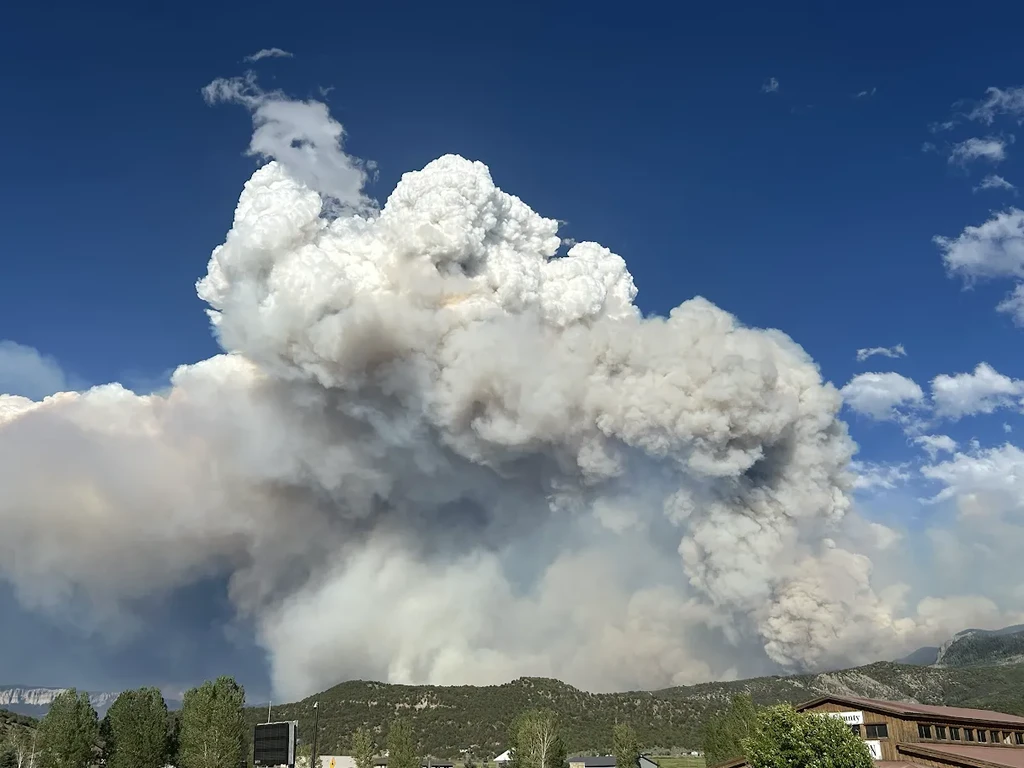
Stratospheric ballooning, a practice that originated in the 1780s, has evolved to serve various scientific purposes. Today, it is employed in meteorology and as a platform for conducting diverse experiments ranging from temperature and pressure testing to atmospheric sampling, chemistry experiments, and radio telemetry testing. University of Minnesota Twin Cities' stratospheric ballooning team, under the guidance of NASA researcher Jean-Paul Vernier, participates in the BalNeO (Balloon Network for Stratospheric Aerosol Observations) campaign.
This project aims to study wildfire smoke plumes, which originate from Canada, the western U.S., or even farther away territories like Siberia.
In the spring of 2025, the team received an invitation from NASA's Minnesota Space Grant Consortium to join the INSPYRE (INjected Smoke and PYRocumulonimbus Experiment) campaign. James Flaten, the associate director of the consortium, recruited the team for Jean-Paul Vernier's project. The team members, comprising undergraduate students in aerospace engineering, started preparing payloads for their balloon flights.
The first test flight of the "Smokestack" project took place on August 27, 2025. The students were responsible for launching, tracking, chasing, and recovering the balloon, as well as managing the ground station to collect and retrieve sensor data. The flight equipment included an iMet radiosonde and a Vaisala radiosonde, which gathered GPS and weather sensor data transmitted to ground stations via telemetry radio.
The payload box housed the Profiling Optical Particle Counter (POPC), which measured aerosol concentrations including wildfire smoke, and a custom flight computer named PICOLO.
In preparation for the 2026 wildfire season, the team received support from Jean-Paul and Rubel Das from NIA and NASA Langley. They worked on predicting the movement of pyroCb smoke to determine the optimal times and locations for launching balloons that would intercept wildfire smoke plumes. The Smokestack team consisted of Sean Gilomen, Lani Calderon, Andrew Schmit, Jack Husemann, Varsha Balaji, and Isaiah Theisen, who served as the all-ballooning team and Smokestack sub-team student lead.
Written by urgent.news from NASA Science's reporting — not their text. Machine-written — may contain errors; check the original before relying on it.