Who will shape India’s next 500 million digital users?
The next wave of India’s digital economy raises a different set of questions: who controls the layers through which consumers discover apps, access services and make payments? And how can India build for the next 500 million users without relying on assumptions about what they want or can afford? A
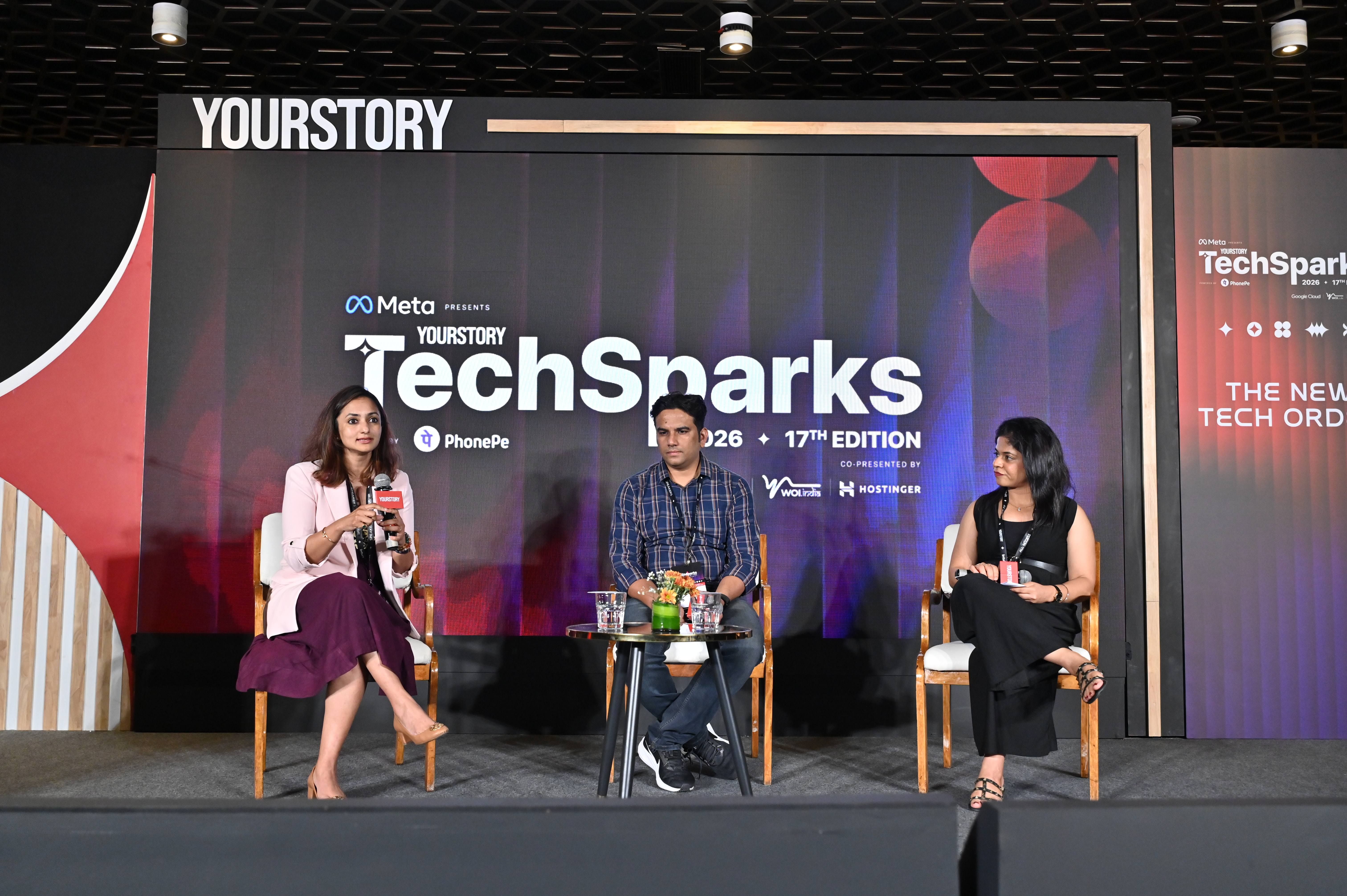
India's digital economy is experiencing rapid growth across various sectors, including entertainment, utilities, and AI applications. However, questions remain about who controls the layers that guide consumers in discovering apps, accessing services, and making payments. Priya Narasimhan of Indus Appstore and Sagar Gaonkar of Eloelo Group discussed these issues at the TechSparks 2026 conference.
The next wave of growth in India's digital economy is expected to be characterized by local, personalized, and AI-powered services. Users increasingly seek digital experiences tailored to their local context and designed to maximize value. Artificial intelligence plays a key role in both content creation and delivery, enabling platforms to generate both high-quality and large volumes of content.
However, content creation costs remain high, so identifying promising ideas early is crucial. On the consumer side, personalization becomes essential as the amount of content grows. Platforms must understand different user groups and deliver content that keeps audiences engaged. The discovery process for digital services is also evolving.
AI is reshaping the way consumers find and interact with digital content, but adoption rates vary. Early adopters are already using AI tools for exploration and decision-making, while many Indians still rely on traditional app interfaces. For Indus Appstore, this presents a challenge in maintaining relevance alongside AI-driven discovery mechanisms.
To address this, Narasimhan suggests combining familiar app interfaces with an AI-ready backend. Developers and businesses should still have access to large language models and AI agents, while consumers continue to benefit from conventional app interfaces. Similarly, Gaonkar emphasizes the importance of making AI and personalization accessible to non-technical creators, as well as simplifying the experience for users of digital goods.
Despite Indians' preference for app-based services, there is a gap between mobile usage for consumption and opportunities for digital goods sales. This gap is partly due to distribution challenges and economic difficulties. Narasimhan believes India's app-first approach means there should be a robust digital goods marketplace, but current distribution barriers hinder this.
Similarly, Gaonkar highlights the need to simplify the experience for users and bring together various capabilities around specific use cases. Digital sovereignty refers to how and where consumers interact with technology, and Narasimhan proposes focusing on three key layers: discovery and distribution, monetization and billing, and data trust and consent.
Control over app marketplaces and distribution is essential to avoid platform restrictions and fees. India's payments infrastructure should allow developers to benefit from existing payment systems rather than face additional taxes. Establishing norms around data trust and consent is also vital. Narasimhan advocates for regulatory frameworks and domestic platforms that enable developers to scale on Indian infrastructure while still accessing global technology.
Gaonkar stresses the importance of leveraging India's strengths in data, creativity, and diverse consumption patterns to develop technology that meets the needs of Indian users and can be adapted for other markets. Ultimately, Narasimhan challenges the notion that smaller-city consumers are low-value customers, pointing out their latent demand and the need for affordable, flexible pricing options.
Written by urgent.news from YourStory's reporting — not their text. Machine-written — may contain errors; check the original before relying on it.